 Back
BackFoundations of Biology: Chemical Bonds, Macromolecules, and Molecular Genetics
Study Guide - Smart Notes
 Tailored notes based on your materials, expanded with key definitions, examples, and context.
Chapter 2: The Chemical Context of Life
Chemical Bonds
Chemical bonds are the forces that hold atoms together in molecules and compounds. They are fundamental to the structure and function of biological molecules.
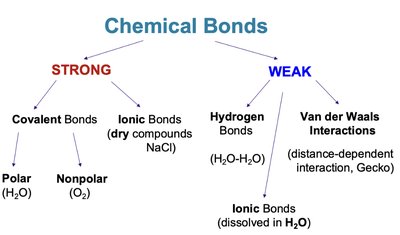
Covalent Bonds: Involve the sharing of electron pairs between atoms. Can be polar (unequal sharing, e.g., H2O) or nonpolar (equal sharing, e.g., O2).
Ionic Bonds: Formed when one atom transfers electrons to another, resulting in oppositely charged ions (e.g., NaCl in dry form).
Hydrogen Bonds: Weak attractions between a hydrogen atom and an electronegative atom (often O or N), crucial in stabilizing biological molecules like DNA and proteins.
Van der Waals Interactions: Weak, distance-dependent interactions due to transient charge differences; important in molecular recognition and gecko adhesion.
Additional info: The strength and type of chemical bonds determine the stability and reactivity of biological molecules.
Chapter 3: Carbon and the Molecular Diversity of Life
Carbohydrates
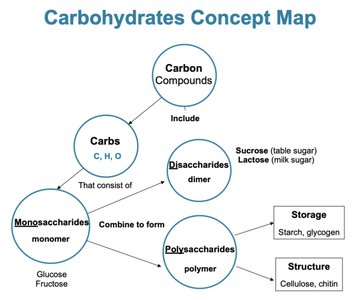
Carbohydrates are organic molecules composed of carbon, hydrogen, and oxygen. They serve as energy sources and structural components in cells.
Monosaccharides: Simple sugars (e.g., glucose, fructose) that are the monomers of carbohydrates.
Disaccharides: Dimers formed by two monosaccharides (e.g., sucrose, lactose).
Polysaccharides: Polymers of monosaccharides; can serve as energy storage (starch in plants, glycogen in animals) or structural support (cellulose in plants, chitin in fungi and arthropods).
Additional info: The structure of polysaccharides (branching, linkage type) determines their function and digestibility.
Lipids
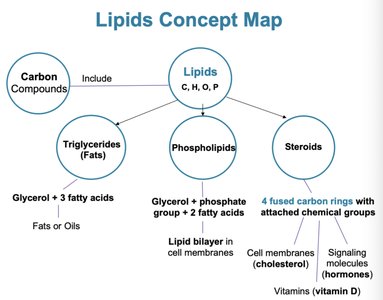
Lipids are hydrophobic molecules that include fats, phospholipids, and steroids. They are essential for energy storage, membrane structure, and signaling.
Triglycerides (Fats): Composed of glycerol and three fatty acids. Serve as long-term energy storage.
Phospholipids: Contain glycerol, two fatty acids, and a phosphate group. Major component of cell membranes, forming bilayers.
Steroids: Characterized by four fused carbon rings. Include cholesterol (membrane structure) and hormones (e.g., testosterone, estradiol).
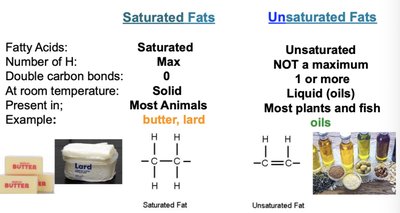
Saturated vs. Unsaturated Fats:
Saturated Fats: No double bonds, solid at room temperature, found in animal products (e.g., butter, lard).
Unsaturated Fats: One or more double bonds, liquid at room temperature, found in plants and fish oils.
Additional info: Trans fats are artificially produced unsaturated fats associated with health risks.
Chapter 3: Essential Biological Molecules – Proteins
Proteins: Structure and Function
Proteins are polymers of amino acids and perform a vast array of functions, including catalysis, transport, support, and signaling.
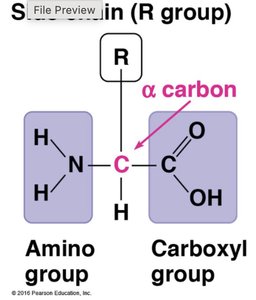
Amino Acids: The monomers of proteins, each with a central (α) carbon, amino group, carboxyl group, hydrogen, and variable R group (side chain).
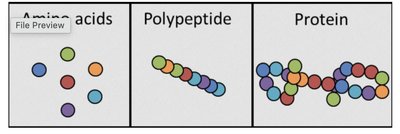
Polypeptides: Chains of amino acids linked by peptide bonds.
Protein Structure: Proteins fold into specific three-dimensional shapes, determined by their amino acid sequence.
Additional info: Protein function is directly related to its structure, which can be altered by changes in pH, temperature, or mutations.
Chapter 13: The Molecular Basis of Inheritance
DNA Structure and Function
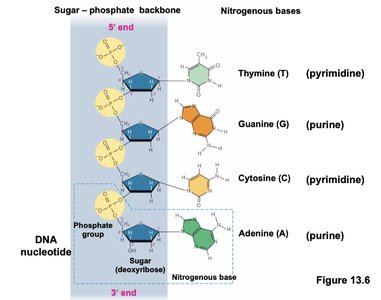
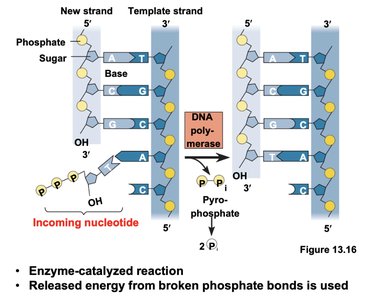
DNA (deoxyribonucleic acid) is the hereditary material in all living organisms. It encodes genetic information using four nucleotide bases: adenine (A), thymine (T), guanine (G), and cytosine (C).
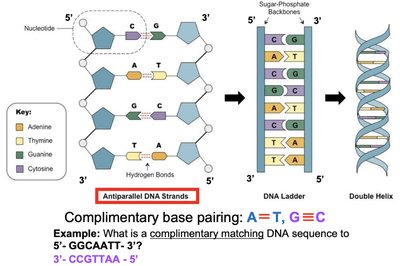
Double Helix: DNA consists of two antiparallel strands forming a double helix, stabilized by hydrogen bonds between complementary bases (A=T, G≡C).
Nucleotide Structure: Each nucleotide contains a phosphate group, deoxyribose sugar, and a nitrogenous base.
Additional info: The sequence of bases encodes genetic information, and the structure allows for accurate replication.
Experimental Evidence for DNA as Genetic Material
Key experiments established DNA as the molecule of heredity.
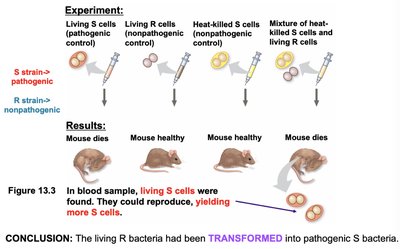
Griffith's Transformation Experiment: Demonstrated that a substance from dead pathogenic bacteria could transform non-pathogenic bacteria into a pathogenic form.
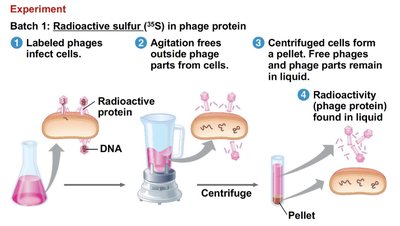
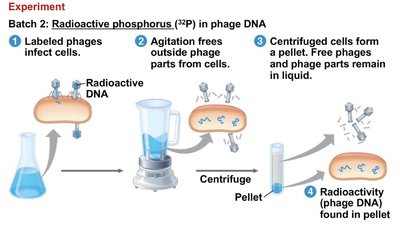
Hershey-Chase Experiment: Used radioactive labeling to show that DNA, not protein, is the genetic material in phages.
Chargaff's Rules and DNA Base Pairing
Erwin Chargaff discovered that in any DNA sample, the amount of adenine equals thymine, and the amount of guanine equals cytosine (A=T, G=C). This provided key evidence for the double helix model.
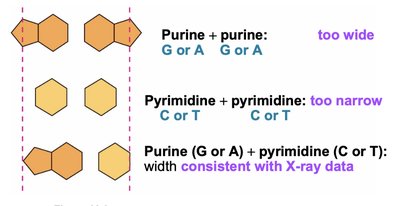
Purines (A, G) pair with pyrimidines (T, C) to maintain a uniform width of the DNA helix.
DNA Replication
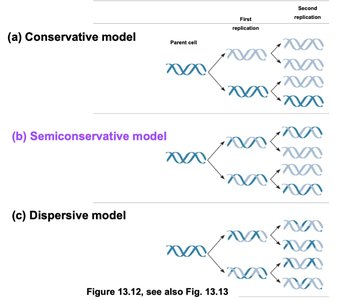
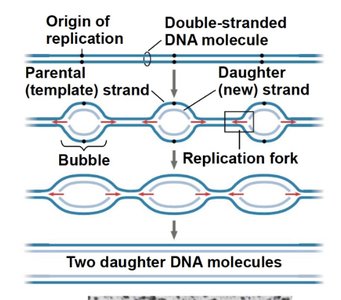
DNA replication is the process by which DNA makes a copy of itself during cell division. It is semiconservative, meaning each new DNA molecule consists of one old and one new strand.
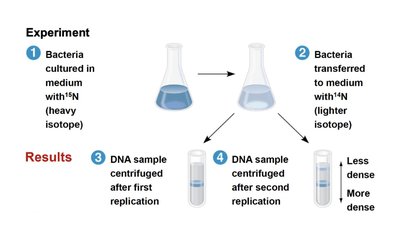
Semiconservative Model: Supported by the Meselson-Stahl experiment, which used isotopic labeling to distinguish old and new DNA strands.
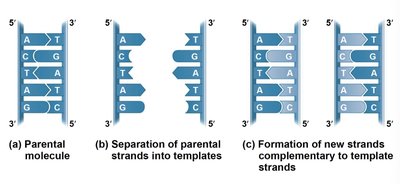
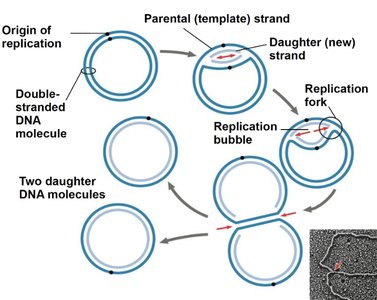
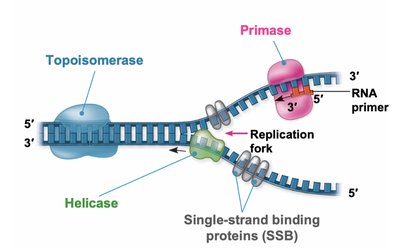
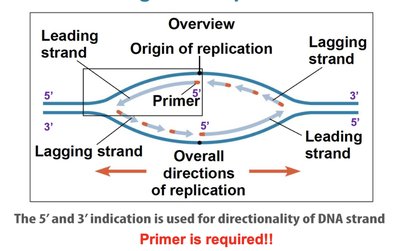
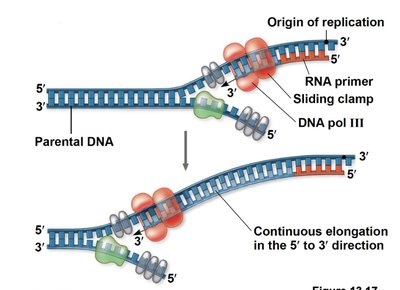
Replication Origins and Forks: Replication begins at specific origins, forming replication bubbles and forks where DNA is unwound and copied.
Key Enzymes: Helicase unwinds DNA, primase synthesizes RNA primers, DNA polymerase adds nucleotides, and ligase joins fragments.
Leading and Lagging Strands: The leading strand is synthesized continuously, while the lagging strand is synthesized in Okazaki fragments.
Chapter 14: Gene Expression – From Gene to Protein
Central Dogma: DNA to RNA to Protein
The central dogma of molecular biology describes the flow of genetic information: DNA is transcribed into RNA, which is then translated into protein.
Transcription: Synthesis of RNA from a DNA template by RNA polymerase.
Translation: Synthesis of a polypeptide (protein) from an mRNA template at the ribosome.
Additional info: The genetic code is universal and redundant, with codons (triplets of nucleotides) specifying amino acids.
Mutations
Mutations are changes in the genetic material that can affect protein structure and function.
Point Mutations: Single nucleotide changes; can be silent, missense, or nonsense.
Insertions/Deletions: Addition or loss of nucleotides, often causing frameshift mutations.
Mutagens: Physical or chemical agents that increase mutation rates (e.g., UV light, chemicals).
Additional info: Some mutations are harmful, while others can be neutral or beneficial, contributing to evolution.
