 Back
BackFoundations of Biology: Chemistry of Life, Macromolecules, and Molecular Genetics
Study Guide - Smart Notes
 Tailored notes based on your materials, expanded with key definitions, examples, and context.
Introduction: Evolution and the Foundations of Biology
Levels of Biological Organization
Biology studies life across a hierarchy of organization, from the biosphere to molecules. Understanding these levels is essential for grasping how life functions and evolves.
Biosphere: All environments on Earth inhabited by life.
Ecosystems: Communities of living organisms and their physical environments.
Communities: Different populations living together in a defined area.
Populations: Groups of individuals of the same species.
Organisms: Individual living entities.
Organs and Organ Systems: Structures composed of tissues that perform specific functions.
Tissues: Groups of similar cells performing a function.
Cells: Basic units of life.
Organelles: Functional components within cells.
Molecules: Chemical structures consisting of two or more atoms.
The Chemical Context of Life
Atoms, Elements, and Compounds
All matter is composed of atoms, which combine to form elements and compounds. The chemical properties of life depend on the structure and interactions of these atoms.
Atom: Smallest unit of matter, composed of protons, neutrons, and electrons.
Element: Substance that cannot be broken down by chemical means.
Compound: Substance consisting of two or more elements in a fixed ratio.
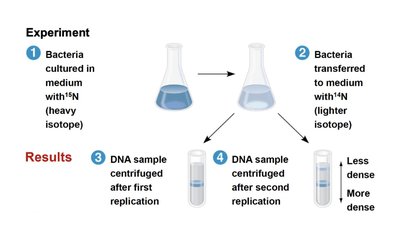
Isotopes: Atoms of the same element with different numbers of neutrons.
Chemical Bonds and Interactions
Chemical bonds hold atoms together in molecules and compounds. The type and strength of these bonds determine the properties of substances essential for life.
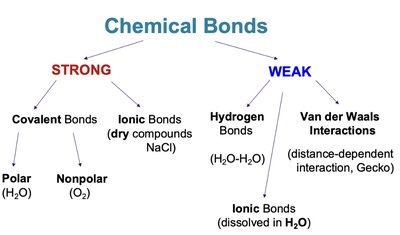
Covalent Bonds: Atoms share pairs of electrons. Can be polar (unequal sharing, e.g., H2O) or nonpolar (equal sharing, e.g., O2).
Ionic Bonds: Atoms transfer electrons, resulting in oppositely charged ions (e.g., NaCl).
Hydrogen Bonds: Weak attractions between a hydrogen atom and an electronegative atom (e.g., between water molecules).
Van der Waals Interactions: Weak, short-range forces due to transient local partial charges.
Water: Structure and Properties
Water is vital for life due to its unique chemical and physical properties, which arise from its polar structure and hydrogen bonding.
Cohesion and Adhesion: Water molecules stick to each other (cohesion) and to other substances (adhesion), aiding processes like water transport in plants.
Expansion upon Freezing: Ice is less dense than liquid water, allowing it to float and insulate aquatic life.
Temperature Moderation: High specific heat allows water to buffer temperature changes.
Versatility as a Solvent: Water dissolves many substances due to its polarity, making it the solvent of life.
Carbon and the Molecular Diversity of Life
Organic Molecules and Functional Groups
Life is carbon-based, and carbon's ability to form four covalent bonds allows for a diversity of stable, complex molecules.
Hydrocarbons: Molecules consisting only of carbon and hydrogen; nonpolar and hydrophobic.
Functional Groups: Specific groups of atoms that confer particular chemical properties (e.g., hydroxyl, carboxyl, amino, phosphate).
Macromolecules: Structure and Function
Carbohydrates
Carbohydrates are sugars and their polymers, serving as energy sources and structural materials.
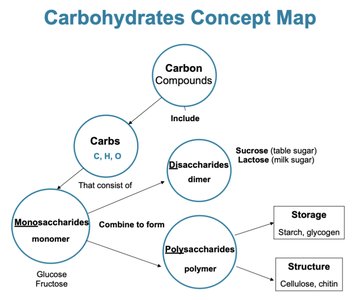
Monosaccharides: Simple sugars (e.g., glucose, fructose).
Disaccharides: Two monosaccharides joined by a glycosidic bond (e.g., sucrose, lactose).
Polysaccharides: Long chains of monosaccharides; can be for storage (starch in plants, glycogen in animals) or structure (cellulose in plants, chitin in fungi and arthropods).
Lipids
Lipids are hydrophobic molecules, including fats, phospholipids, and steroids, with roles in energy storage, membrane structure, and signaling.
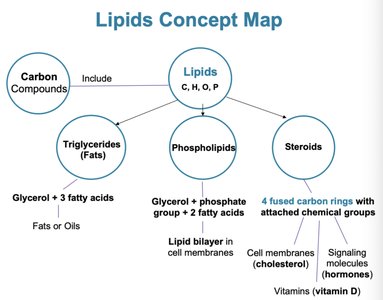
Fats (Triglycerides): Glycerol + 3 fatty acids; energy storage molecules.
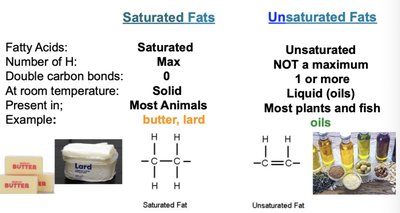
Saturated Fats: No double bonds; solid at room temperature; found in animal products.
Unsaturated Fats: One or more double bonds; liquid at room temperature; found in plants and fish oils.
Phospholipids: Glycerol + phosphate group + 2 fatty acids; form cell membranes.
Steroids: Four fused carbon rings; include cholesterol and hormones.
Proteins
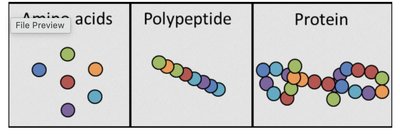
Proteins are polymers of amino acids that perform a vast array of functions, including catalysis, structure, transport, and signaling.
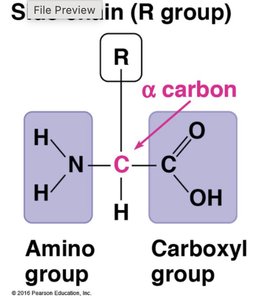
Amino Acids: Monomers with a central carbon, amino group, carboxyl group, hydrogen, and variable R group.
Polypeptides: Chains of amino acids linked by peptide bonds.
Protein Structure: Four levels—primary (sequence), secondary (α-helix, β-sheet), tertiary (3D folding), quaternary (multiple polypeptides).
The Molecular Basis of Inheritance
Structure of DNA and RNA
DNA and RNA are nucleic acids composed of nucleotide monomers. DNA stores genetic information, while RNA is involved in protein synthesis and gene regulation.
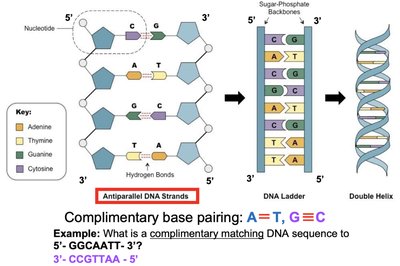
DNA: Double helix, antiparallel strands, deoxyribose sugar, bases A, T, G, C.
RNA: Single-stranded, ribose sugar, bases A, U, G, C.
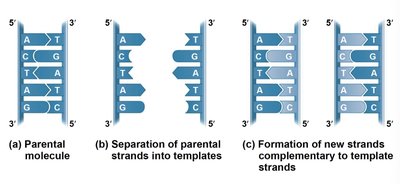
Base Pairing: A pairs with T (or U in RNA), G pairs with C via hydrogen bonds.
Discovery of DNA as Genetic Material
Key experiments established DNA as the hereditary material.
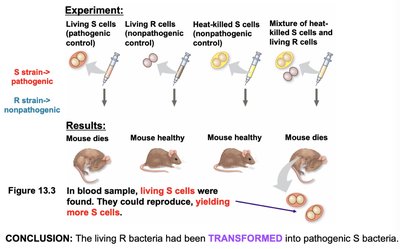
Griffith's Transformation Experiment: Showed that a 'transforming principle' (later identified as DNA) could transfer genetic information between bacteria.
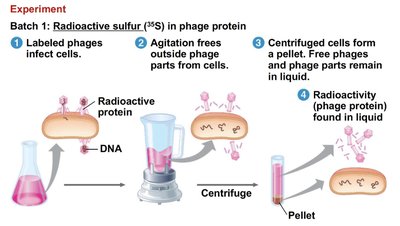
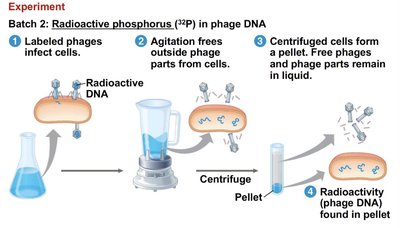
Hershey-Chase Experiment: Used radioactive labeling to demonstrate that DNA, not protein, is the genetic material in viruses.
DNA Structure and Replication
The double helix model of DNA explains its ability to store and replicate genetic information.
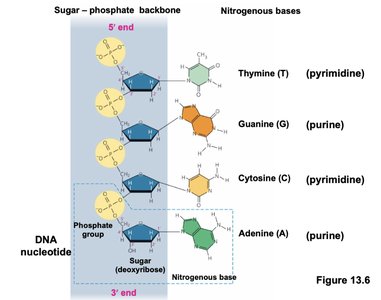
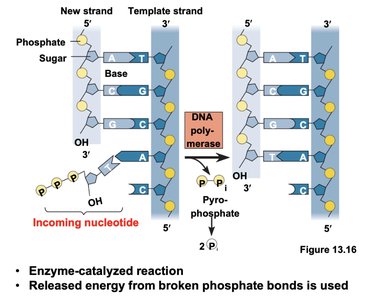
Nucleotide Structure: Each nucleotide consists of a phosphate group, deoxyribose sugar, and a nitrogenous base.
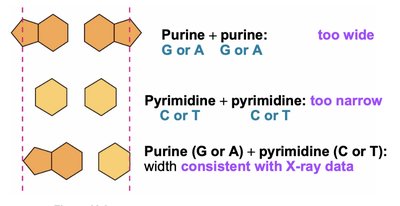
Base Pairing Rules: Purines (A, G) pair with pyrimidines (T, C) to maintain a uniform helix width.
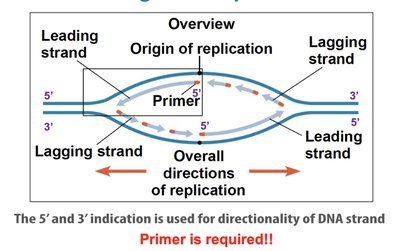
Antiparallel Strands: DNA strands run in opposite directions (5' to 3' and 3' to 5').
Models and Mechanism of DNA Replication
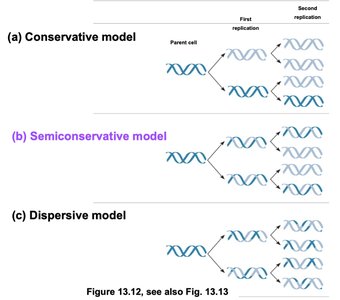
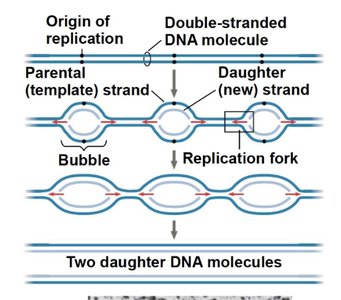
DNA replication is semiconservative: each new DNA molecule consists of one old and one new strand. The process is highly accurate and involves multiple enzymes.
Semiconservative Model: Supported by the Meselson-Stahl experiment.
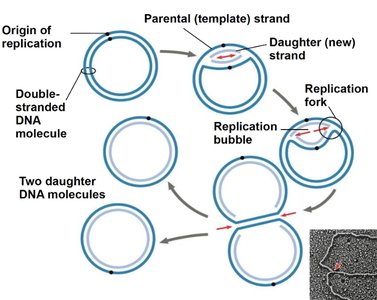
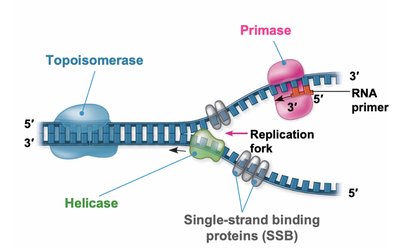
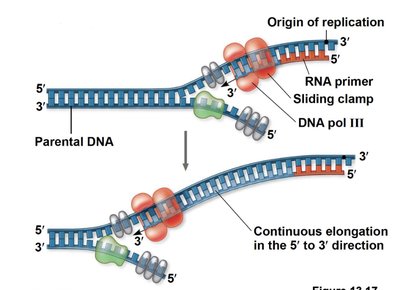
Replication Origins: Replication begins at specific sequences, forming replication bubbles and forks.
Key Enzymes: Helicase (unwinds DNA), primase (synthesizes RNA primer), DNA polymerase (synthesizes new DNA), ligase (joins fragments).
Leading and Lagging Strands: Leading strand synthesized continuously; lagging strand synthesized in Okazaki fragments.
Gene Expression: From Gene to Protein
Central Dogma: Transcription and Translation
Genetic information flows from DNA to RNA to protein. This process involves two main steps: transcription (DNA to RNA) and translation (RNA to protein).
Transcription: Synthesis of RNA from a DNA template by RNA polymerase.
Translation: Synthesis of a polypeptide at the ribosome, using mRNA as a template and tRNA for amino acid delivery.
Genetic Code: Triplet codons in mRNA specify amino acids; code is universal and redundant.
Mutations and Their Effects
Mutations are changes in the DNA sequence that can affect protein structure and function. They are a source of genetic variation and can be caused by errors in replication or by mutagens.
Point Mutations: Single nucleotide changes; can be silent, missense, or nonsense.
Insertions/Deletions: Can cause frameshift mutations, altering the reading frame of the gene.
Summary Table: Types of Chemical Bonds
Bond Type | Strength | Example |
|---|---|---|
Covalent (Polar) | Strong | H2O |
Covalent (Nonpolar) | Strong | O2 |
Ionic (dry) | Strong | NaCl (solid) |
Ionic (in water) | Weak | NaCl (dissolved) |
Hydrogen | Weak | H2O-H2O |
Van der Waals | Weak | Gecko adhesion |
Summary Table: Macromolecules and Their Functions
Macromolecule | Monomer | Polymer | Function |
|---|---|---|---|
Carbohydrate | Monosaccharide | Polysaccharide | Energy, structure |
Lipid | Fatty acid, glycerol | Triglyceride, phospholipid, steroid | Energy storage, membranes, signaling |
Protein | Amino acid | Polypeptide | Catalysis, structure, transport |
Nucleic Acid | Nucleotide | DNA, RNA | Genetic information, protein synthesis |
