 Back
Foundations of Biology: Evolution, Diversity, and the Organization of Life
Study Guide - Smart Notes
 Tailored notes based on your materials, expanded with key definitions, examples, and context.
Introduction: Evolution and the Foundations of Biology
Characteristics of Life
All living organisms share several fundamental characteristics that distinguish them from non-living matter. These characteristics are essential for the maintenance and perpetuation of life.
Energy and Matter: Living systems acquire, transform, and utilize energy and matter to maintain order and carry out life processes. The concept of entropy (disorder) is central, as life maintains low entropy through constant energy input.
Information: Genetic information, primarily in the form of DNA, is passed from one generation to the next, guiding development, function, and reproduction.
Organization: Life exhibits a high degree of organization, from molecules to cells, tissues, organs, and entire organisms.
Interactions: Organisms interact with their environment and with each other, leading to complex biological systems.
The Cell: The Smallest Unit of Life
The cell is the fundamental unit of structure and function in all living organisms. Cells can be classified into two main types:
Prokaryotic Cells: Cells lacking a nucleus and membrane-bound organelles. Examples include Bacteria and Archaea.
Eukaryotic Cells: Cells with a nucleus and membrane-bound organelles. Examples include Animals, Plants, Fungi, and Protists.
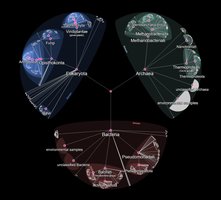
All life is classified into three domains based on cellular organization and genetic differences:
Archaea
Bacteria
Eukarya
Classifying the Diversity of Life
Humans have long grouped organisms based on observable characteristics, but modern classification aims to reflect natural evolutionary relationships. Classification systems are continually refined as new data become available.
Taxonomy: The science of naming, describing, and classifying organisms.
Phylogeny: The evolutionary history and relationships among species or groups of species.
Domains and Examples of Life
Representative organisms from each domain illustrate the diversity of life:
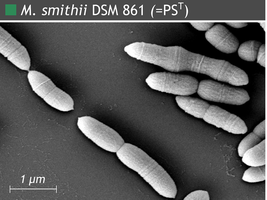
Archaea: Methanogens (Methanobrevibacter smithii)
Bacteria: Various prokaryotic forms
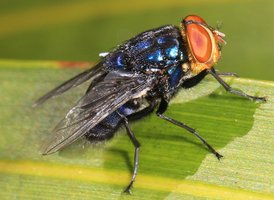
Eukarya: Includes animals (e.g., flies
 ), fungi (e.g., mushrooms
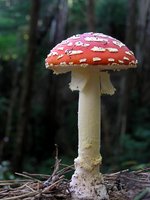 ), algae
 , and multicellular animals (e.g., sheep
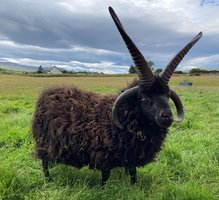 )
Evolution: The Unifying Theory of Biology
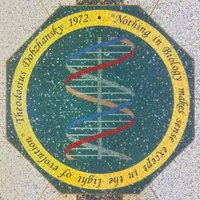
"Nothing in Biology Makes Sense Except in the Light of Evolution"
This famous statement by Theodosius Dobzhansky emphasizes that evolutionary theory provides the framework for understanding all biological phenomena.
Darwin and the Origin of Species
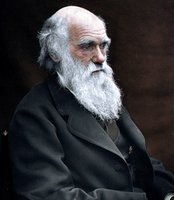
Charles Darwin's work established evolution by natural selection as the central mechanism explaining the diversity and unity of life. His observations and insights remain foundational to modern biology.
Concept 1.2: Evolution Accounts for the Unity and Diversity of Life
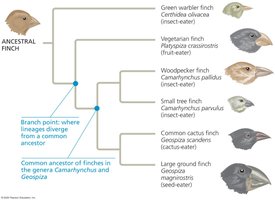
Evolution is the process by which organisms change over time, accumulating differences from their ancestors. This process explains both the similarities (unity) and differences (diversity) among living organisms.
Descent with Modification: Organisms inherit traits from their ancestors, but heritable changes (mutations, recombination) lead to diversity.
Common Ancestry: Similar traits in different species are explained by descent from a common ancestor.
Divergence: Differences between species arise after populations diverge from a common ancestor.
Timeline of Life
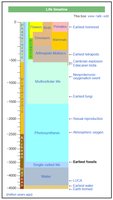
Life on Earth has a long evolutionary history, with multicellular life appearing after billions of years of single-celled existence.
Mechanisms of Evolution
Evolution occurs through several mechanisms, with natural selection being the most significant:
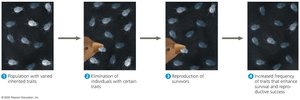
Natural Selection: Individuals with traits that enhance survival and reproduction are more likely to pass those traits to the next generation.
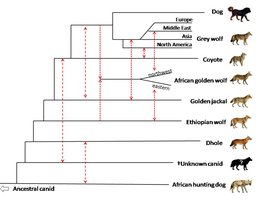
Artificial Selection: Humans selectively breed organisms for desired traits, which is a form of guided evolution but not a natural process.
Artificial Selection and Human Influence
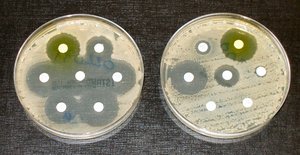
Artificial selection demonstrates how selective pressures can shape organisms over generations. Human activities can also create new natural selection pressures in the environment.
Phylogeny and the Tree of Life
Understanding Phylogenetic Trees
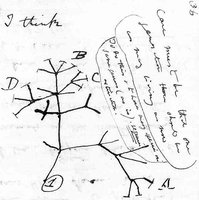
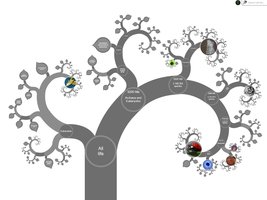
Phylogenetic trees are diagrams that depict evolutionary relationships among organisms. Each branch point represents a common ancestor, and the branching pattern reflects the history of divergence.
Cladistics: A method of classifying organisms based on common ancestry.
Characters: Traits used to determine evolutionary relationships can be primitive (ancestral) or derived (advanced).
Modern Phylogenetic Tools
Modern phylogenetic trees are constructed using genetic, morphological, and molecular data. Online resources such as onezoom.org and lifemap.cnrs.fr provide interactive visualizations of the tree of life.
Summary Table: Domains of Life and Key Features
Domain | Cell Type | Representative Organisms | Key Features |
|---|---|---|---|
Archaea | Prokaryotic | Methanogens | Unique membrane lipids, often extremophiles |
Bacteria | Prokaryotic | E. coli, Cyanobacteria | Peptidoglycan cell walls, diverse metabolism |
Eukarya | Eukaryotic | Animals, Plants, Fungi, Protists | Membrane-bound organelles, complex multicellularity |
Key Terms and Concepts
Entropy: A measure of disorder; living systems maintain low entropy through energy input.
DNA: The molecule that stores genetic information in all living organisms.
Natural Selection: The process by which traits that enhance survival and reproduction become more common in a population over generations.
Artificial Selection: The intentional breeding of organisms by humans for specific traits.
Phylogeny: The evolutionary history and relationships among species.
Common Ancestor: An ancestral species from which two or more descendant species evolved.
