 Back
Foundations of Biology: Introduction and Core Concepts
Study Guide - Smart Notes
 Tailored notes based on your materials, expanded with key definitions, examples, and context.
Chapter 1: Introduction to Biology
What is Biology?
Biology is the scientific study of life. Biologists seek to understand what distinguishes living things from non-living matter by examining the characteristics that define life.
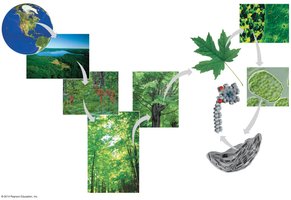
Organization: Living things are highly organized, from atoms to biospheres.
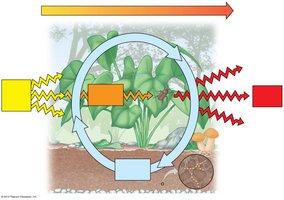
Acquire Materials and Energy: Organisms obtain and use energy and materials from their environment.
Reproduction: Living things produce offspring, passing on genetic information.
Growth and Development: Organisms increase in size and complexity over time.
Response to Stimuli: Living things detect and respond to environmental changes.
Adaptation: Populations evolve over generations to become better suited to their environments.
Homeostasis: Organisms maintain a stable internal environment despite external fluctuations.
Homeostasis
Homeostasis is the process by which living organisms maintain a relatively stable internal environment, such as temperature and pH, despite changes in the external environment.
Themes of Biology
Levels of Biological Organization
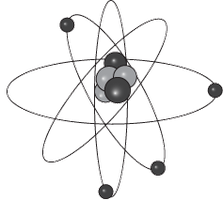
Biological systems are structured in a hierarchy, with new properties emerging at each level of organization. The main levels are:
Atoms
Molecules
Organelles
Cells
Tissues
Organs and Organ Systems
Organisms
Populations
Communities
Ecosystems
Biosphere
The Cell: The Basic Unit of Life
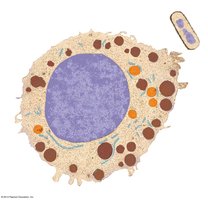
The cell is the smallest unit of life capable of performing all essential life processes. All cells share certain features, such as being enclosed by a membrane. There are two main types of cells:
Eukaryotic cells: Have a nucleus and membrane-bound organelles.
Prokaryotic cells: Lack a nucleus; DNA is not enclosed in a membrane.
Energy and Metabolism
Life requires the transfer and transformation of energy and matter. Organisms obtain energy from their environment and use it to power cellular processes. Metabolism refers to all chemical reactions occurring in the body.
Metabolic rate: The rate at which the body uses energy.
Genetic Information and Gene Expression
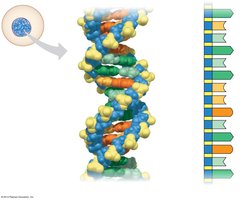
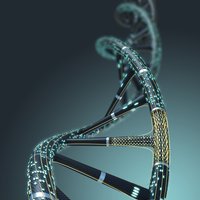
Life’s processes involve the expression and transmission of genetic information. Chromosomes contain DNA, which holds genes—the units of inheritance. The genome is the entire set of genetic instructions in an organism.
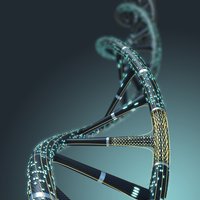
Gene expression: The process by which information from a gene is used to synthesize a functional gene product (often a protein).
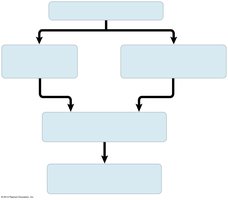
Central Dogma of Biology:
Inheritance
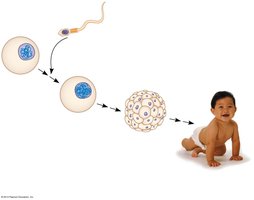
Genetic information is passed from parents to offspring during reproduction, ensuring continuity of life and the inheritance of traits.
Interactions with the Environment
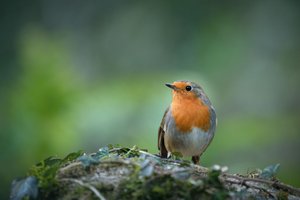
Organisms interact with both the physical environment and other organisms. These interactions can affect both the organism and its environment.
Types of interactions: Commensalism, mutualism, parasitism.
Biological Classification
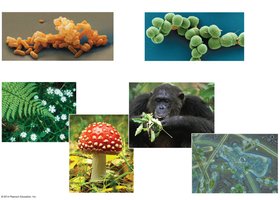
Biologists classify life into three domains:
Bacteria: Prokaryotic organisms.
Archaea: Prokaryotic organisms, distinct from bacteria.
Eukarya: Eukaryotic organisms, including:
Plants (photosynthetic)
Fungi (absorb nutrients)
Animals (ingest food)
Protists (diverse group, single- or multicellular)
Evolution
What is Evolution?
Evolution is the process of change that has transformed life on Earth. It explains both the similarities among organisms (common ancestry) and the differences (heritable changes).
Microevolution: Small changes within a species or population.
Macroevolution: Large-scale changes that result in the origin of new species.
Natural Selection
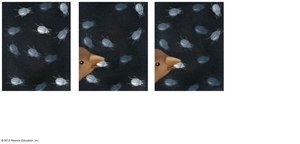
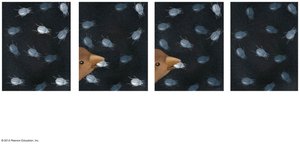
Natural selection is the process by which individuals with advantageous traits survive and reproduce more successfully, leading to adaptation in populations.
Examples: Pesticide resistance in insects, antibiotic resistance in bacteria.


Phylogenetic Tree
A phylogenetic tree shows evolutionary relationships among species, tracing back to a common ancestor.
The Scientific Method
Steps of the Scientific Method
The scientific method is a systematic approach to inquiry in science. It involves:
Making observations
Forming hypotheses
Testing hypotheses with experiments
Drawing conclusions

Data Collection
Biologists collect data through observations and experiments. Data can be:
Qualitative: Descriptive, non-numerical observations.
Quantitative: Numerical measurements, often organized in tables or graphs.
Hypotheses and Predictions
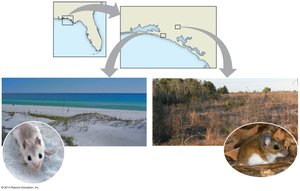
A scientific hypothesis is a testable and falsifiable explanation for a set of observations. Hypotheses lead to predictions that can be tested by further observation or experimentation.


Experiments and Variables
Experiments are designed to test hypotheses by manipulating variables:
Independent variable: Manipulated by the scientist (x-axis).
Dependent variable: Measured outcome (y-axis).

Controlled Experiments
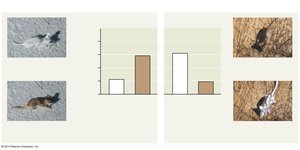
Controlled experiments test the effect of a single variable by comparing an experimental group to a control group. The control group is not exposed to the experimental treatment.
Theories in Science
In science, a theory is the best explanation for a wide range of observations and experimental results. Theories are based on well-supported hypotheses and are general enough to lead to new testable predictions.
Limits of Science
Scientific hypotheses must be testable and falsifiable. Questions involving supernatural or spiritual explanations are outside the scope of science.
