 Back
Foundations of Biology: Introduction and Core Themes
Study Guide - Smart Notes
 Tailored notes based on your materials, expanded with key definitions, examples, and context.
Introduction: Evolution and the Foundations of Biology
What is Biology?
Biology is the scientific study of life, encompassing a wide range of questions about living organisms, their development, interactions, and underlying mechanisms. Biologists seek to understand how life works at all levels, from molecules to ecosystems.
Key Questions: How does a single cell develop into an organism? How do different forms of life interact? How does the human mind work?
Studying Life: Common Themes in Biology
Levels of Biological Organization
Life can be studied at various levels, from molecules to the entire biosphere. Understanding these levels helps organize biological information and reveals emergent properties—new characteristics that arise at each level due to the arrangement and interaction of parts.
Reductionism: Breaking down complex systems into simpler components for study.
Systems Biology: Examining interactions among parts of a biological system to understand how they function together.
Emergent Properties: Properties that arise from the arrangement and interaction of parts within a system (e.g., a functioning bicycle or a living cell).
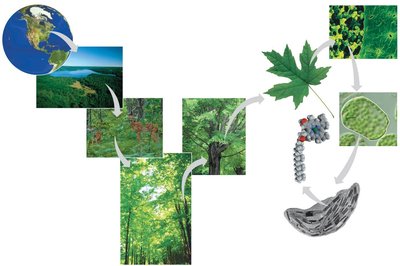
Structure and Function
At every level of the biological hierarchy, there is a close relationship between structure and function. Analyzing biological structures provides clues about their roles and mechanisms.
The Cell: The Basic Unit of Life
The cell is the smallest unit of life capable of performing all necessary activities. All cells are enclosed by a membrane and share certain features, but there are two main types:
Prokaryotic Cells: Lack a nucleus and membrane-bound organelles; generally smaller (e.g., bacteria, archaea).
Eukaryotic Cells: Contain membrane-bound organelles, including a nucleus (e.g., plants, animals, fungi, protists).
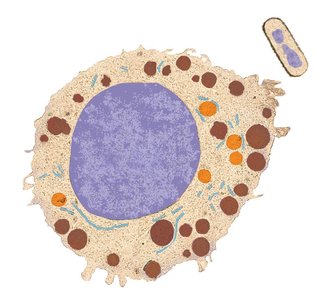
Genetic Information: Expression and Transmission
DNA: The Genetic Material
Chromosomes contain most of a cell's genetic material in the form of DNA (deoxyribonucleic acid). DNA molecules are composed of two strands forming a double helix, with each strand made up of nucleotides (A, T, C, G).
Genes: Units of inheritance that transmit information from parents to offspring.
Gene Expression: The process by which information from a gene is used to synthesize proteins, often via an RNA intermediary.
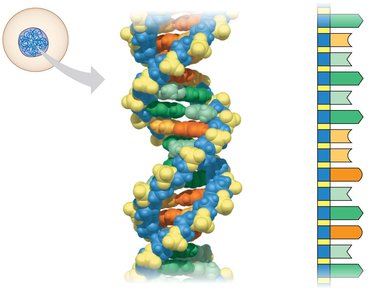
Genomics and Bioinformatics
Genomics is the large-scale study of sets of genes within and between species. Advances in technology allow rapid sequencing and analysis of genomes, with bioinformatics providing computational tools to manage and interpret the vast data.
Energy and Matter: Transfer and Transformation
Life depends on the transfer and transformation of energy and matter. Energy, primarily from the sun, is converted by photosynthetic organisms into chemical energy, which is then transferred through ecosystems as organisms consume one another. Chemical elements are recycled within ecosystems.
Producers: Organisms (like plants) that convert solar energy into chemical energy.
Consumers: Organisms that obtain energy by eating other organisms.
Decomposers: Organisms that break down dead material, returning elements to the environment.
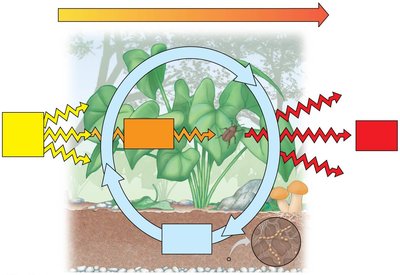
Interactions: Organisms and Their Environments
Organisms interact with each other and with physical factors in their environment. These interactions can affect both the organisms and their environments, influencing evolutionary processes and ecosystem dynamics.
Evolution: The Core Theme of Biology
Unity and Diversity of Life
Evolution explains both the unity and diversity of life. Similar traits among organisms are due to descent from common ancestors, while differences arise from the accumulation of heritable changes over time.
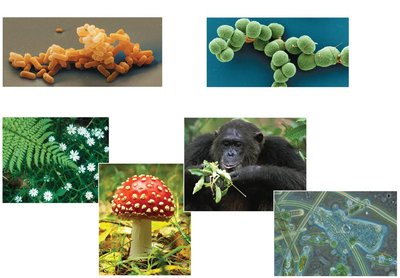
Domains of Life: Bacteria, Archaea (both prokaryotic), and Eukarya (eukaryotic; includes Plantae, Fungi, Animalia, and protists).
Charles Darwin and Natural Selection
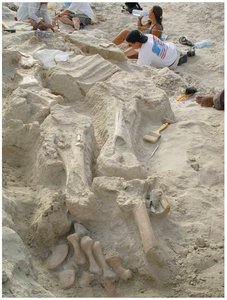
Charles Darwin's theory of evolution by natural selection provides a mechanism for how species change over time. Key observations include variation in traits, overproduction of offspring, and adaptation to environments. Natural selection leads to the propagation of advantageous traits.
Scientific Inquiry: Forming and Testing Hypotheses
The Scientific Method
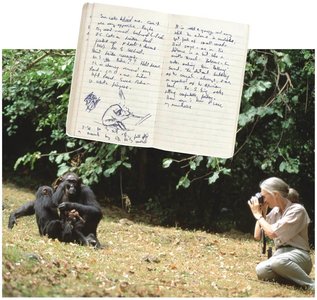
Science is a process of inquiry involving observation, hypothesis formation, and testing. Data can be qualitative (descriptive) or quantitative (measured). Inductive reasoning draws generalizations from observations, while deductive reasoning makes specific predictions from general premises.
Hypothesis: A testable and falsifiable explanation for observations.
Controlled Experiment: Compares an experimental group with a control group, differing only in the variable of interest.
Theory: Broader than a hypothesis, supported by a large body of evidence, and can generate new hypotheses.
Summary Table: Prokaryotic vs. Eukaryotic Cells
Feature | Prokaryotic Cell | Eukaryotic Cell |
|---|---|---|
Nucleus | Absent | Present |
Membrane-bound Organelles | Absent | Present |
Size | Generally smaller | Generally larger |
Examples | Bacteria, Archaea | Plants, Animals, Fungi, Protists |
