 Back
Foundations of Biology: Introduction, Chemistry of Life, and Study Strategies
Study Guide - Smart Notes
 Tailored notes based on your materials, expanded with key definitions, examples, and context.
Course Introduction and Overview
Course Structure and Logistics
This course, Foundations of Biology, introduces students to the fundamental principles of biology, focusing on the chemical and molecular basis of life, the structure and function of living organisms, and the scientific methods used to study them. Students are expected to engage with lectures, labs, homework, and various study resources to master the material.
Lecture and Lab Organization: Students are assigned to specific lab sections and must follow the schedule for wet and dry labs as outlined in the syllabus.
Required Materials: The main textbook is Biological Science (Freeman et al.), with additional resources available through Pearson+ and ICON. A lab manual is also required.
Course Communication: All lecture correspondence should be directed to the designated course email.
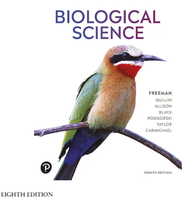
Studying for Biology
Effective Learning Strategies
Success in college-level biology requires active engagement, repetition, and the use of multiple study strategies. The course is designed to build knowledge in layers, from foundational chemistry to complex biological systems.
Before Lecture: Watch preparatory videos, read or skim the textbook, and complete pre-lecture homework.
During Lecture: Pay attention, take brief notes, ask questions, and participate in interactive activities.
After Lecture: Review materials, complete homework, and participate in study groups or discussion posts.
Neural Pathways: Learning strengthens neural connections in the brain, making repeated practice essential for long-term retention.
Additional info: Active learning, such as diagramming and group study, is emphasized as more effective than passive listening.
What is Life?
Defining Life and Unifying Theories
Biology is the study of living organisms, their structure, function, growth, origin, evolution, and taxonomy. Defining life is complex, but a widely used definition is: "A self-sustaining chemical system capable of evolution." Three unifying theories form the foundation of modern biology:
Cell Theory: All living things are composed of cells.
Chromosomal Theory of Inheritance: Genetic information is carried on chromosomes.
Evolution: Species change over time through natural selection and genetic variation.
Levels of Biological Organization
Hierarchy from Atoms to Organisms
Biological systems are organized in a hierarchy of increasing complexity:
Atom
Molecule
Macromolecule
Organelle
Cell
Tissue
Organ
Organ System
Multicellular Organism
Additional info: Understanding each level is crucial for grasping how life functions at both micro and macro scales.
Review of Chemistry for Biology
Atoms, Elements, Isotopes, and Ions
All matter is composed of atoms, which are the smallest units of elements. Atoms consist of protons, neutrons, and electrons:
Protons: Positively charged particles in the nucleus; the number of protons defines the element.
Neutrons: Neutral particles in the nucleus; isotopes differ in neutron number.
Electrons: Negatively charged particles orbiting the nucleus; ions differ in electron number.
Isotopes: Atoms of the same element with different numbers of neutrons (same chemical properties, different mass).
Ions: Atoms or molecules with a net electric charge due to the loss or gain of electrons.
Elements Essential for Life
Life on Earth is primarily composed of six elements: carbon, hydrogen, nitrogen, oxygen, phosphorus, and sulfur (CHNOPS).
Chemical Bonds and Molecular Interactions
Types of Chemical Bonds
The properties of biomolecules depend on the types of chemical bonds formed between atoms:
Covalent Bonds: Atoms share electrons. Can be non-polar (equal sharing) or polar (unequal sharing).
Ionic Bonds: Electrons are transferred from one atom to another, creating charged ions that attract each other.
Hydrogen Bonds: Weak attractions between the partially positive hydrogen of one polar molecule and the partially negative atom of another.
Van der Waals Interactions: Weak attractions due to temporary dipoles in non-polar molecules.
Electronegativity and Bond Polarity
Electronegativity is an atom's ability to attract electrons in a bond. The difference in electronegativity between atoms determines bond type:
If the difference is ≤ 0.4: Non-polar covalent bond (equal sharing).
If the difference is 0.4–2.0: Polar covalent bond (unequal sharing).
If the difference is > 2.0: Ionic bond (electron transfer).
Polar and Non-Polar Molecules
Polar molecules have regions of partial positive and negative charge (dipoles) due to unequal electron sharing. These can form hydrogen bonds, which are critical for the structure and function of biological molecules (e.g., water, proteins).
Non-polar molecules have no charge separation and cannot form hydrogen bonds. They interact via van der Waals forces and are important in the formation of cell membranes (e.g., fatty acids).
Summary Table: Types of Chemical Bonds
Bond Type | Electron Behavior | Example | Biological Importance |
|---|---|---|---|
Covalent (Non-polar) | Equal sharing | O2, CH4 | Stable backbone of biomolecules |
Covalent (Polar) | Unequal sharing | H2O | Solubility, reactivity |
Ionic | Electron transfer | NaCl | Nerve impulses, muscle contraction |
Hydrogen Bond | Attraction between dipoles | Between water molecules | Protein folding, DNA structure |
Van der Waals | Temporary dipoles | Lipid interactions | Membrane structure |
Key Equations
Electronegativity Difference:
Why Chemistry Matters in Biology
The formation and properties of biomolecules are determined by the nature of chemical bonds and the types of atoms involved. These molecular characteristics dictate how molecules interact in cells, influence protein structure and function, and underlie all biological processes.
Summary and Study Recommendations
Review the syllabus and course policies on ICON.
Engage with all course materials and use active learning strategies.
Understand the chemical basis of life, focusing on atoms, elements, and types of bonds.
Practice interpreting molecular diagrams and predicting molecular behavior based on bond types.
Additional info: Mastery of these foundational concepts is essential for success in all subsequent topics in biology, including metabolism, genetics, and cell biology.
