 Back
Foundations of Biology: Key Themes and Concepts 1
Study Guide - Smart Notes
 Tailored notes based on your materials, expanded with key definitions, examples, and context.
Introduction to Biology
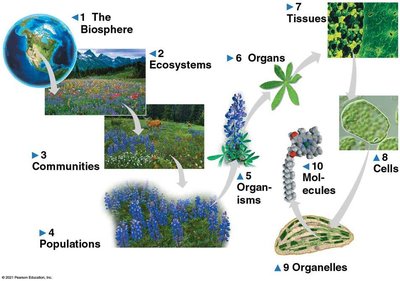
Biology is the scientific study of life and living organisms, encompassing their structure, function, growth, origin, evolution, and distribution. The field of biology is broad, with many branches such as microbiology, ecology, molecular biology, biochemistry, and genetics. Biologists study life at multiple levels, from molecules to the biosphere.
Major Themes in Biology
Theme #1: Living Beings Display Emergent Properties
Emergent properties are characteristics of a system that arise from the interaction and arrangement of the system's parts, but are not present in the individual components alone. This concept is often summarized as "the whole is greater than the sum of its parts." For example, a bicycle's ability to provide transportation and safety emerges only when all its parts are assembled correctly.

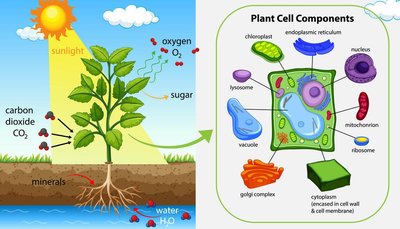
In biology, emergent properties are seen in processes like photosynthesis, where individual molecules and organelles cannot perform the process alone, but together enable the conversion of light energy to chemical energy.
Theme #2: Living Beings Are Composed of Cells
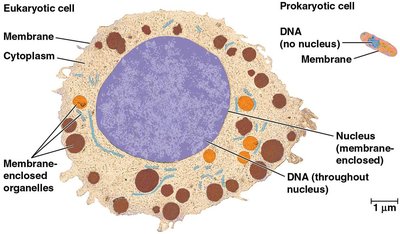
Cell theory is a fundamental concept in biology, stating that all living organisms are made up of cells, which are the basic units of life. Cells are enclosed by a cell membrane and contain genetic material. There are two main types of cells: prokaryotic (lacking a nucleus and membrane-bound organelles) and eukaryotic (having a nucleus and membrane-bound organelles).
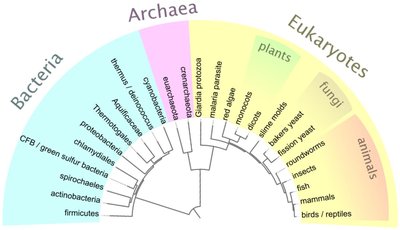
The three major domains of life—Bacteria, Archaea, and Eukarya—are distinguished by cellular structure and genetic differences.
Theme #3: Living Beings Use Genetic Material for Information Storage
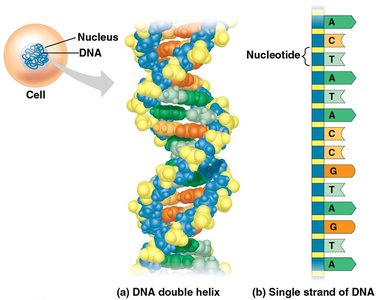
All living organisms use deoxyribonucleic acid (DNA) as their genetic material. DNA is organized into chromosomes, which contain genes—specific sequences of nucleotides (adenine, thymine, guanine, cytosine) that encode the instructions for cellular processes. The sequence of nucleotides in a gene determines the information it carries.
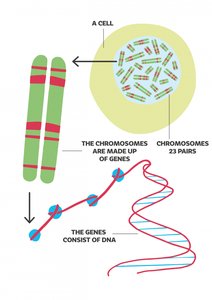
The central dogma of molecular biology describes the flow of genetic information: DNA is transcribed into RNA, which is then translated into protein. This process is known as gene expression.
Theme #4: Living Beings Rely on Energy and Matter
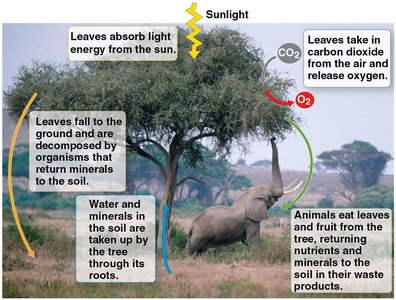
Energy and matter are essential for life. Energy flows through biological systems, typically entering as sunlight and being converted to chemical energy by producers (e.g., plants) through photosynthesis. Consumers obtain energy by eating producers or other consumers. Matter, such as carbon and nutrients, is recycled within ecosystems.
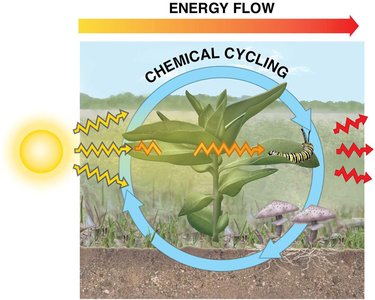
Producers and consumers are interconnected, and energy transformations are fundamental to all biological processes.
Theme #5: Living Beings Rely on Interactions
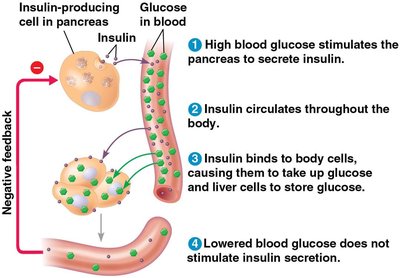
Biological systems are highly interactive, both internally (among molecules, cells, tissues, and organs) and externally (with other organisms and the environment). These interactions are regulated by feedback mechanisms:
Negative feedback: The end product reduces the initial stimulus (e.g., regulation of blood glucose by insulin).
Positive feedback: The end product enhances the initial stimulus (e.g., blood clotting).
Organisms interact with each other in various ways, such as mutualism (+/+), parasitism (+/-), competition (-/-), commensalism (+/0), and amensalism (-/0).
Theme #6: Living Beings Adapt and Evolve Over Time
Evolution is the unifying theory of biology, explaining both the diversity and unity of life. Evolution occurs through the process of natural selection, where individuals with advantageous traits are more likely to survive and reproduce, passing those traits to future generations. Over time, this leads to adaptation and the emergence of new species.
Observation 1: Species are generally well-suited to their environments.
Observation 2: Individuals vary in heritable traits.
Observation 3: More offspring are produced than can survive, leading to competition.
Assertion 1: Individuals with beneficial traits survive and reproduce more successfully.
Assertion 2: Over generations, advantageous traits become more common in the population.
Taxonomy is the science of classifying and naming organisms. Each species is given a two-part name (genus and species), and all life is grouped into three domains: Bacteria, Archaea, and Eukarya.
Summary Table: Key Themes of Biology
Theme | Description |
|---|---|
Emergent Properties | New functions arise from the arrangement and interaction of parts within a system. |
Cellular Organization | All living things are composed of cells, the basic units of life. |
Genetic Information | DNA stores and transmits hereditary information. |
Energy and Matter | Life depends on the transfer and transformation of energy and matter. |
Interactions | Organisms interact with each other and their environment, regulated by feedback mechanisms. |
Evolution | Populations evolve over time through natural selection, leading to adaptation and diversity. |
