 Back
Foundations of Biology: Life, Evolution, and Genetics
Study Guide - Smart Notes
 Tailored notes based on your materials, expanded with key definitions, examples, and context.
Biology: The Study of Life
Characteristics of Living Things
Biology is the scientific study of life and living organisms. To be considered alive, an entity must exhibit several key characteristics:
Cellular Organization: All living things are composed of one or more cells, the basic units of life.
Replication: Life reproduces itself through processes such as mitosis and meiosis.
Information Processing: Living organisms process hereditary information encoded in DNA and respond to environmental information.
Energy Utilization: Organisms acquire and use energy to maintain order and carry out life processes.
Evolution: Populations of organisms evolve over time through changes in their genetic makeup.
These characteristics form the foundation for understanding what it means to be alive.
The Cell Theory
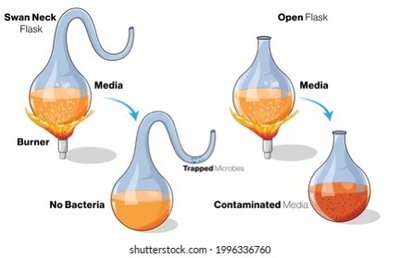
The cell theory states that all living organisms are made up of cells and that all cells arise from pre-existing cells. This concept was supported by experiments such as Louis Pasteur's swan-neck flask experiment, which disproved spontaneous generation by showing that cells do not arise from non-living material.
Scientific Theories in Biology
A scientific theory is a well-substantiated explanation for a broad range of phenomena, supported by a large body of evidence. Three foundational theories in biology are:
Cell Theory
Theory of Evolution by Natural Selection
Chromosome Theory of Inheritance
These theories provide a framework for understanding biological processes.
Evolution: The Unifying Theory of Biology
Evolution and Natural Selection
Evolution is defined as the change in the characteristics of a population over time. Charles Darwin and Alfred Russel Wallace independently developed the theory of evolution by natural selection, which explains how populations change and adapt to their environments.
Natural Selection: The process by which individuals with advantageous heritable traits are more likely to survive and reproduce, leading to changes in the traits of populations over generations.
Population: A group of individuals of the same species living in the same area at the same time.
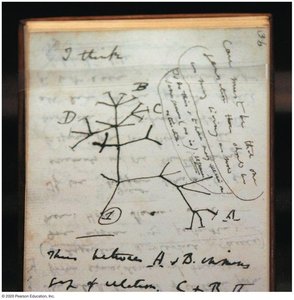
Phylogenetic Trees
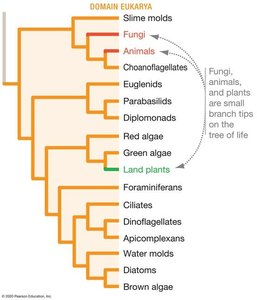
Phylogenetic trees are diagrams that depict evolutionary relationships among species. Groups that share a common ancestor (represented by a node) are more closely related to each other.
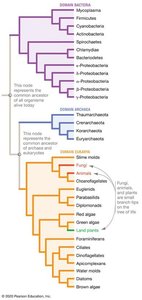
Taxonomy and Biological Classification
Taxonomy is the science of naming, defining, and classifying organisms. The modern system, established by Carolus Linnaeus, uses a hierarchical structure:
Domain
Kingdom
Phylum
Class
Order
Family
Genus
Species
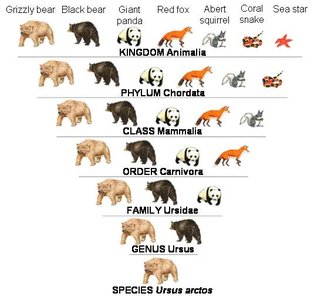
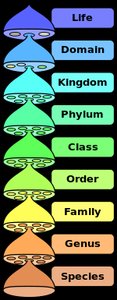
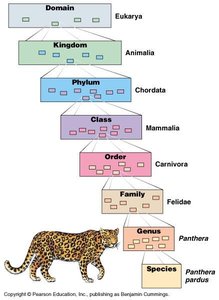
Binomial nomenclature assigns each species a two-part Latin name: the genus (capitalized) and the specific epithet (not capitalized), both italicized (e.g., Panthera pardus).
Genetics: The Basis of Inheritance
Genes, Alleles, and Chromosomes
Genetics is the study of heredity and variation. Key terms include:
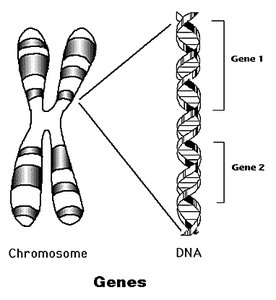
Gene: A segment of DNA that encodes a specific protein or function.
Allele: Different versions of a gene.
Chromosome: Structures within cells that contain DNA and genes.
Mendelian Genetics
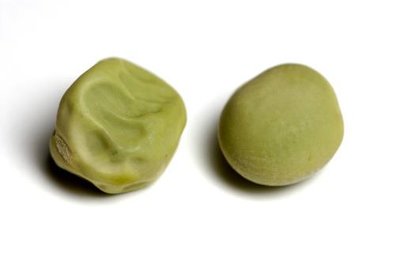
Gregor Mendel discovered the basic principles of inheritance through experiments with pea plants. He identified dominant and recessive alleles and described how they combine to produce genotypes and phenotypes.
Genotype: The genetic makeup of an organism (e.g., RR, Rr, rr).
Phenotype: The observable traits of an organism (e.g., round or wrinkled seeds).

Modern Synthesis
The Modern Synthesis integrated Mendelian genetics with Darwinian evolution, providing a quantitative framework for understanding how genetic variation leads to evolutionary change.
Evidence for Evolution
Fossil Record and Transitional Forms
The fossil record provides evidence for the evolution of life on Earth, including transitional forms that show intermediate characteristics between ancestral and derived species.
Homology
Homology refers to similarities among species due to shared ancestry. Types include:
Genetic Homology: Similar DNA or protein sequences.
Developmental Homology: Similar embryonic development.
Structural Homology: Similar anatomical structures.
Mechanisms of Evolution
Processes Driving Evolution
Evolution is driven by four main processes:
Natural Selection: Differential survival and reproduction due to heritable variation.
Genetic Drift: Random changes in allele frequencies, especially in small populations.
Gene Flow: Movement of alleles between populations.
Mutation: The source of new genetic variation.
Hardy-Weinberg Principle
The Hardy-Weinberg equilibrium describes a non-evolving population. The equation is:
where p and q are the frequencies of two alleles. If observed genotype frequencies differ from expected, evolution is occurring at that locus.
Speciation and the History of Life
Speciation
Speciation is the process by which one species splits into two or more distinct species. It can occur via geographic isolation (allopatric speciation) or within the same area (sympatric speciation).
Timeline of Life
The history of life on Earth is divided into eons, eras, and periods, with major events including the origin of life, the evolution of eukaryotes, multicellularity, and the diversification of animal and plant life.
Summary Table: Key Biological Concepts
Concept | Definition | Example |
|---|---|---|
Cell Theory | All living things are made of cells; all cells come from pre-existing cells | Bacteria, plants, animals |
Evolution | Change in the genetic composition of populations over time | Antibiotic resistance in bacteria |
Gene | Segment of DNA encoding a protein | Gene for flower color in peas |
Natural Selection | Process where individuals with advantageous traits reproduce more | Peppered moth coloration |
Additional info: This guide integrates foundational concepts from the first chapters of a General Biology course, including the nature of science, cell theory, evolution, genetics, and the mechanisms that drive biological diversity.
