 Back
BackFoundations of Biology: Study Notes for College Students
Study Guide - Smart Notes
 Tailored notes based on your materials, expanded with key definitions, examples, and context.
Introduction to Biology and Scientific Inquiry
What is Biology?
Biology is the scientific study of life, encompassing the structure, function, growth, origin, evolution, and distribution of living organisms. It seeks to answer fundamental questions about how life works and how living things interact with each other and their environments.
Biology Themes: Evolution, structure and function, information flow, energy transformations, and interactions within systems.
Levels of Biological Organization: Biosphere, ecosystems, communities, populations, organisms, organs, tissues, cells, organelles, molecules.
Scientific Method and Inquiry
The scientific method is a systematic approach to understanding the natural world through observation, hypothesis formation, experimentation, and analysis.
Steps: Observation, question, hypothesis, prediction, experiment, analysis, conclusion.
Hypothesis: A testable explanation for an observation.
Theory: A broader explanation supported by a large body of evidence.
The Chemical Context of Life
Atoms, Elements, and Compounds
All matter is composed of atoms, which are the smallest units of elements. Elements are substances that cannot be broken down by chemical means, and compounds are substances formed from two or more elements in fixed ratios.
Atomic Structure: Atoms consist of protons, neutrons, and electrons.
Valence Electrons: Electrons in the outermost shell determine chemical reactivity.
Common Elements in Biology: Carbon (C), Hydrogen (H), Oxygen (O), Nitrogen (N), Phosphorus (P), Sulfur (S).
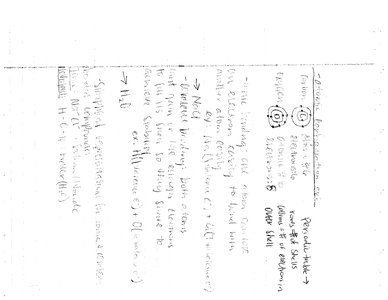
Chemical Bonds
Chemical bonds hold atoms together in molecules and compounds. The main types of bonds in biology are covalent, ionic, and hydrogen bonds.
Covalent Bonds: Atoms share electrons (e.g., H2O, CH4).
Ionic Bonds: Electrons are transferred from one atom to another, creating charged ions (e.g., NaCl).
Hydrogen Bonds: Weak attractions between a hydrogen atom and an electronegative atom (e.g., between water molecules).
Water and Life
Properties of Water
Water is essential for life due to its unique chemical and physical properties, which arise from its polarity and ability to form hydrogen bonds.
Cohesion and Adhesion: Water molecules stick to each other (cohesion) and to other substances (adhesion).
High Specific Heat: Water resists changes in temperature, helping to stabilize environments.
Solvent Properties: Water dissolves many substances, facilitating chemical reactions in cells.
Density of Ice: Ice is less dense than liquid water, allowing it to float and insulate aquatic life.
Carbon and the Molecular Diversity of Life
Carbon Compounds
Carbon atoms form the backbone of biological molecules due to their ability to form four covalent bonds, creating diverse structures such as chains, rings, and branches.
Organic Molecules: Molecules containing carbon and hydrogen, often with oxygen, nitrogen, phosphorus, or sulfur.
Functional Groups: Specific groups of atoms that confer characteristic properties (e.g., hydroxyl, carboxyl, amino, phosphate).
The Structure and Function of Large Biological Molecules
Macromolecules
Living organisms are composed of four major classes of macromolecules: carbohydrates, lipids, proteins, and nucleic acids.
Carbohydrates: Sugars and polymers of sugars; main energy source and structural components.
Lipids: Hydrophobic molecules including fats, phospholipids, and steroids; important for energy storage and membrane structure.
Proteins: Polymers of amino acids; perform a wide range of functions including catalysis (enzymes), structure, transport, and signaling.
Nucleic Acids: DNA and RNA; store and transmit genetic information.
A Tour of the Cell
Cell Structure and Function
Cells are the basic units of life. They can be classified as prokaryotic or eukaryotic based on the presence of a nucleus and membrane-bound organelles.
Prokaryotic Cells: Lack a nucleus; DNA is in the nucleoid region (e.g., bacteria, archaea).
Eukaryotic Cells: Have a nucleus and organelles (e.g., plants, animals, fungi, protists).
Key Organelles: Nucleus, mitochondria, chloroplasts, endoplasmic reticulum, Golgi apparatus, lysosomes, vacuoles.
Membrane Structure and Function
Plasma Membrane
The plasma membrane is a selectively permeable barrier composed of a phospholipid bilayer with embedded proteins. It regulates the movement of substances into and out of the cell.
Fluid Mosaic Model: Describes the dynamic arrangement of lipids and proteins in the membrane.
Transport Mechanisms: Passive transport (diffusion, osmosis, facilitated diffusion) and active transport (requires energy).
Passive Transport
Passive transport involves the movement of molecules down their concentration gradient without the use of cellular energy.
Simple Diffusion: Movement of small, nonpolar molecules directly through the membrane.
Facilitated Diffusion: Movement of molecules via transport proteins.
Osmosis: Diffusion of water across a selectively permeable membrane.
Osmosis and Tonicity
Osmosis affects cell volume and function depending on the tonicity of the surrounding solution.
Isotonic Solution: No net movement of water; cell remains the same size.
Hypotonic Solution: Water enters the cell; cell may swell or burst.
Hypertonic Solution: Water leaves the cell; cell shrinks.
An Introduction to Metabolism
Metabolic Pathways and Energy
Metabolism encompasses all chemical reactions in a cell, including catabolic (breakdown) and anabolic (synthesis) pathways. Energy is required for cellular work and is often stored in the form of ATP.
ATP (Adenosine Triphosphate): The main energy currency of the cell.
Enzymes: Biological catalysts that speed up chemical reactions by lowering activation energy.
Enzyme Function
Enzymes bind substrates at their active sites, facilitating the conversion to products. Their activity can be affected by temperature, pH, and inhibitors.
Competitive Inhibitors: Compete with the substrate for the active site.
Noncompetitive Inhibitors: Bind elsewhere on the enzyme, changing its shape and function.
Cellular Respiration and Fermentation
Overview of Cellular Respiration
Cellular respiration is the process by which cells extract energy from glucose and other organic molecules. It consists of glycolysis, the citric acid cycle, and oxidative phosphorylation.
Glycolysis: Occurs in the cytoplasm; breaks glucose into pyruvate, producing ATP and NADH.
Citric Acid Cycle (Krebs Cycle): Occurs in the mitochondrial matrix; completes the breakdown of glucose, generating ATP, NADH, and FADH2.
Oxidative Phosphorylation: Occurs in the inner mitochondrial membrane; uses the electron transport chain and chemiosmosis to produce ATP.
Fermentation
Fermentation is an anaerobic process that allows cells to generate ATP without oxygen. It regenerates NAD+ by transferring electrons to organic acceptors.
Lactic Acid Fermentation: Produces lactate as a byproduct (e.g., in muscle cells).
Alcohol Fermentation: Produces ethanol and CO2 (e.g., in yeast).
Photosynthesis
Overview of Photosynthesis
Photosynthesis is the process by which plants, algae, and some bacteria convert light energy into chemical energy stored in glucose. It occurs in the chloroplasts and involves two main stages: the light reactions and the Calvin cycle.
Light Reactions: Convert solar energy to chemical energy (ATP and NADPH), releasing O2 as a byproduct.
Calvin Cycle: Uses ATP and NADPH to fix CO2 into organic molecules (glucose).
Electron Transport and Chemiosmosis in Photosynthesis
During the light reactions, electrons are transferred through a series of proteins in the thylakoid membrane, creating a proton gradient that drives ATP synthesis.
NADPH Formation: Electrons reduce NADP+ to NADPH, which is used in the Calvin cycle.
ATP Synthesis: Protons flow through ATP synthase, converting ADP to ATP.
Summary Table: Types of Chemical Bonds
Bond Type | Description | Example |
|---|---|---|
Covalent | Atoms share electrons | H2O, CH4 |
Ionic | Electrons transferred, forming ions | NaCl |
Hydrogen | Weak attraction between H and electronegative atom | Between water molecules |
Summary Table: Types of Transport Across Membranes
Transport Type | Energy Required? | Direction | Example |
|---|---|---|---|
Simple Diffusion | No | Down gradient | O2, CO2 |
Facilitated Diffusion | No | Down gradient | Glucose via carrier protein |
Active Transport | Yes (ATP) | Against gradient | Na+/K+ pump |
Key Equations
Cellular Respiration:
Photosynthesis:
Additional info: Some explanations and tables were expanded for clarity and completeness based on standard introductory biology content.
