 Back
Foundations of General Biology: The Study of Life, Cell Theory, Evolution, and Classification
Study Guide - Smart Notes
 Tailored notes based on your materials, expanded with key definitions, examples, and context.
Biology: The Study of Life
Definition and Scope
Biology is the scientific study of life, aiming to unify our understanding of the diversity of living organisms through observation and theory. It seeks to answer fundamental questions about the nature, origin, and organization of life.
Biology: The study of living organisms and their interactions with each other and their environments.
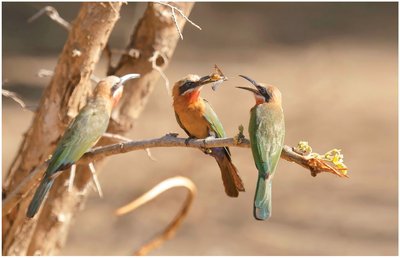
Key characteristics of life: All organisms share fundamental traits, including being composed of cells, the ability to replicate, evolution, information storage and transmission, and energy utilization.
Key Concepts and Theories in Biology
Foundational Theories
Biology is built upon several foundational theories that explain patterns and mechanisms in the natural world.
Cell Theory: All organisms are made of cells, and all cells come from preexisting cells.
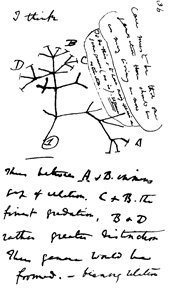
Theory of Evolution by Natural Selection: All species are related by common ancestry, and evolution occurs through natural selection.
Chromosome Theory of Inheritance: Genetic information is stored in genes located on chromosomes.
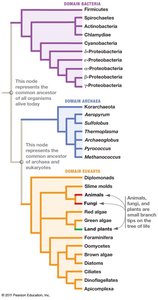
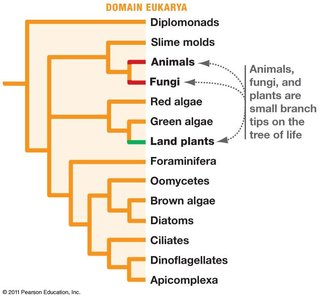
Phylogenetic Tree: A graphical representation of evolutionary relationships among species.
Scientific Method: Biologists ask questions, generate hypotheses, and design experiments to test predictions.
Cell Theory
Historical Development and Experimental Evidence
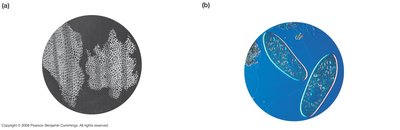
The cell theory was developed through observations made possible by the invention of the microscope. Early scientists such as Robert Hooke and Anton van Leeuwenhoek provided the first views of cells and microorganisms.
Robert Hooke: First observed cork cells in 1665.
Anton van Leeuwenhoek: First to observe single-celled organisms ("animalcules") in pond water.
Spontaneous Generation Hypothesis: Proposed that cells arise from nonliving materials.
All-cells-from-cells Hypothesis: Proposed that cells are produced only when preexisting cells grow and divide.
Pasteur's Experiment
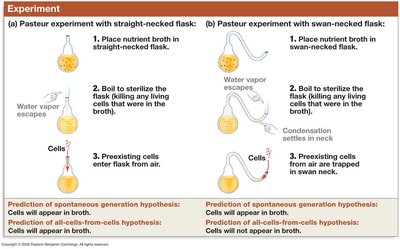
Louis Pasteur conducted experiments to test whether cells arise spontaneously or from other cells, using straight-necked and swan-necked flasks.
Experimental Design: Both flasks contained nutrient broth and were boiled to sterilize. Only the straight-necked flask allowed cells from the air to enter.
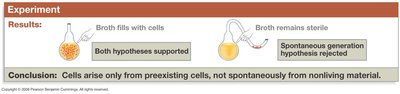
Results: Cells appeared only in the straight-necked flask, supporting the all-cells-from-cells hypothesis and rejecting spontaneous generation.

Theory of Evolution by Natural Selection
Pattern and Process
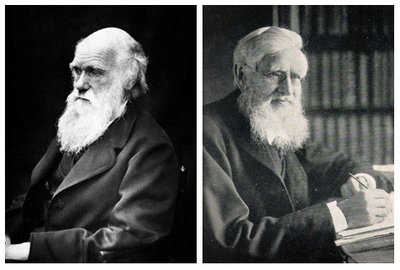
The theory of evolution by natural selection, independently realized by Charles Darwin and Alfred Russel Wallace, explains how species are related by common ancestry and how heritable traits increase in frequency over time.
Pattern: Species are related by common ancestry.
Process: Evolution occurs by natural selection, where heritable traits that increase reproductive success become more common.
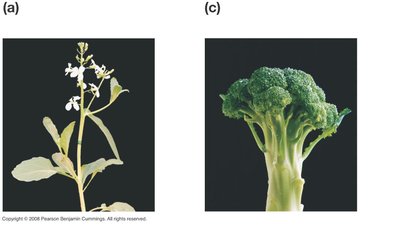
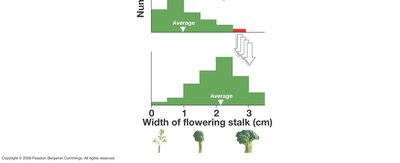
Artificial Selection: Humans can select for specific traits, as seen in the domestication of plants like Brassica oleracea (broccoli).

Chromosome Theory of Inheritance
Genetic Information and Heredity
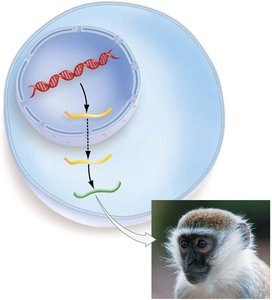
The chromosome theory of inheritance explains how genetic information is stored and transmitted. Genes are units of heredity located on chromosomes, which are composed of DNA.
Genes: Segments of DNA that code for cell products.
DNA: The hereditary material in cells.
Messenger RNA (mRNA): Transmits genetic information from DNA to protein synthesis.
Proteins: Determine physical traits of organisms.
Taxonomy and Classification
Hierarchical Organization
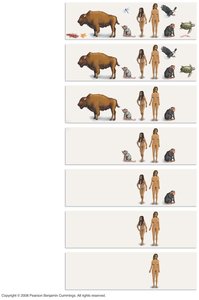
Taxonomy is the effort to classify and name organisms. Carolus Linnaeus developed a hierarchical system and binomial nomenclature for scientific naming.
Binomial Nomenclature: Two-part scientific name (Genus species), always italicized.
Hierarchy: Kingdom, Phylum, Class, Order, Family, Genus, Species.
Mnemonic: "King Phillip Came Over For Good Spaghetti" helps remember the order.
Kingdoms and Domains
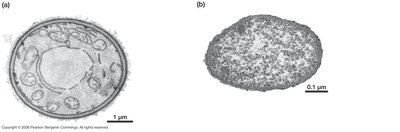
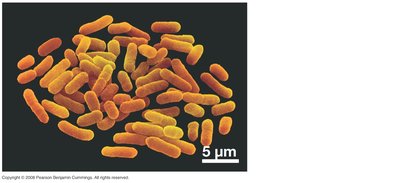
Classification systems have evolved from two kingdoms (plants and animals) to five kingdoms and three domains, based on molecular and cellular characteristics.
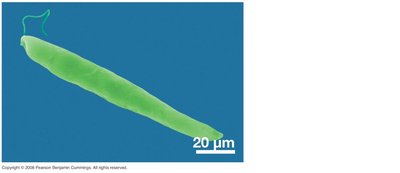
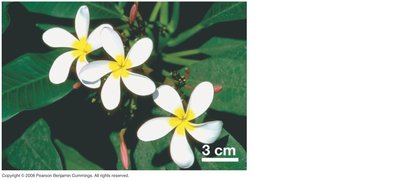
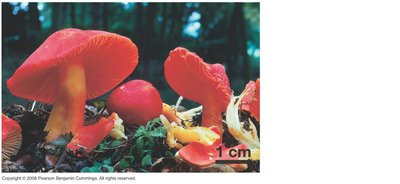
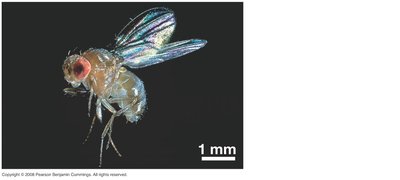
Kingdoms: Monera (prokaryotes), Protista (unicellular eukaryotes), Plantae, Fungi, Animalia.
Domains: Bacteria, Archaea, Eukarya.
Molecular Approach: Carl Woese used rRNA sequences to classify organisms into domains.
Phylogenetic Trees
Evolutionary Relationships
Phylogenetic trees are diagrams that represent evolutionary relationships among organisms, showing how species diverge from common ancestors.
Phylogeny: The evolutionary history and relationships among species.
Branch Tips: Represent current species; nodes represent common ancestors.
Summary Table: Key Biological Theories and Concepts
Theory/Concept | Main Idea | Key Contributors | Evidence/Example |
|---|---|---|---|
Cell Theory | All organisms are made of cells; all cells come from preexisting cells | Robert Hooke, Anton van Leeuwenhoek, Rudolph Virchow, Louis Pasteur | Microscope observations, Pasteur's experiment |
Evolution by Natural Selection | Species are related by common ancestry; traits evolve by natural selection | Charles Darwin, Alfred Russel Wallace | Artificial selection in plants, Darwin's notebook |
Chromosome Theory of Inheritance | Genes are located on chromosomes; DNA is hereditary material | Walter Sutton, Theodor Boveri | DNA, mRNA, protein synthesis |
Taxonomy | Classification and naming of organisms | Carolus Linnaeus | Binomial nomenclature, taxonomic hierarchy |
Phylogenetic Tree | Graphical representation of evolutionary relationships | Carl Woese, Charles Darwin | rRNA sequence comparison, tree diagrams |
Additional info: These notes expand on brief points from the original materials, providing academic context and examples for clarity. All included images directly reinforce the explanations and are relevant to the adjacent content.
