 Back
From Gene to Protein: The Central Dogma and Genetic Code
Study Guide - Smart Notes
 Tailored notes based on your materials, expanded with key definitions, examples, and context.
From Gene to Protein: The Central Dogma and Genetic Code
Central Dogma of Molecular Biology
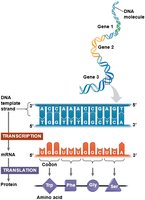
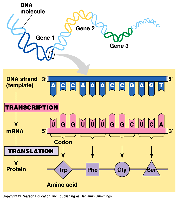
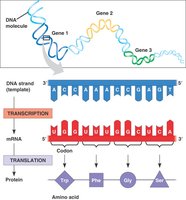
The central dogma describes the flow of genetic information within a biological system. It explains how the information encoded in DNA is used to synthesize proteins, which determine an organism's phenotype.
Genotype: Determined by the sequence of bases in DNA.
Phenotype: Determined by the proteins and RNA encoded by DNA.
Gene Expression: The process by which DNA directs RNA synthesis (transcription) and protein synthesis (translation).
The flow of information: DNA → RNA → Protein
Historical Experiments Defining Gene Function
Key experiments established our understanding of how genes control phenotype and metabolism:
Garrod (1908): Proposed that genes dictate phenotype through enzyme production, based on studies of inborn errors of metabolism (e.g., alkaptonuria).
Beadle and Tatum: Used Neurospora crassa to show that genes encode enzymes, leading to the "one gene-one enzyme" hypothesis.
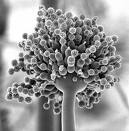
Beadle and Tatum's experiments identified mutants that required specific nutrients for growth, demonstrating that each gene encodes a specific enzyme in a metabolic pathway.
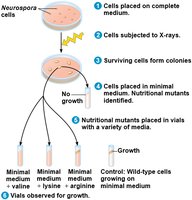
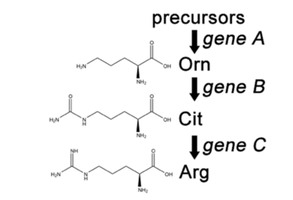
Conclusion: Each mutated gene corresponds to a missing enzyme in the arginine biosynthetic pathway, supporting the "one gene-one enzyme" hypothesis.
Refinement: Later research showed that many proteins are composed of multiple polypeptides, each encoded by a separate gene, leading to the "one gene-one polypeptide" hypothesis.
The Genetic Code
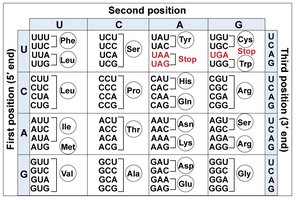
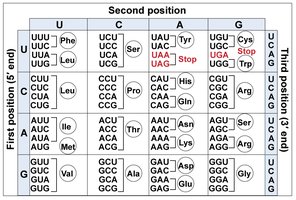
The genetic code is the set of rules by which information encoded in DNA or RNA sequences is translated into proteins by living cells.
Codon: A sequence of three nucleotides that specifies a particular amino acid.
There are 20 amino acids and 4 nucleotides; a triplet code (3 nucleotides per codon) provides 64 possible codons, enough to encode all amino acids.
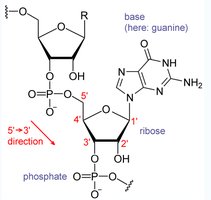
Codons are read in the 5' to 3' direction during translation.
Properties of the Genetic Code
Redundant: Most amino acids are specified by more than one codon.
Unambiguous: Each codon specifies only one amino acid.
Non-overlapping: Codons are read one after another, without overlap.
Universal: The genetic code is nearly universal among all organisms, with rare exceptions (e.g., mitochondria, some unicellular eukaryotes).
Reading Frame and Mutations
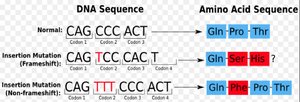
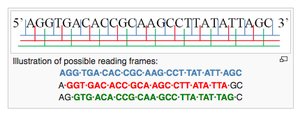
The reading frame is critical for correct translation. Insertion or deletion of nucleotides can cause frameshift mutations, altering the downstream amino acid sequence.
Deciphering the Genetic Code
Crick and Brenner: Demonstrated the triplet nature of the code using frameshift mutations.
Nirenberg and Matthaei: Identified the first codon (UUU codes for phenylalanine) using artificial mRNA in cell-free systems.
Khorana: Used synthetic RNA to determine codon assignments for all amino acids.
Start and Stop Codons
Start codon: AUG (methionine) signals the start of translation.
Stop codons: UAA, UAG, UGA signal termination of translation and do not encode amino acids.
Open Reading Frames (ORFs)
An open reading frame is a sequence of DNA that begins with a start codon (ATG) and continues in-frame for a significant length before reaching a stop codon. ORFs are used to predict protein-coding genes.
Universality and Application of the Genetic Code
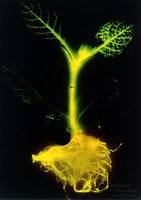
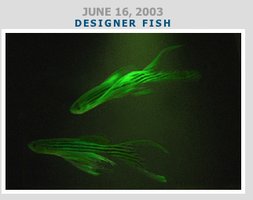
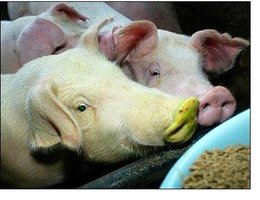
The near-universality of the genetic code allows genes from one organism to be expressed in another, enabling biotechnology applications such as the production of human proteins in bacteria and the creation of transgenic organisms.
Transcription: RNA Synthesis
Overview of Transcription
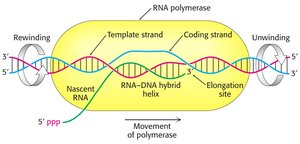
Transcription is the process by which a segment of DNA is used as a template to synthesize a complementary RNA molecule. This is the first step in gene expression.
Template strand: Only one DNA strand is used as a template for RNA synthesis.
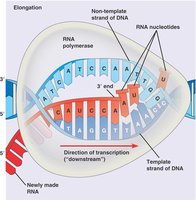
RNA polymerase: The enzyme that synthesizes RNA from the DNA template, adding nucleotides to the 3' end of the growing RNA strand.
RNA is synthesized in the 5' to 3' direction.
Differences Between DNA and RNA
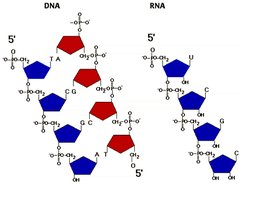
RNA contains ribose sugar (2' OH) instead of deoxyribose.
RNA uses uracil (U) instead of thymine (T).
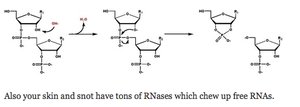
RNA is usually single-stranded and less stable than DNA.
Types of RNA
mRNA (messenger RNA): Encodes protein sequences.
tRNA (transfer RNA): Brings amino acids to the ribosome during translation.
rRNA (ribosomal RNA): Structural and catalytic component of ribosomes.
snRNA (small nuclear RNA): Involved in RNA splicing.
ncRNA (non-coding RNA): Various regulatory functions.
RNA Polymerases in Prokaryotes and Eukaryotes
Prokaryotes have a single RNA polymerase for all RNA types.
Eukaryotes have three RNA polymerases:
RNA Pol I: rRNA
RNA Pol II: mRNA and some snRNA
RNA Pol III: tRNA and 5S rRNA
Stages of Transcription
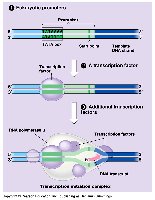
Initiation: RNA polymerase binds to the promoter region, aided by transcription factors in eukaryotes.
Elongation: RNA polymerase moves along the DNA, synthesizing RNA.
Termination: RNA polymerase stops transcription at a terminator sequence (prokaryotes) or after a polyadenylation signal (eukaryotes).
Promoters and Regulation
Promoter: DNA sequence where RNA polymerase binds to initiate transcription.
Cis-acting elements: DNA sequences near the gene that regulate transcription.
Trans-acting factors: Proteins (e.g., transcription factors) that bind to cis-elements to regulate transcription.
Transcription Elongation and Termination
RNA polymerase unwinds DNA and synthesizes RNA complementary to the template strand.
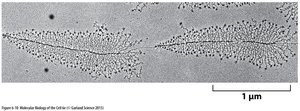
Multiple RNA polymerases can transcribe a single gene simultaneously, amplifying gene expression.
Termination mechanisms differ between prokaryotes and eukaryotes.
Post-Transcriptional Modifications in Eukaryotes
RNA Processing
In eukaryotes, the primary RNA transcript (pre-mRNA) undergoes several modifications before becoming mature mRNA:
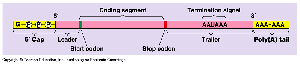
5' Cap: Addition of a modified guanine nucleotide to the 5' end, protecting mRNA from degradation and aiding ribosome binding.
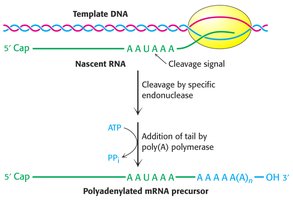
3' Poly-A Tail: Addition of 50-250 adenine nucleotides to the 3' end, enhancing stability and export from the nucleus.
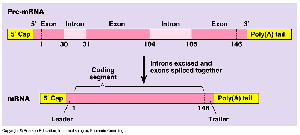
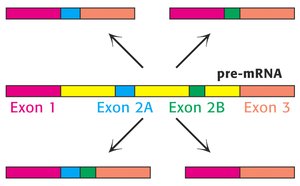
Splicing: Removal of non-coding introns and joining of coding exons.
RNA Splicing and Alternative Splicing
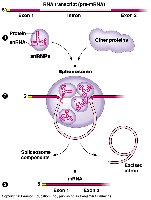
Splicing is carried out by the spliceosome, a complex of proteins and snRNAs.
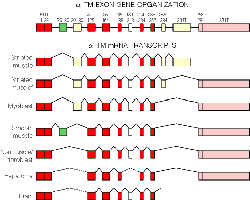
Alternative splicing allows a single gene to produce multiple protein isoforms, increasing protein diversity.
Summary Table: Key Differences Between Prokaryotic and Eukaryotic Transcription
Feature | Prokaryotes | Eukaryotes |
|---|---|---|
Location | Cytoplasm | Nucleus |
RNA Polymerases | One | Three (I, II, III) |
RNA Processing | None | 5' cap, poly-A tail, splicing |
mRNA Structure | Often polycistronic | Monocistronic |
Practice Questions and Applications
Given a DNA sequence, predict the mRNA and protein sequence using the genetic code table.
Identify the template strand for transcription.
Calculate the minimum number of nucleotides required to encode a polypeptide of a given length (e.g., 100 amino acids requires at least 300 nucleotides).
Key Takeaways
The central dogma describes the flow of genetic information from DNA to RNA to protein.
Genes encode proteins (or functional RNAs) that determine phenotype.
The genetic code is a triplet, non-overlapping, redundant, and nearly universal code for translating nucleotide sequences into amino acids.
Transcription and RNA processing are essential steps in gene expression, with significant differences between prokaryotes and eukaryotes.
Alternative splicing greatly increases the diversity of proteins encoded by the genome.
