 Back
Fundamental Chemistry and Cell Structure for General Biology
Study Guide - Smart Notes
 Tailored notes based on your materials, expanded with key definitions, examples, and context.
Chemistry of Life
Atoms, Elements, and Molecules
All living organisms are composed of chemicals, which are organized into atoms, elements, and molecules. Understanding these basic units is essential for studying biology.
Atom: The smallest unit of matter, consisting of protons, neutrons, and electrons.
Element: A substance made entirely of one type of atom; defined by its atomic number (number of protons).
Molecule: Two or more atoms bonded together.
Subatomic Particles:
Proton: +1 charge, found in nucleus
Neutron: 0 charge, found in nucleus
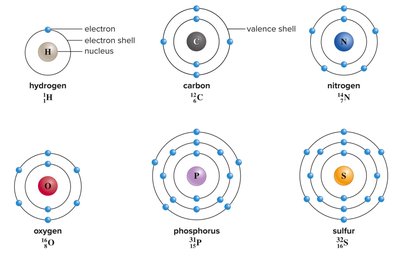
Electron: -1 charge, found in electron shell
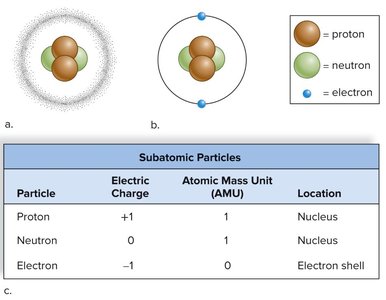
Atomic Structure and Stability
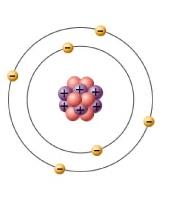
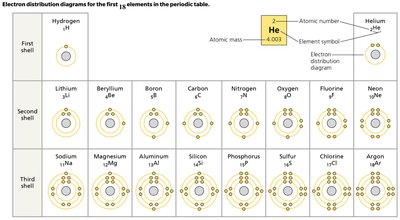
Atoms are most stable when their outermost (valence) electron shell is full. The distribution of electrons in shells determines chemical reactivity.
First shell: holds up to 2 electrons
Second shell: holds up to 8 electrons
Third shell: holds up to 8 electrons
Atoms with incomplete valence shells are reactive and seek stability through chemical bonds.
Periodic Table and Biological Elements
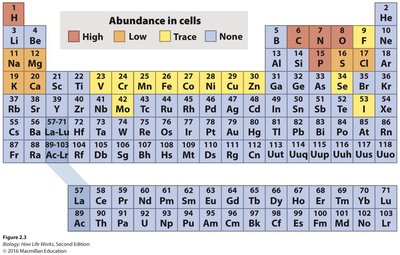
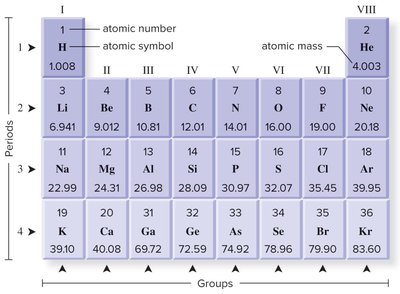
The periodic table organizes elements by atomic number and properties. Only a subset of elements are abundant in living cells.
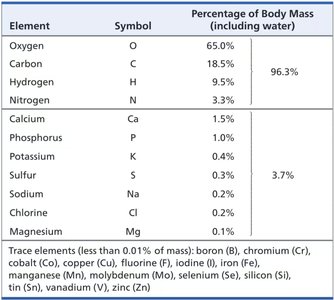
Major elements in biology: Oxygen, Carbon, Hydrogen, Nitrogen, Calcium, Phosphorus, Potassium, Sulfur, Sodium, Chlorine, Magnesium.
Trace elements are required in very small amounts.
Chemical Bonds and Interactions
Types of Chemical Bonds
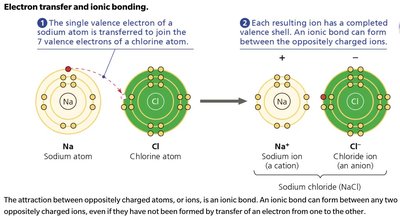
Atoms achieve stability by forming chemical bonds, which involve interactions between valence electrons.
Ionic Bonds: Formed when electrons are transferred from one atom to another, resulting in oppositely charged ions (e.g., NaCl).
Covalent Bonds: Formed when atoms share electrons. Can be polar (unequal sharing) or nonpolar (equal sharing).
Polar Covalent Bonds: Result in partial charges (δ+ and δ-) due to differences in electronegativity.
Nonpolar Covalent Bonds: No charge difference; electrons are shared equally.
Electronegativity and Bond Type
Electronegativity is the ability of an atom to attract shared electrons. The difference in electronegativity between two atoms determines the bond type.
Large difference (>1.7): Ionic bond
Moderate difference: Polar covalent bond
Small or no difference: Nonpolar covalent bond
Redox Reactions
Redox reactions involve the transfer of electrons between atoms.
Oxidation: Loss of electrons
Reduction: Gain of electrons
Mnemonic: OIL RIG (Oxidation Is Loss, Reduction Is Gain)
Biomolecules and Cell Structure
Biomolecules: Composition and Function
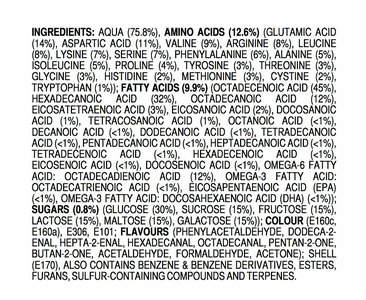
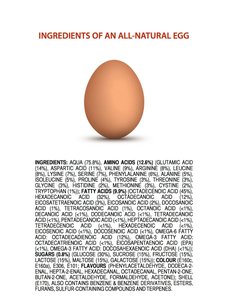
Biomolecules are the building blocks of life, including proteins, lipids, carbohydrates, and nucleic acids. Their chemical properties determine their biological functions.
Proteins: Made of amino acids; perform structural, enzymatic, and regulatory roles.
Lipids: Hydrophobic molecules; form membranes and store energy.
Carbohydrates: Provide energy and structural support.
Nucleic Acids: DNA and RNA; store and transmit genetic information.
Cell Components and Organization
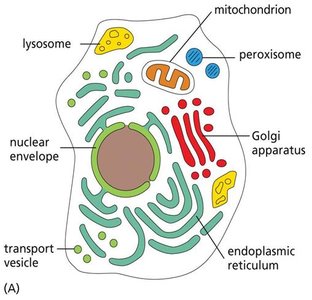
Cells are the fundamental units of life, composed of various organelles that perform specialized functions.
Nucleus: Contains DNA; site of genetic control.
Mitochondria: Powerhouse of the cell; site of cellular respiration.
Endoplasmic Reticulum (ER): Synthesizes proteins and lipids.
Golgi Apparatus: Modifies, sorts, and packages proteins and lipids.
Lysosomes: Digest cellular waste.
Peroxisomes: Break down fatty acids and detoxify harmful substances.
Transport Vesicles: Move materials within the cell.
Scale of Biological Organization
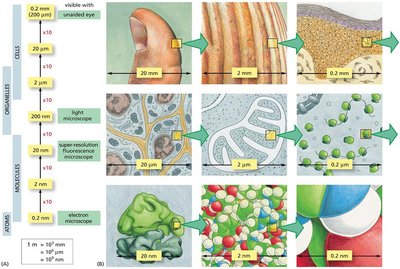
Biological structures range from atoms to molecules, organelles, cells, tissues, and organs. Understanding scale is important for interpreting biological processes.
Atoms → Molecules → Organelles → Cells → Tissues → Organs
Microscopes are used to visualize structures at different scales.
Summary Table: Major Elements in Biology
Element | Symbol | Percentage of Body Mass |
|---|---|---|
Oxygen | O | 65.0% |
Carbon | C | 18.5% |
Hydrogen | H | 9.5% |
Nitrogen | N | 3.3% |
Calcium | Ca | 1.5% |
Phosphorus | P | 1.0% |
Potassium | K | 0.4% |
Sulfur | S | 0.3% |
Sodium | Na | 0.2% |
Chlorine | Cl | 0.2% |
Magnesium | Mg | 0.1% |
Key Equations and Concepts
Atomic Number:
Mass Number:
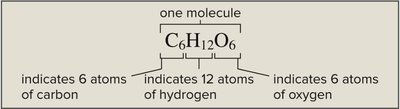
Molecular Formula Example: (Glucose: 6 carbons, 12 hydrogens, 6 oxygens)

Fundamental Concept
Atoms interact via bonds to form molecules. The structure and function of biomolecules are determined by their chemical properties, including polarity and electronegativity. These properties impart functional capabilities essential for life.
Additional info: Context was expanded to clarify atomic structure, chemical bonding, and cell components, as well as to provide a self-contained summary suitable for exam preparation.
