 Back
Fundamental Chemistry and Cell Structure for General Biology
Study Guide - Smart Notes
 Tailored notes based on your materials, expanded with key definitions, examples, and context.
Introduction to Biology
Levels of Biological Organization
Biology studies life at multiple levels, from atoms and molecules to cells and organisms. Understanding these levels is essential for grasping how life functions.
Atoms: Basic units of matter, composed of protons, neutrons, and electrons.
Molecules: Groups of atoms bonded together, forming the chemical basis of life.
Organelles: Specialized structures within cells that perform distinct functions.
Cells: Fundamental units of life, capable of carrying out all life processes.
Chemistry
Atoms and Elements
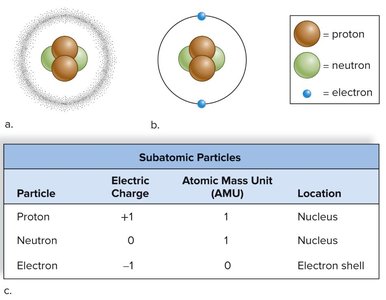
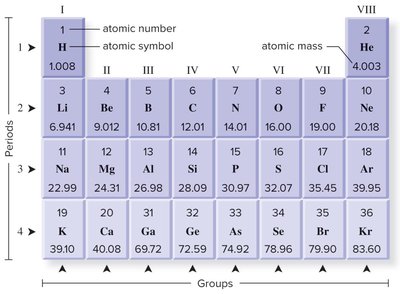
Atoms are the smallest units of elements, which are pure substances consisting of only one type of atom. Elements are defined by their atomic number (number of protons).
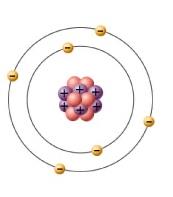
Subatomic Particles: Protons (+1 charge), neutrons (0 charge), electrons (-1 charge).
Atomic Number: Number of protons in the nucleus; defines the element.
Mass Number: Sum of protons and neutrons.

Electron Shells and Stability
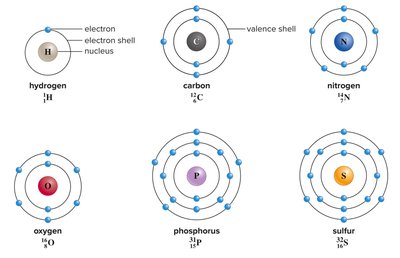
Electrons occupy energy levels called shells. The outermost shell (valence shell) determines chemical reactivity.
Atoms are most stable when their valence shell is full.
Shell 1 holds 2 electrons; Shell 2 and 3 hold 8 electrons each.
Periodic Table and Elements in Biology
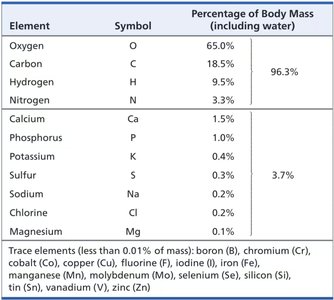
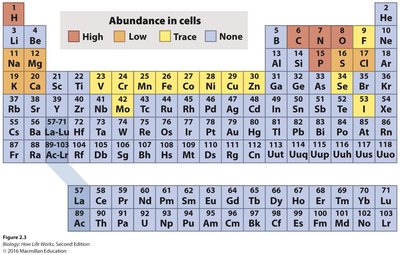
The periodic table organizes elements by atomic number and properties. Biological systems primarily use a few key elements.
Major Elements: Oxygen, carbon, hydrogen, nitrogen.
Minor Elements: Calcium, phosphorus, potassium, sulfur, sodium, chlorine, magnesium.
Biomolecules
Composition of Biomolecules
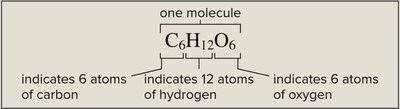
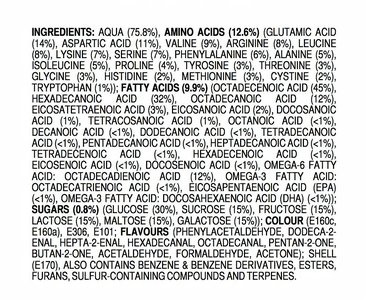
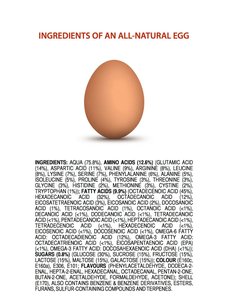
Biomolecules are composed of atoms bonded together in specific arrangements. The most common biomolecules include proteins, lipids, carbohydrates, and nucleic acids.
Proteins: Made of amino acids; perform structural and functional roles.
Lipids: Composed of fatty acids; important for energy storage and membrane structure.
Carbohydrates: Made of sugars; provide energy and structural support.
Nucleic Acids: DNA and RNA; store and transmit genetic information.
Cell Components
Structure of Eukaryotic Cells
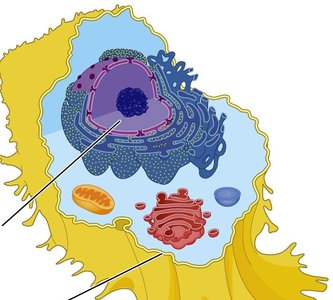
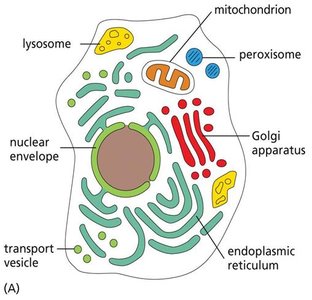
Eukaryotic cells contain membrane-bound organelles, each with specialized functions.
Nucleus: Contains DNA; controls cell activities.
Mitochondria: Site of cellular respiration; produces energy.
Golgi Apparatus: Modifies, sorts, and packages proteins and lipids.
Endoplasmic Reticulum: Synthesizes proteins and lipids.
Lysosomes: Digest cellular waste.
Peroxisomes: Break down fatty acids and detoxify chemicals.
Chemical Bonds
Types of Chemical Bonds
Atoms interact to achieve stable electron configurations, forming chemical bonds.
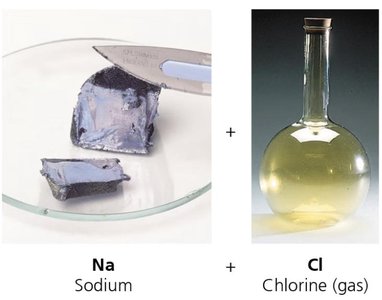
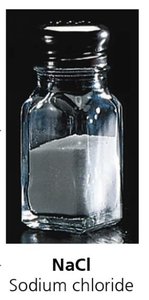
Ionic Bonds: Formed by transfer of electrons between atoms, resulting in charged ions.
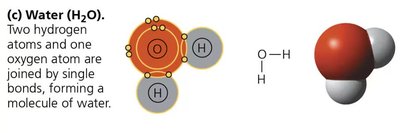
Covalent Bonds: Formed by sharing electrons between atoms; can be polar or nonpolar.
Bond Polarity and Electronegativity
Electronegativity is the ability of an atom to attract shared electrons. Differences in electronegativity determine bond polarity.
Nonpolar Covalent Bonds: Equal sharing of electrons; no charge difference.
Polar Covalent Bonds: Unequal sharing; partial charges (δ+ and δ-) develop.
Ionic Bonds: Large difference in electronegativity; complete transfer of electrons.
Additional info:
Biomolecules' polarity affects their solubility and interactions in biological systems.
Redox reactions involve electron transfer, important in metabolism.
