 Back
Fundamental Concepts in General Biology: Properties of Life, Biomolecules, Cells, and Chemical Bonds
Study Guide - Smart Notes
 Tailored notes based on your materials, expanded with key definitions, examples, and context.
Properties of Life
Defining Life
Biology seeks to understand what it means to be alive. Living organisms share several fundamental properties that distinguish them from non-living matter.
Reproduction/Self-Replication: The ability to produce offspring or replicate oneself is essential for life.
Requirement for Water and Nutrients: All living things need water and nutrients to sustain their biological processes.
Cellular Organization: Life is composed of cells, the basic unit of structure and function.
Response to Environment: Organisms can sense and respond to changes in their surroundings.
Information Storage: Genetic information is stored in DNA, enabling inheritance and regulation of cellular activities.
Energy Management (Metabolism): Living things can produce, store, and use energy, often through processes like respiration and photosynthesis.
Evolution: Populations of organisms evolve over time through natural selection and genetic variation.
Compartmentalization: Organisms differentiate their internal environment from the external environment, often via membranes.
Example: A bacterium reproduces, metabolizes nutrients, responds to environmental changes, and evolves, fulfilling all criteria for life.
Biomolecules: The Chemical Basis of Life
The Four Major Biomolecules
Biological functions are facilitated by four main types of biomolecules, each with distinct roles:
Lipids: Essential for membrane formation and compartmentalization; store more energy per gram than carbohydrates.
Carbohydrates: Serve as energy sources and structural components; heavier than lipids, so plants often store energy as fats.
Nucleic Acids: DNA and RNA store and transmit genetic information; substrates for evolution.
Proteins: Perform most cellular functions, including responses to environmental stimuli.
Example: Cell membranes are primarily composed of phospholipids, which create distinct internal and external environments.
Cell Structure and Types
Eukaryotic vs. Prokaryotic Cells
Cells are the smallest units of life. There are two main types:
Eukaryotic Cells: Contain a nucleus and various organelles; found in plants, animals, fungi, and protists.
Prokaryotic Cells: Lack a true nucleus; found in bacteria and archaea.
Comparison Table:
Feature | Eukaryotic Cells | Prokaryotic Cells |
|---|---|---|
Nucleus | Present | Absent |
Size | Larger | Smaller |
Organelles | Many | Few |
Examples | Plants, Animals | Bacteria, Archaea |
Additional info: Viruses, while containing genetic material and capable of evolution, are not considered alive because they cannot replicate independently.
Scientific Inquiry in Biology
The Scientific Method
Biologists use the scientific method to investigate natural phenomena:
Observation: Gathering information about the natural world.
Question: Formulating questions based on observations.
Hypothesis: Proposing possible explanations.
Prediction: Making testable predictions.
Experiment: Testing predictions with controlled experiments.
Data Collection: Recording and analyzing results.
Repetition: Repeating experiments to confirm findings.
Example: The beach mouse experiment demonstrates evolution by natural selection, where lighter-colored mice survive better on sandy beaches.
Chemical Context of Life
Atoms and Elements
All matter is composed of atoms, which are organized into elements. The most biologically important elements include hydrogen, carbon, nitrogen, oxygen, and phosphorus.
Atomic Structure: Atoms consist of protons, neutrons, and electrons. The outermost shell (valence shell) determines chemical reactivity.
Valence Electrons: Atoms seek to fill their valence shell, often leading to chemical bonding.
Example: Carbon has 6 protons, 6 neutrons, and 6 electrons; its chemical behavior is determined by its electrons.
Chemical Bonds
Atoms interact to form molecules through chemical bonds:
Covalent Bonds: Atoms share electrons. Can be polar (unequal sharing) or non-polar (equal sharing).
Polar Covalent Bonds: One atom attracts electrons more strongly, creating partial charges.
Non-Polar Covalent Bonds: Electrons are shared equally.
Ionic Bonds: One atom completely transfers electrons to another, resulting in oppositely charged ions (cation and anion) that attract each other.
Electronegativity: The tendency of an atom to attract electrons. Oxygen is highly electronegative; potassium is less so.
Bond Type Determination: The difference in electronegativity between atoms determines the bond type:
Small difference: Non-polar covalent
Moderate difference: Polar covalent
Large difference: Ionic
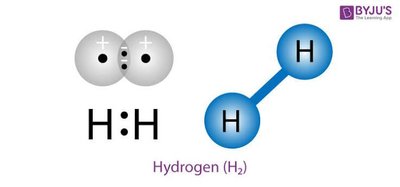
Example: Hydrogen gas (H2) is formed by a non-polar covalent bond, where two hydrogen atoms share electrons equally.
Additional info: Noble gases have full valence shells and do not typically participate in chemical reactions relevant to biology.
Summary Table: Properties of Life and Biomolecules
Property of Life | Associated Biomolecule | Example |
|---|---|---|
Reproduction | Nucleic acids | DNA replication |
Energy Management | Lipids, Carbohydrates | ATP production |
Response to Environment | Proteins | Enzyme activity |
Compartmentalization | Lipids | Cell membrane |
