 Back
Fundamentals of Biology: Chemistry of Life, Water, Macromolecules, and Cell Structure
Study Guide - Smart Notes
 Tailored notes based on your materials, expanded with key definitions, examples, and context.
Chemistry of Life
Elements and Atoms
The foundation of biological systems is built upon chemical elements and their atomic structure. Understanding the composition and behavior of atoms is essential for grasping biological processes.
Element: A substance made up of one type of atom, characterized by a unique number of protons.
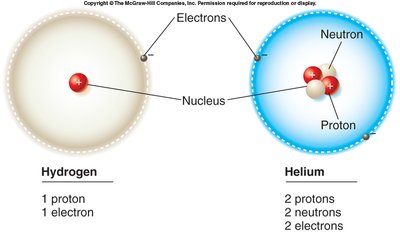
Atoms: Composed of protons (positive), neutrons (neutral), and electrons (negative).
Isotopes: Atoms of the same element with different numbers of neutrons.
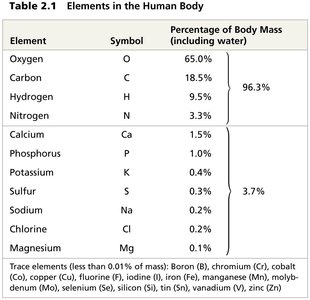
Major elements in living organisms: Oxygen, Carbon, Hydrogen, and Nitrogen make up 96.3% of body mass; other elements like Calcium, Phosphorus, Potassium, Sulfur, Sodium, Chlorine, and Magnesium are also essential.
Atomic Structure and Electron Configuration
The arrangement of electrons in shells and orbitals determines how atoms interact and form molecules.
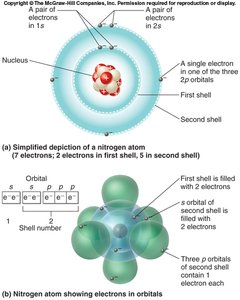
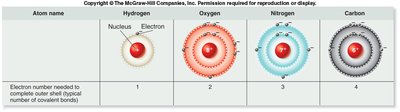
Electron shells: Electrons occupy shells around the nucleus; the first shell holds 2 electrons, the second and third hold 8 each.
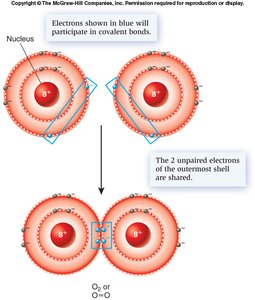
Valence electrons: Electrons in the outermost shell are involved in chemical bonding.
Chemical Bonds
Atoms form molecules through various types of bonds, which differ in electron sharing and strength.
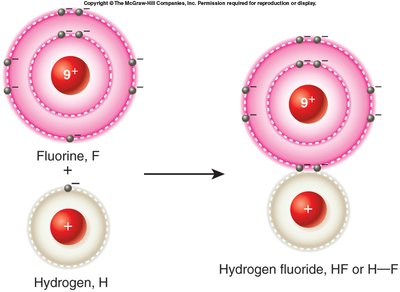
Covalent bonds: Atoms share electrons; can be single, double, or triple bonds.
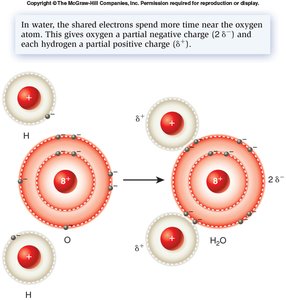
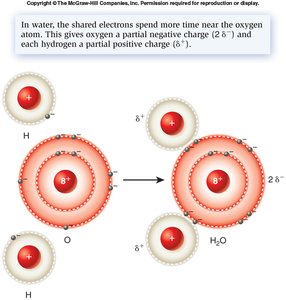
Polar covalent bonds: Unequal sharing of electrons, resulting in partial charges (e.g., water).
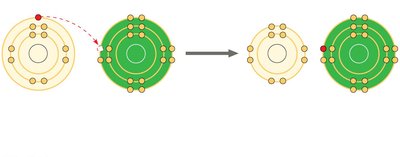
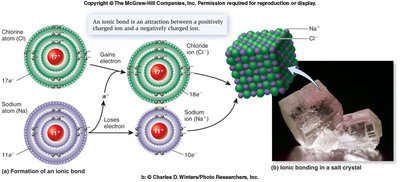
Ionic bonds: Electrons are transferred, creating charged ions that attract each other.
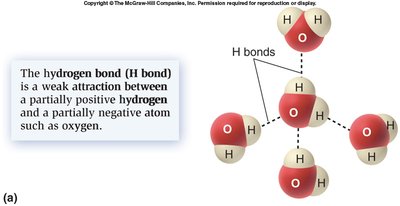
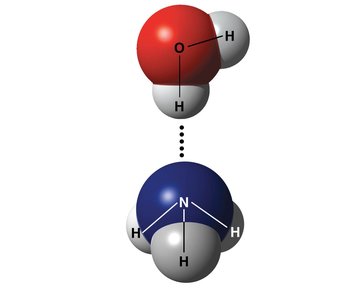
Hydrogen bonds: Weak attractions between partially positive hydrogen and partially negative atoms (often oxygen or nitrogen).
Properties of Water
Unique Characteristics of Water
Water is vital for life due to its chemical and physical properties, which arise from its molecular structure and hydrogen bonding.
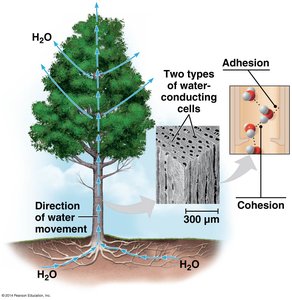
Cohesion: Water molecules stick together due to hydrogen bonds.
Adhesion: Water molecules stick to other substances.
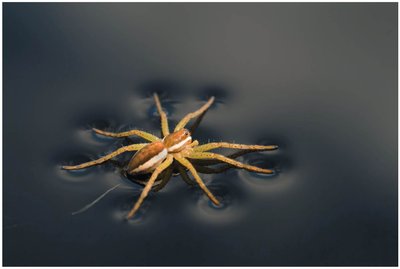
Surface tension: The cohesive forces at the surface of water create a "skin" that resists external force.
Density: Water is denser as a liquid than as a solid, allowing ice to float.
Solvent properties: Water dissolves many substances, especially ionic and polar molecules.

Hydrophilic, Hydrophobic, and Amphipathic Molecules
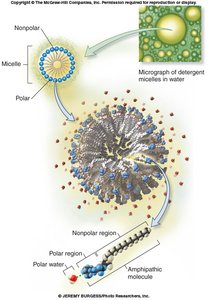
Hydrophilic: Molecules with ionic or polar covalent bonds dissolve well in water.
Hydrophobic: Nonpolar molecules do not dissolve well in water.
Amphipathic: Molecules with both hydrophilic and hydrophobic regions (e.g., phospholipids, detergents).
Acids, Bases, and pH
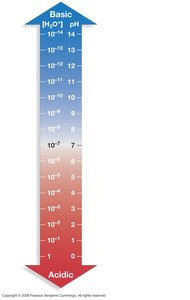
The concentration of hydrogen ions in a solution determines its acidity or basicity, measured by pH.
Acids: Increase H+ concentration.
Bases: Increase OH- concentration.
pH:
Neutral pH: 7; acidic pH < 7; basic pH > 7.
Carbon and Molecular Diversity
Importance of Carbon
Carbon's ability to form four covalent bonds makes it the backbone of organic molecules, allowing for a vast diversity of structures.
Carbon skeletons: Can be straight, branched, or ring-shaped.
Functional groups: Specific groups of atoms attached to carbon skeletons that determine chemical properties (e.g., amino, carboxyl, hydroxyl, phosphate, sulfhydryl).
Isomers
Structural isomers: Same molecular formula, different arrangement.
Enantiomers: Mirror-image isomers, often with different biological activity.
Macromolecules
Carbohydrates
Carbohydrates are energy sources and structural materials, composed of monosaccharides, disaccharides, and polysaccharides.
Monosaccharides: Simple sugars (e.g., glucose, fructose).
Disaccharides: Two monosaccharides joined by glycosidic linkage (e.g., sucrose, maltose).
Polysaccharides: Long chains of monosaccharides (e.g., starch, glycogen, cellulose, chitin).
Proteins
Proteins are polymers of amino acids, performing diverse functions such as catalysis, structure, transport, and signaling.
Amino acids: 20 types, each with a unique R group.
Peptide bonds: Link amino acids in polypeptide chains.
Levels of structure: Primary (sequence), secondary (alpha helix, beta sheet), tertiary (3D folding), quaternary (multiple polypeptides).
Nucleic Acids
Nucleic acids (DNA and RNA) store and transmit genetic information.
Nucleotides: Monomers composed of a sugar, phosphate group, and nitrogenous base.
DNA: Double helix, stores genetic information.
RNA: Single-stranded, involved in protein synthesis.
Base pairing: Adenine with thymine (DNA), guanine with cytosine.
Cell Structure and Function
Cell Types
Cells are the basic units of life, with structure correlating to function.
Prokaryotic cells: Lack a membrane-bound nucleus; include Bacteria and Archaea.
Eukaryotic cells: Have a nucleus and membrane-bound organelles; include plants, animals, fungi, and protists.
Organelles and Their Functions
Nucleus: Stores genetic material.
Ribosomes: Protein synthesis.
Endoplasmic reticulum (ER): Rough ER synthesizes proteins; smooth ER synthesizes lipids and detoxifies.
Golgi apparatus: Modifies, sorts, and ships proteins.
Lysosomes: Digestion and waste processing.
Mitochondria: ATP production (cellular respiration).
Chloroplasts: Photosynthesis in plants and algae.
Cytoskeleton: Structural support, movement, and transport.
Membrane Structure and Function
Phospholipid bilayer: Forms the basic structure of cell membranes; amphipathic nature allows selective permeability.
Membrane proteins: Integral and peripheral proteins facilitate transport, signaling, and structural support.
Transport mechanisms: Diffusion, osmosis, facilitated diffusion, and active transport.
Cell Communication and Homeostasis
Cell Signaling
Cells communicate to coordinate activities and respond to environmental changes.
Direct intercellular signaling: Via cell junctions.
Contact-dependent signaling: Surface-bound molecules.
Autocrine and paracrine signaling: Local signaling.
Endocrine signaling: Long-distance signaling via hormones.
Signal Transduction Pathways
Reception: Signal molecule binds to receptor.
Transduction: Cascade of molecular events.
Response: Alteration of cellular activity (enzyme function, gene expression, etc.).
Homeostasis
Homeostasis is the maintenance of a stable internal environment through feedback mechanisms.
Negative feedback: Counteracts changes to maintain stability.
Positive feedback: Amplifies changes.
Component | Function |
|---|---|
Receptor | Detects change |
Control Center | Processes information |
Effector | Executes response |
Example: Calcium homeostasis regulated by parathyroid hormone and calcitonin. Additional info: These notes cover the foundational chapters of General Biology, including chemistry of life, water properties, macromolecules, cell structure, membrane function, and cell communication. Images included are directly relevant to the explanations and reinforce key concepts.
