 Back
BackFundamentals of Biology I: Introduction, Properties of Life, and Scientific Method CHP 1
Study Guide - Smart Notes
 Tailored notes based on your materials, expanded with key definitions, examples, and context.
Introduction to Biology
What is Biology?
Biology is the scientific study of life, encompassing the structure, function, growth, origin, evolution, and distribution of living organisms. It is a foundational science for understanding the natural world and is essential for many fields, including medicine, ecology, and biotechnology.
Life is characterized by several key properties: membrane delimitation, information storage and transmission, energy storage and usage, self-replication, responsiveness to the environment, and evolution.
The cell is the smallest unit of life, capable of performing all life functions.
Organisms are all descendants from a common ancestor and are part of ecosystems, evolving in response to environmental changes.

Course Structure and Success Strategies
Success in General Biology requires active engagement with course materials, regular study, and participation in group activities. The course utilizes Canvas, McGraw-Hill textbook, Simbio, and iClicker for interactive learning.
Assignments and quizzes are managed through Canvas and McGraw-Hill.
Group work and iClicker activities encourage collaborative learning and critical thinking.
Effective study practices include concept mapping, flash cards, self-testing, and regular review.

Properties of Life
Defining Life
Life is defined by a set of properties that distinguish living organisms from non-living matter. These properties are facilitated by biomolecules and cellular structures.
Membrane delimitation: Cells are surrounded by membranes that separate internal and external environments.
Information storage and transmission: Genetic material (DNA/RNA) encodes instructions for cellular function.
Energy storage and usage: Organisms store energy (e.g., ATP, glucose) and use it for metabolic processes.
Self-replication: Cells and organisms reproduce, passing genetic information to offspring.
Responsiveness: Organisms sense and respond to environmental stimuli.
Evolution: Populations change over time through natural selection and genetic variation.
Organisms and Evolution
All organisms share a common ancestry and are shaped by evolutionary processes. The diversity of life is a result of adaptation to changing environments and ecological interactions.
Form and function are related; adaptations enhance survival and reproduction.
Organisms influence and are influenced by their ecosystems.
The Tree of Life illustrates evolutionary relationships among all living organisms.
Scientific Inquiry in Biology
The Scientific Method
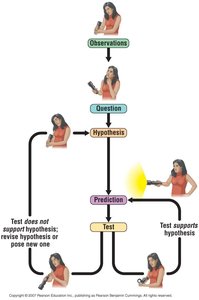
The scientific method is a systematic approach to investigating questions about the natural world. It involves observation, hypothesis formation, prediction, experimentation, and analysis.
Observation: Gathering information about phenomena.
Question: Identifying a problem or area of curiosity.
Hypothesis: Proposing a testable explanation.
Prediction: Making logical forecasts based on the hypothesis.
Experiment: Testing predictions with controlled variables.
Analysis: Interpreting results to support or refute the hypothesis.
Repeat: Modifying, extending, or rejecting hypotheses based on results.

Controls in Experiments
A control group is used in experiments to minimize the effects of variables other than the independent variable. This increases the reliability of results by providing a baseline for comparison.
Independent variable: The factor being tested or manipulated.
Dependent variable: The result or change measured in response to the independent variable.
Controls help distinguish the effect of the independent variable from other influences.
Experimental Variable (Independent Variable) | Responding Variable (Dependent Variable) |
|---|---|
Factor of the experiment being tested | Result or change that occurs due to the experimental variable |

Example of Scientific Method Application
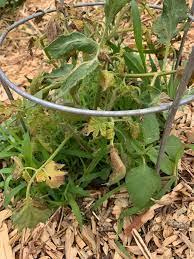
Consider the scenario: A neighbor's plants are thriving while yours are not. You hypothesize that soil quality is the cause. You predict that adding fertilizer will improve plant growth, then test this by applying fertilizer and measuring tomato yield.
Observation: Neighbor's plants are healthier.
Hypothesis: Soil quality affects plant growth.
Prediction: Fertilizer will increase tomato yield.
Experiment: Add fertilizer and measure results.
Control group: Plants grown without fertilizer.
Independent variable: Fertilizer application.
Dependent variable: Tomato yield.

Variables in Experiments
Understanding variables is crucial for designing experiments and interpreting results.
Independent variable: The factor intentionally changed by the experimenter.
Dependent variable: The outcome measured in response to changes in the independent variable.
Example: In a cake recipe experiment, the independent variable is the addition of baking powder; the dependent variable is the cake's texture.
Data Presentation and Graphs
Types of Graphs
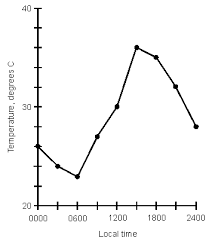
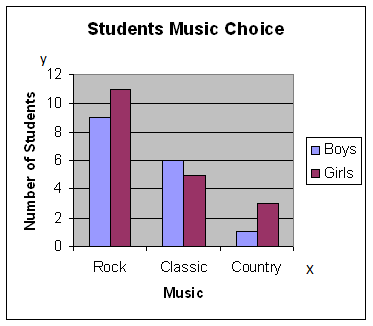
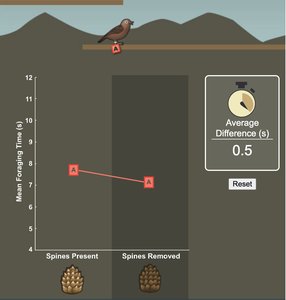
Graphs are used to visually represent data and relationships between variables. Common types include line graphs, bar graphs, and scatter plots.
Horizontal axis (x-axis): Represents the independent variable (e.g., time).
Vertical axis (y-axis): Represents the dependent variable (e.g., growth, temperature).
Graphs help identify trends, patterns, and correlations in data.
Effective Study Practices
Strategies for Success
Developing effective study habits is essential for mastering biology concepts and performing well in exams.
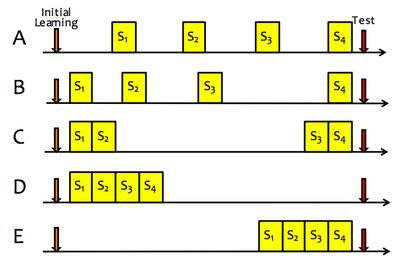
Establish a regular study schedule and review materials frequently.
Join study groups and attend office hours for collaborative learning.
Use concept maps, flash cards, and self-testing to reinforce understanding.
Apply information by explaining concepts to others without notes.
Summary Table: Key Concepts
Concept | Definition | Example |
|---|---|---|
Cell | Smallest unit of life | Bacterial cell |
Evolution | Change in populations over time | Natural selection |
Scientific Method | Systematic approach to inquiry | Testing fertilizer effect on plants |
Control Group | Baseline for comparison | Plants without fertilizer |
Independent Variable | Factor changed in experiment | Amount of fertilizer |
Dependent Variable | Measured outcome | Tomato yield |
Additional info: These notes provide foundational concepts for General Biology, including the properties of life, scientific inquiry, and effective study practices. Understanding these principles is essential for success in subsequent biology courses and standardized exams.
