 Back
Fungi and Pollination: Structure, Function, and Ecological Roles
Study Guide - Smart Notes
 Tailored notes based on your materials, expanded with key definitions, examples, and context.
Fungal Biology
Key Features of Fungi
Fungi are a diverse group of eukaryotic organisms with unique nutritional strategies, structural adaptations, and life cycles. They play essential roles in ecosystems as decomposers, parasites, mutualists, and even predators.
Nutrition: All fungi are absorptive heterotrophs, meaning they absorb small organic compounds from their environment for energy and carbon. Many secrete enzymes to break down complex molecules.
Structure: Fungi may be unicellular (yeasts) or multicellular. Multicellular fungi are composed of tubular filaments called hyphae, which collectively form a mycelium.
Cell Wall: Fungal cell walls contain chitin, a nitrogen-containing polysaccharide.
Life Cycles: Fungi reproduce both sexually and asexually, often producing haploid spores. Most of their life cycle is haploid, with a brief diploid stage following nuclear fusion.
Example: The structure of a typical mushroom includes the fruiting body above ground and a vast network of mycelium below ground.
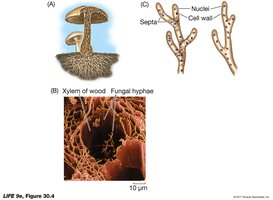
Fungal Body Forms
Fungi exhibit two main body forms: unicellular (yeasts) and multicellular (filamentous).
Unicellular Fungi (Yeasts): Rare in fungi, evolved multiple times independently.
Multicellular Fungi: Made up of hyphae. Hyphae may be septate (divided by cross-walls called septa) or coenocytic (lacking septa, with many nuclei in a single cell).
Example: The fruiting body of a fungus, such as the illustrated mushroom, is only a small part of the total fungal biomass.
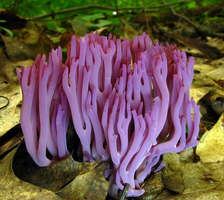
Fungal Ecological Roles
Fungi are principal decomposers, breaking down cellulose, lignin, and keratin. They recycle nutrients, aid in soil formation, and return carbon to the atmosphere.
Decomposers: Break down dead organic matter.
Parasites/Pathogens: Absorb nutrients from living hosts, sometimes causing disease.
Mutualists: Form beneficial relationships with plants (mycorrhizae), algae, or cyanobacteria (lichens).
Predators: Some fungi trap and consume small animals, such as nematodes.
Pollination in Angiosperms
Transfer of Pollen Among Plants
Pollination is the movement of male microgametophytes (pollen) to the female gametophyte within the carpel. The vector for pollination (wind, water, animals) strongly influences flower evolution.
Wind Pollination: Characteristic of ~20% of angiosperms, including all grasses. Wind-pollinated flowers are small, inconspicuous, and produce large amounts of pollen due to inefficiency.
Water Pollination: Rare, occurs in aquatic angiosperms. Pollen grains are adapted to drift in water.
Animal Pollination: Most angiosperms (~80%) rely on animals. Flowers evolve traits to attract pollinators, such as color, scent, and nectar.
Example: Grasses release clouds of pollen into the air, which can cause allergies in humans.
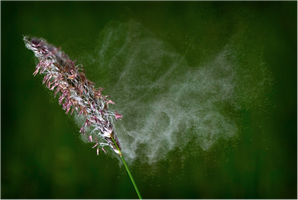
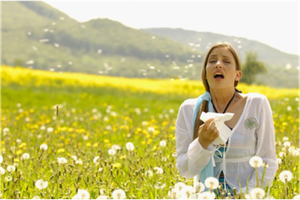
Wind Pollination
Wind-pollinated plants produce large quantities of pollen, which is carried by air currents. Most pollen does not reach its target, so these plants compensate by sheer volume.
Flower Traits: Small, green, scentless flowers.
Efficiency: Low; most pollen is lost.
Examples: Grasses, many trees.
Essential Vocabulary
Hyphae: Tubular filaments that make up the body of multicellular fungi.
Mycelium: Mass of hyphae forming the fungal body.
Chitin: Structural polysaccharide in fungal cell walls.
Septate Hyphae: Hyphae divided by septa (cross-walls).
Coenocytic Hyphae: Hyphae lacking septa, containing many nuclei.
Fruiting Body: Reproductive structure of multicellular fungi (e.g., mushroom).
Absorptive Heterotroph: Organism that absorbs nutrients from its environment.
Pollination: Transfer of pollen from male to female reproductive structures in plants.
Summary Table: Fungal Body Forms
Body Form | Structure | Key Features | Examples |
|---|---|---|---|
Unicellular (Yeast) | Single cell | Rare, evolved multiple times | Saccharomyces cerevisiae |
Multicellular | Hyphae, mycelium | Septate or coenocytic hyphae | Mushrooms, molds |
Summary Table: Pollination Vectors
Vector | Flower Traits | Efficiency | Examples |
|---|---|---|---|
Wind | Small, green, scentless | Low | Grasses, trees |
Water | Small, inconspicuous | Very low | Seagrasses |
Animals | Colorful, scented, nectar | High | Bees, birds, bats |
Additional info: Academic context was added to clarify fungal structure, pollination mechanisms, and ecological roles. Images were included only where directly relevant to the explanation of fungal structure and wind pollination.
