 Back
BackFungi: Structure, Function, and Diversity
Study Guide - Smart Notes
 Tailored notes based on your materials, expanded with key definitions, examples, and context.
Chapter 29: Fungi
Introduction to Fungi
Fungi are a diverse group of eukaryotic organisms that play critical roles in terrestrial ecosystems as decomposers, mutualists, and sometimes pathogens. They can exist as single cells (yeasts) or as complex multicellular structures composed of filaments called hyphae. Fungi are essential for nutrient cycling and have profound impacts on ecosystem productivity and biodiversity.
Why Do Biologists Study Fungi?
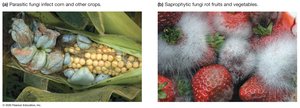
Medical and Agricultural Importance: Fungi can cause diseases in humans and plants, leading to significant health and economic impacts. For example, rusts, smuts, and mildews cause crop losses, while some fungi are sources of antibiotics like penicillin.
Ecological Roles: Fungi are major decomposers, breaking down dead organic matter and recycling nutrients, especially carbon, in ecosystems.
Mutualistic Relationships: Many fungi form beneficial associations with plants (mycorrhizae) and animals, enhancing nutrient uptake and digestion.
Economic and Ecological Impacts of Fungi
Negative Impacts: Fungi cause diseases in crops and humans, and spoil food products.
Positive Impacts: Fungi are used in food production (e.g., bread, cheese, beer, wine), fermentation (e.g., chocolate), and as sources of industrial enzymes and antibiotics.
Mycorrhizal Fungi and Plant Growth
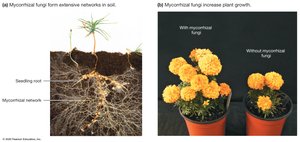
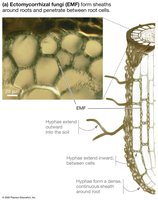
Mycorrhizal fungi form close associations with plant roots, enhancing water and nutrient uptake. These relationships are crucial for plant health and productivity, especially in nutrient-poor soils.
Fungi and the Carbon Cycle
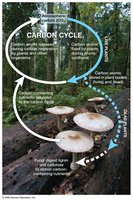
Saprophytic fungi decompose dead plant material, accelerating the carbon cycle by releasing carbon dioxide through cellular respiration. This process is essential for nutrient cycling in terrestrial ecosystems.
Fungal Structure and Growth
Morphological Traits
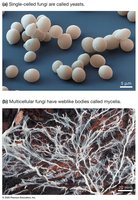
Yeasts: Single-celled fungi that reproduce by budding.
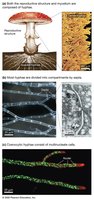
Mycelia: Multicellular, filamentous structures composed of hyphae. Mycelia have a high surface-area-to-volume ratio, making nutrient absorption efficient but increasing susceptibility to desiccation.
Hyphae and Mycelium
Hyphae: Long, narrow filaments that make up the mycelium. They may be divided by septa (cross-walls) with pores or be coenocytic (lacking septa, multinucleate).
Dynamic Growth: Mycelia grow toward food sources and die back where nutrients are depleted.
Reproductive Structures in Fungi
Fungi reproduce both sexually and asexually, producing various types of spores. Four main sexual reproductive structures are observed:
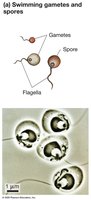
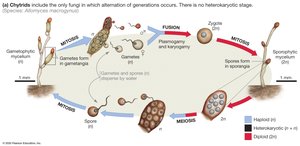
Swimming gametes and spores: Motile cells with flagella (chytrids).
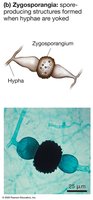
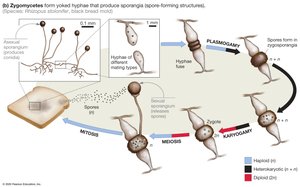
Zygosporangia: Thick-walled, spore-producing structures formed by fusion of hyphae (zygomycetes).
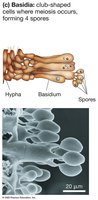
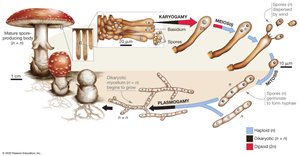
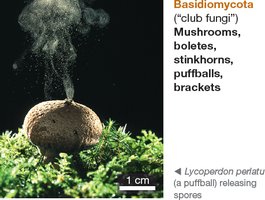
Basidia: Club-shaped cells where meiosis occurs, producing four spores (basidiomycetes).
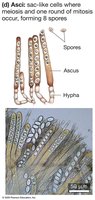
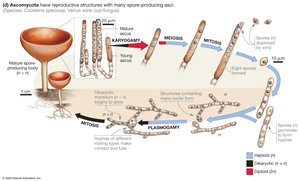
Asci: Sac-like cells where meiosis and mitosis occur, producing eight spores (ascomycetes).
Asexual Reproduction
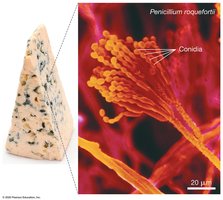
Many fungi produce asexual spores called conidia, which are dispersed by wind or water and germinate under favorable conditions.
Fungal Phylogeny and Evolution
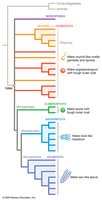
Fungi Are Closely Related to Animals
Shared Traits: Both fungi and animals synthesize chitin, have similar flagella in some cells, and store glucose as glycogen.
Phylogenetic Evidence: DNA sequence data supports a close evolutionary relationship between fungi and animals.
Fungal Symbioses and Ecological Roles
Symbiotic Relationships
Mutualism: Both partners benefit (e.g., mycorrhizal fungi and plants).
Parasitism: One partner benefits at the expense of the other.
Commensalism: One partner benefits, the other is unaffected.
Experimental Evidence for Mutualism
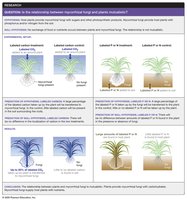
Experiments using radioactively labeled carbon dioxide demonstrate that plants transfer carbon compounds to their fungal symbionts, confirming the mutualistic nature of mycorrhizal associations.
Types of Mycorrhizal Fungi
Ectomycorrhizal Fungi (EMF): Form dense networks around roots but do not penetrate root cells. They help plants absorb amino acids and phosphate ions.
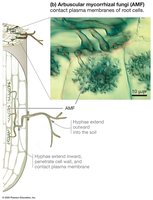
Arbuscular Mycorrhizal Fungi (AMF): Penetrate root cell walls, increasing surface area for nutrient exchange. They are especially important in grasslands and tropical forests.
Endophytes and Other Symbioses
Endophytes: Fungi living inside plant tissues, often conferring drought tolerance or protection from herbivores.
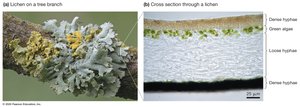
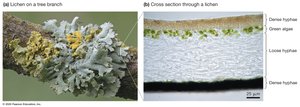
Lichens: Mutualistic associations between ascomycete fungi and cyanobacteria or green algae.
Insect Symbioses: Some insects harbor fungi for digestion or cultivate fungal gardens.
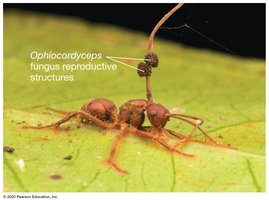
Parasitic Fungi: Some fungi manipulate host behavior, such as the "zombie ant" fungus.
Fungi as Decomposers
Extracellular Digestion
Fungi secrete enzymes to digest complex organic molecules outside their bodies. The resulting simple compounds are absorbed by hyphae. Key substrates include lignin and cellulose, the main components of plant cell walls.
Lignin Degradation: Lignin peroxidase breaks down lignin, exposing cellulose for further digestion.
Cellulose Digestion: Cellulases convert cellulose into glucose, which fungi can absorb and metabolize.
Fungal Life Cycles
General Features
Sexual reproduction often involves a heterokaryotic stage (cells with two or more genetically distinct nuclei).
Life cycles vary among major fungal groups.
Chytrid Life Cycle
Chytrids are unique among fungi in exhibiting alternation of generations, with both haploid and diploid multicellular stages. Motile gametes and spores are produced.
Zygomycete Life Cycle
Zygomycetes reproduce sexually by forming zygosporangia, which are resistant to harsh conditions. Asexual reproduction via sporangia is also common.
Basidiomycete Life Cycle
Basidiomycetes (club fungi) produce mushrooms as reproductive structures. Dikaryotic hyphae form basidia, where karyogamy and meiosis occur, producing four haploid spores.
Ascomycete Life Cycle
Ascomycetes (sac fungi) form asci, where karyogamy, meiosis, and mitosis produce eight haploid spores. Many ascomycetes also reproduce asexually.
Key Lineages of Fungi
Lineage | Main Features | Ecological Role | Example |
|---|---|---|---|
Microsporidia | Single-celled, parasitic, possess polar tube for host invasion | Animal parasites |
|
Chytrids | Aquatic, motile gametes and spores, digest cellulose | Decomposers, parasites |
|
Zygomycetes | Soil-dwellers, form zygosporangia, asexual reproduction common | Saprophytes, parasites |
|
Glomeromycota | Arbuscular mycorrhizal fungi, penetrate root cells | Mutualists with plants |
|
Basidiomycota | Form basidia, produce mushrooms, lignin decomposers | Decomposers, mutualists, parasites |
|
Ascomycota | Form asci, include yeasts, lichens, many reproduce asexually | Mutualists, decomposers, parasites, predators |
|
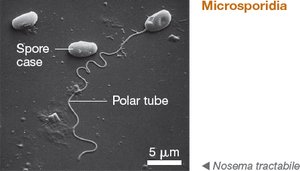
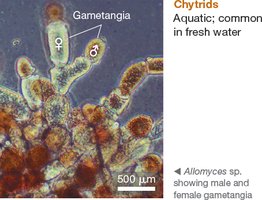
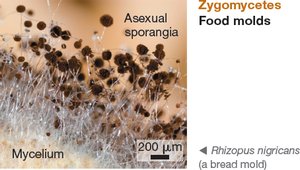
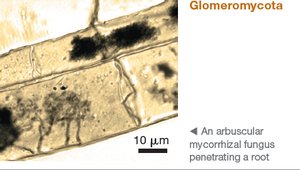
Additional info: The classification and evolutionary relationships of fungi are continually refined as new molecular data become available. Chytrids and zygomycetes are not monophyletic groups.
