 Back
BackFungi: Structure, Function, and Reproduction (Campbell Biology Ch. 31)
Study Guide - Smart Notes
 Tailored notes based on your materials, expanded with key definitions, examples, and context.
Fungi: Structure, Function, and Reproduction
Concept: Fungi
Fungi are a diverse group of heterotrophic eukaryotes that play essential roles in ecosystems as decomposers, mutualists, and parasites. Their unique biology and reproductive strategies distinguish them from other kingdoms.
Heterotrophic Eukaryotes: Fungi obtain nutrients by absorbing organic material from their environment. They generally possess haploid nuclei and are the main decomposers in many ecosystems.
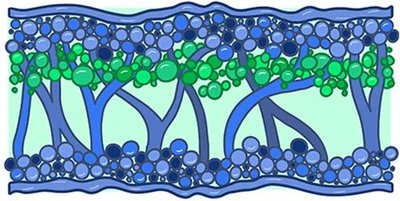
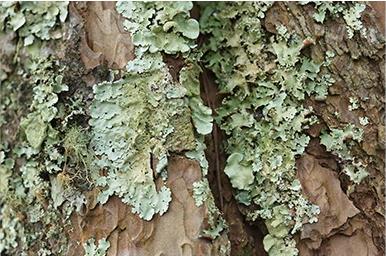
Mutualists: Some fungi form symbiotic relationships that benefit both partners. Examples include endophytes (fungi living inside plants) and lichens (associations between fungi and algae or cyanobacteria).
Symbioses: Fungi can have obligate (required) or facultative (optional) symbiotic relationships.
Parasites: Many fungi infect plants and animals, causing diseases known as mycoses.
Decomposers: Fungi digest plant material (cellulose and lignin), moving carbon through the carbon cycle. Saprophytes feed on dead plant matter.
Yeast: Unicellular fungi important in food production (bread, beer).
Fungal Mutualisms
Fungi often form mutualistic relationships with other organisms, providing benefits such as nutrient exchange and protection.
Lichens: Symbiotic association between a fungus and a photosynthetic partner (algae or cyanobacteria).
Endophytes: Fungi living within plant tissues, often enhancing plant resistance to stress.
Fungal Structure
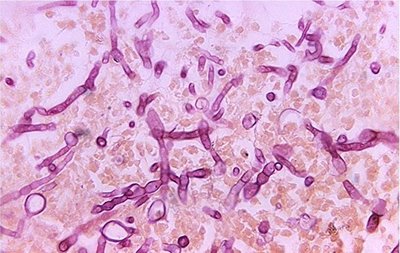
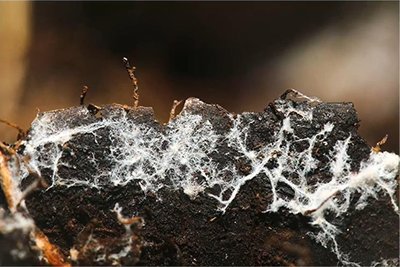
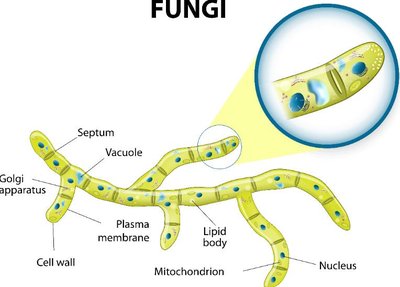
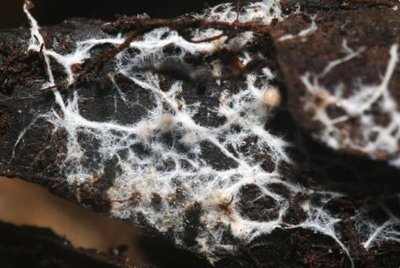
The basic structural unit of fungi is the hypha, a filamentous cell surrounded by a cell wall. Fungi grow as networks of hyphae called mycelia, which maximize surface area for nutrient absorption.
Hypha: Long, filamentous structure; can be divided by septa (cross walls) or be coenocytic (continuous cytoplasm).
Chitin: Main component of fungal cell walls, a polymer of modified β-glucose.
Mycelium: Interwoven mass of hyphae forming the main body of the fungus.
Extracellular Digestion: Fungi release enzymes to break down organic matter and absorb nutrients.
Specialized Fungal Structures
Fungi have evolved specialized structures for nutrient acquisition and symbiosis with plants.
Haustoria: Specialized hyphal tips that penetrate plant cells to extract nutrients.
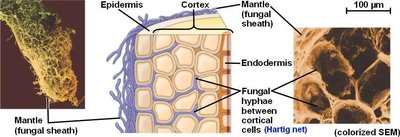
Mycorrhizae: Symbiotic association between fungi and plant roots, enhancing nutrient uptake.
Ectomycorrhizae: Fungal hyphae form a sheath around roots but do not penetrate cell walls.
Arbuscular (Endomycorrhizal) Fungi: Hyphae penetrate root cortical cells.
Fungal Reproduction
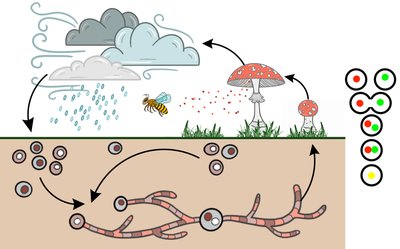
Fungi reproduce both sexually and asexually, always using spores. Their reproductive cycles are complex and involve unique cellular processes.
Spores: Reproductive cells produced in both sexual and asexual cycles.
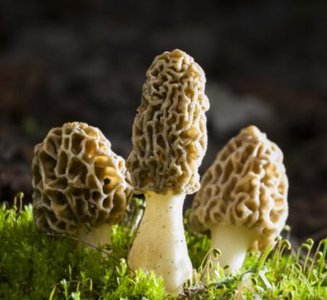
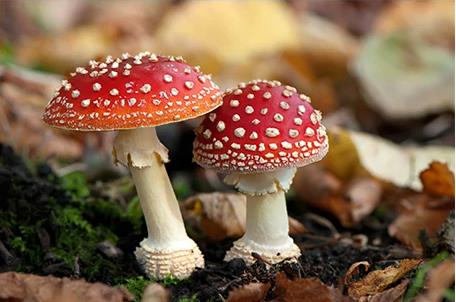
Fruiting Body: Structure that produces spores (e.g., mushrooms).
Deuteromycetes: Fungi that reproduce only asexually.
Mating Types: Fungi have many mating types, identified by pheromones rather than morphological differences.
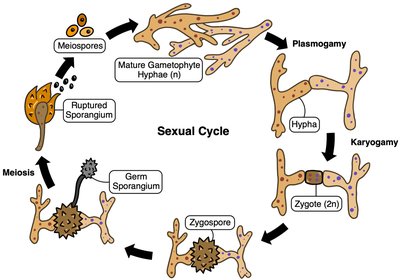
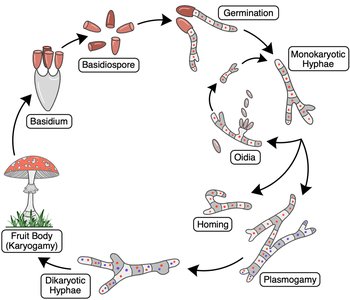
Plasmogamy: Fusion of cytoplasm from two parent cells (without nuclear fusion).
Heterokaryotic: Cells with two or more genetically distinct nuclei (n + n).
Dikaryotic: Cells with two nuclei.
Karyogamy: Fusion of nuclei to form a diploid zygote, which produces spores.
Fungal Groups and Their Reproduction
Major fungal groups differ in their reproductive structures and cycles.
Chytrids: Only fungi with alternation of generations; produce flagellated spores (zoospores).
Zygomycetes: Plasmogamy leads to formation of zygosporangium, where karyogamy occurs. Asexual reproduction via sporangiophores.
Basidiomycota: Dikaryotic hyphae form basidia, where karyogamy and spore production occur. Fruiting body is called basidiocarp.
Ascomycota: Dikaryotic hyphae form asci, each producing eight haploid ascospores. Fruiting body is called ascocarp. Conidia are asexual spores.
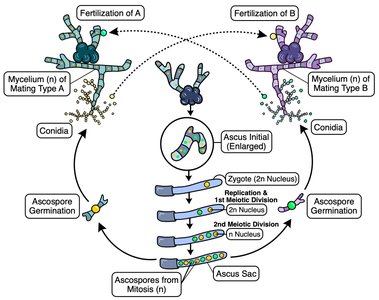
Summary Table: Major Fungal Groups
Group | Key Reproductive Structure | Spore Type | Unique Features |
|---|---|---|---|
Chytrids | Zoosporangium | Zoospores (flagellated) | Alternation of generations |
Zygomycetes | Zygosporangium | Sporangia, zygospores | Coenocytic hyphae |
Basidiomycota | Basidiocarp (fruiting body) | Basidiospores | Dikaryotic hyphae, basidia |
Ascomycota | Ascocarp (fruiting body) | Ascospores, conidia | Asci, eight spores per ascus |
Key Terms and Definitions
Hypha: Filamentous cell of fungi.
Mycelium: Mass of hyphae forming the fungal body.
Chitin: Structural polysaccharide in fungal cell walls.
Plasmogamy: Fusion of cytoplasm from two parent cells.
Karyogamy: Fusion of nuclei to form a diploid zygote.
Haustoria: Specialized hyphal tips for nutrient extraction.
Mycorrhizae: Symbiotic association between fungi and plant roots.
Ascocarp: Fruiting body of ascomycetes.
Basidiocarp: Fruiting body of basidiomycetes.
Equations and Formulas
Heterokaryotic Stage:
Dikaryotic Stage:
Diploid Zygote:
Additional info: Academic context was added to clarify fungal reproductive cycles, mutualisms, and structural terminology.
