 Back
BackFungi: Structure, Function, Diversity, and Ecological Roles
Study Guide - Smart Notes
 Tailored notes based on your materials, expanded with key definitions, examples, and context.
Fungi: Structure, Function, Diversity, and Ecological Roles
Introduction to Fungi
Fungi are a diverse kingdom of eukaryotic organisms that play essential roles in ecosystems as decomposers, mutualists, and pathogens. They are heterotrophs that feed by absorption, using hydrolytic enzymes to break down complex organic matter. Fungi exhibit a variety of body structures and reproductive strategies, and their evolutionary history reveals close relationships with animals.
Fungal Nutrition and Ecological Roles
Modes of Nutrition
Heterotrophy: Fungi absorb nutrients from their environment by secreting enzymes that break down complex molecules into smaller, absorbable compounds.
Decomposers: Break down nonliving organic material, recycling nutrients in ecosystems.
Parasitic Fungi: Absorb nutrients from living hosts, often causing disease.
Mutualistic Fungi: Form beneficial relationships with other organisms, exchanging nutrients for other resources or services.
Fungal Body Structure
Hyphae and Mycelium
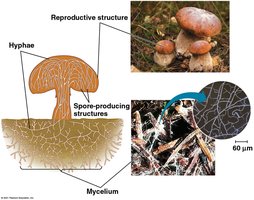
The main body of most fungi consists of a network of filaments called hyphae. These hyphae form an interwoven mass known as the mycelium, which maximizes surface area for absorption. Fungi may also exist as single cells called yeasts, especially in moist environments rich in nutrients.
Cell Wall Composition
Fungal cell walls are rich in chitin, a strong, flexible polysaccharide that prevents cell lysis during nutrient absorption.
Septa and Coenocytic Hyphae
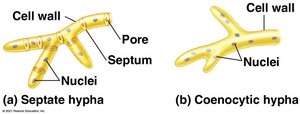
Hyphae may be divided by cross-walls called septa, which have pores allowing movement of organelles. Some fungi lack septa, resulting in coenocytic hyphae—continuous cytoplasmic masses with many nuclei.
Specialized Hyphae
Some fungi have specialized hyphae for feeding on living animals or for extracting nutrients from plants (e.g., haustoria).
Mycorrhizae and Arbuscules
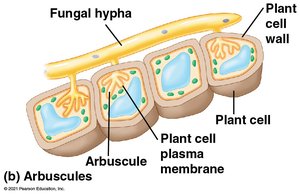
Mutualistic associations between fungi and plant roots are called mycorrhizae. Specialized hyphae called arbuscules penetrate plant cell walls (but not membranes) to facilitate nutrient exchange.
Fungal Reproduction
Spore Production and Life Cycles
Fungi reproduce by producing vast numbers of spores, which can be dispersed by wind or water. Spores germinate in suitable environments to form new mycelia. Fungi may reproduce sexually, asexually, or both.
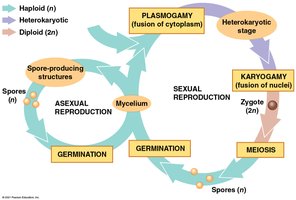
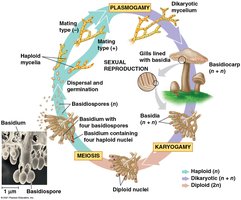
Sexual Reproduction: Involves fusion of hyphae from different mating types, followed by plasmogamy (fusion of cytoplasm), a heterokaryotic stage (coexisting nuclei), karyogamy (fusion of nuclei), and meiosis to produce genetically diverse spores.
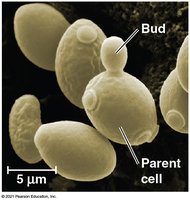
Asexual Reproduction: Molds produce haploid spores by mitosis; yeasts reproduce by simple cell division or budding.
Evolution and Phylogeny of Fungi
Origins and Relationships
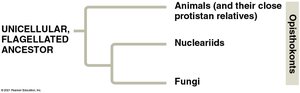
Fungi and animals are more closely related to each other than to plants. Both belong to the Opisthokonts clade, which evolved from a unicellular, flagellated ancestor. Multicellularity evolved independently in fungi and animals.
Major Fungal Lineages
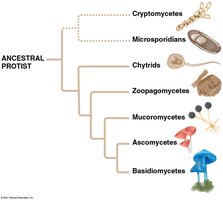
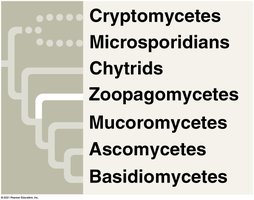
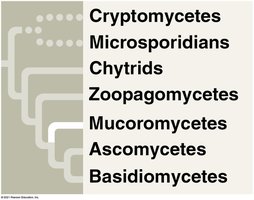
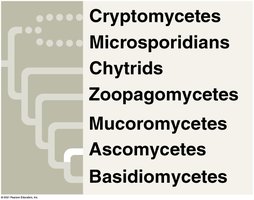
Molecular analyses have clarified relationships among fungal groups. Major lineages include:
Cryptomycetes
Microsporidians
Chytrids
Zoopagomycetes
Mucoromycetes
Ascomycetes
Basidiomycetes
Fungal Diversity: Key Groups
Cryptomycetes
Unicellular, flagellated spores, found in diverse habitats, often parasites of protists and fungi.
Can synthesize chitin-rich cell walls.
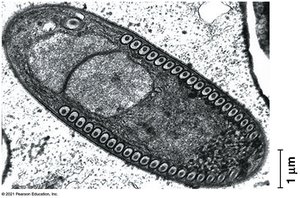
Microsporidians
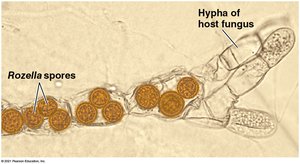
Unicellular parasites of protists and animals, with highly reduced mitochondria and genomes.
Infect host cells using a harpoon-like organelle.
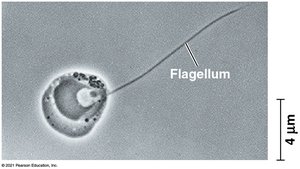
Chytrids
Mostly aquatic, with flagellated spores (zoospores).
Include decomposers, parasites, and mutualists.
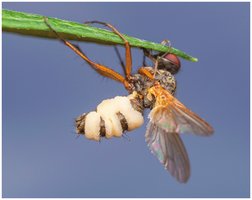
Zoopagomycetes
Parasitic or commensal on animals, fungi, or protists.
Form filamentous hyphae and reproduce asexually via nonflagellated spores.
Mucoromycetes
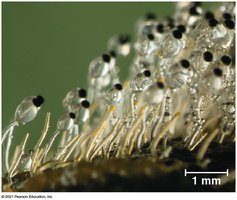
Includes molds such as Rhizopus stolonifer (bread mold).
Reproduce sexually by forming zygosporangia, which are resistant to harsh conditions.
Ascomycetes
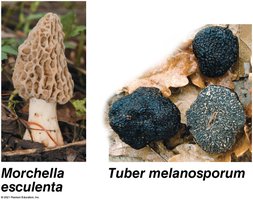
Known as sac fungi; produce spores in saclike asci within fruiting bodies called ascocarps.
Include yeasts, morels, truffles, and many plant pathogens.
Reproduce asexually by conidia and sexually by ascospores.
Basidiomycetes
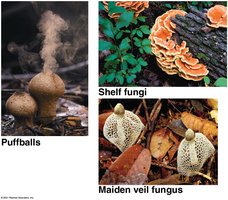
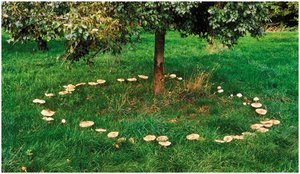
Known as club fungi; include mushrooms, puffballs, and shelf fungi.
Produce spores on club-shaped basidia within fruiting bodies called basidiocarps.
Important decomposers of wood (lignin).
Fungi in Ecological Interactions
Decomposers
Fungi efficiently decompose cellulose and lignin, recycling nutrients in ecosystems.
Mutualists
Form mycorrhizal associations with plants, endophytes within plant tissues, and symbioses with animals (e.g., leaf-cutter ants).
Lichens
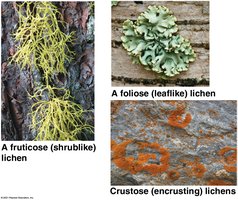
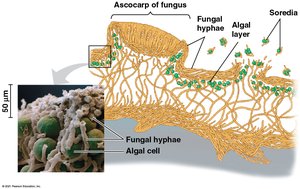
Lichens are symbiotic associations between fungi (usually ascomycetes) and photosynthetic organisms (algae or cyanobacteria). They are important pioneers on new surfaces and contribute to soil formation and nitrogen fixation.
Fungi as Pathogens
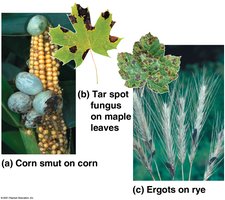
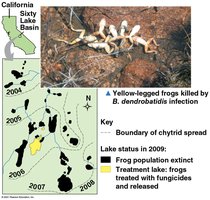
About 30% of fungi are parasites, mainly of plants, causing significant agricultural losses.
Some produce toxins (e.g., ergot on rye) that can affect humans and animals.
Animal mycoses include ringworm and systemic infections.
Practical Uses of Fungi
Fungi are used in food production (bread, cheese, alcoholic beverages).
Source of antibiotics (e.g., penicillin from Penicillium).
Medical applications (e.g., ergot derivatives for blood pressure control).
Biotechnology: genetically engineered yeasts produce human proteins; fungi are being explored for biofuel production.
Summary Table: Major Fungal Groups
Group | Key Features | Reproduction | Ecological Role |
|---|---|---|---|
Cryptomycetes | Unicellular, flagellated spores, chitin cell wall | Asexual, sexual (inferred) | Parasites of protists/fungi |
Microsporidians | Unicellular, reduced mitochondria, harpoon organelle | Asexual | Parasites of animals/protists |
Chytrids | Flagellated zoospores, aquatic | Asexual, sexual | Decomposers, parasites, mutualists |
Zoopagomycetes | Filamentous hyphae, nonflagellated spores | Asexual, sexual (zygosporangium) | Parasites/commensals |
Mucoromycetes | Coenocytic hyphae, zygosporangia | Asexual, sexual | Decomposers, pathogens, mutualists |
Ascomycetes | Saclike asci, ascocarps, conidia | Asexual (conidia), sexual (ascospores) | Decomposers, pathogens, mutualists |
Basidiomycetes | Club-shaped basidia, basidiocarps | Sexual (basidiospores) | Decomposers, mutualists, pathogens |
