 Back
Fungi: Structure, Function, Diversity, and Ecological Roles
Study Guide - Smart Notes
 Tailored notes based on your materials, expanded with key definitions, examples, and context.
Fungi: Structure, Function, Diversity, and Ecological Roles
Introduction to Fungi
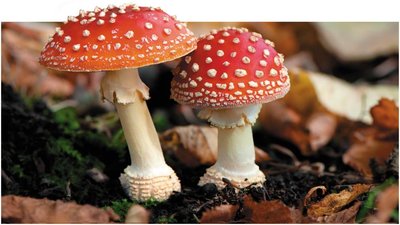
Fungi are a diverse group of eukaryotic organisms essential for ecosystem health. They are heterotrophs that feed by absorption, playing roles as decomposers, mutualists, and pathogens. Most fungi are multicellular, though some exist as single-celled yeasts. Their cell walls are composed of chitin, a strong and flexible polysaccharide.
Heterotrophic Nutrition: Fungi absorb nutrients by secreting hydrolytic enzymes that break down complex molecules into smaller organic compounds.
Ecological Roles: Fungi act as decomposers, parasites, and mutualists in various environments.
Key Traits: Fungi do not ingest food; instead, they absorb nutrients from their surroundings.
Exploring Protistan Diversity
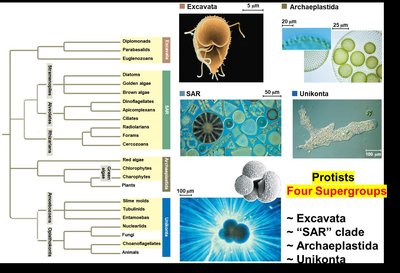
Protists are a diverse group of eukaryotes, often studied alongside fungi due to their evolutionary relationships. Protists are classified into four supergroups: Excavata, SAR clade, Archaeplastida, and Unikonta.
Supergroups: Excavata, SAR clade, Archaeplastida, Unikonta
Evolutionary Context: Fungi and animals are part of the Unikonta supergroup.
Fungal Structure and Function
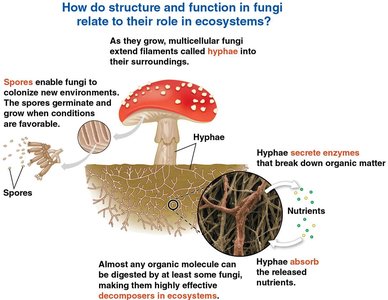
How Structure and Function in Fungi Relate to Their Role in Ecosystems
Fungi extend filaments called hyphae into their surroundings, enabling them to colonize new environments. Spores germinate and grow when conditions are favorable. Hyphae secrete enzymes that break down organic matter, and then absorb the released nutrients, making fungi highly effective decomposers.
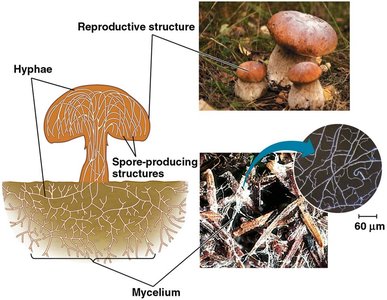
Hyphae: Thread-like structures that form the main body of multicellular fungi.
Mycelium: Interwoven mass of hyphae that penetrates the food source.
Decomposition: Fungi can digest almost any organic molecule, contributing to nutrient cycling.
Body Structure of Fungi
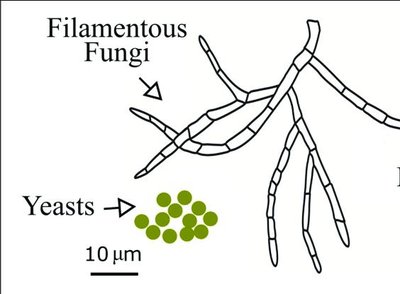
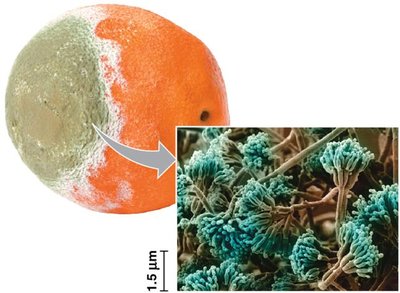
The most common body structures in fungi are multicellular filaments and single cells (yeasts). Fungal bodies form networks of tiny filaments called hyphae, which are strengthened by chitin. The mycelium is the main vegetative part, allowing fungi to colonize new territory.
Filamentous Fungi: Grow as hyphae, forming mycelium.
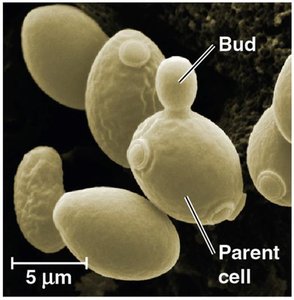
Yeasts: Single-celled fungi that reproduce by budding.
Non-motile: Multicellular fungi spread by hyphal growth.
Specialized Hyphae and Mycorrhizae
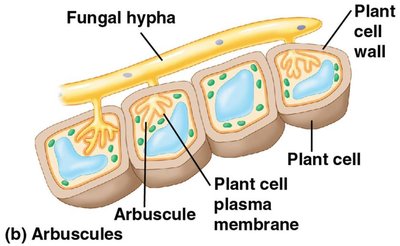
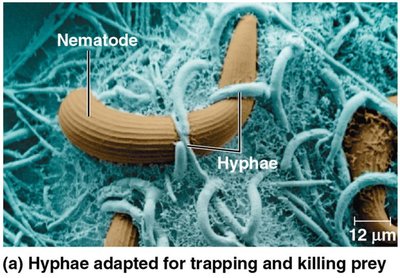
Some fungi have specialized hyphae for feeding and catching prey. Mutualistic fungi, known as mycorrhizae, have branching hyphae called arbuscules that exchange nutrients with plant roots. Mycorrhizal fungi deliver phosphate ions and minerals to plants, receiving organic nutrients in return.
Ectomycorrhizal Fungi: Form sheaths of hyphae over root surfaces.
Endomycorrhizal (Arbuscular) Fungi: Penetrate plant cell walls but not the plasma membrane.
Spore Dispersal: Mycorrhizal fungi colonize soils by dispersing haploid spores.
Fungal Reproduction
Spore Production and Dispersal
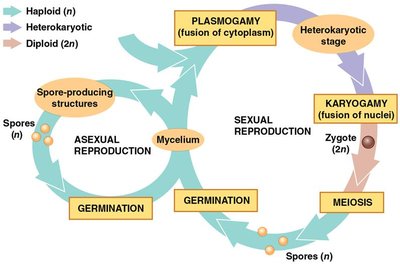
Fungi spread by producing large numbers of spores, either sexually or asexually. Spores are carried by wind or water and germinate in moist environments. Fungal nuclei and spores are usually haploid, with temporary diploid nuclei formed during sexual cycles.
Sexual Signaling: Fungi use pheromones to communicate mating types.
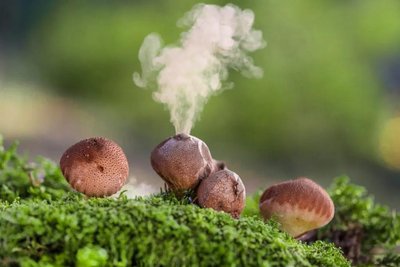
Spore Dispersal: Puffballs can release trillions of spores.
Asexual and Sexual Reproduction
Asexual reproduction occurs through simple cell division or budding. Molds produce haploid spores by mitosis, forming visible mycelia. Yeasts reproduce asexually by budding. Sexual reproduction involves haploid, diploid, and heterokaryotic stages, including plasmogamy (fusion of cytoplasm) and karyogamy (fusion of nuclei).
Asexual Reproduction: Molds and yeasts reproduce without spores or by mitosis.
Sexual Reproduction: Involves fusion of hyphae from different mating types.
Fungal Diversity and Evolution
The Origin of Fungi
Molecular analysis suggests that fungi and animals diverged over a billion years ago. Fungi were among the earliest colonizers of land, forming mutualistic relationships with early plants. Symbiosis genes required for mycorrhizal formation were present in early plants.
Fossil Evidence: Fossil hyphae from ancient fungi support early colonization of land.
Mutualism: Early fungi formed symbiotic relationships with plants.
Major Fungal Lineages
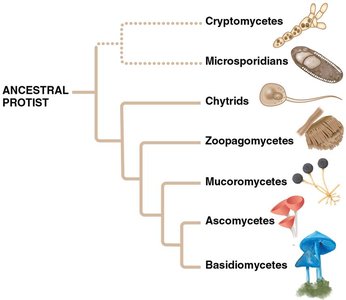
Fungi have radiated into diverse lineages, including cryptomycetes, microsporidians, chytrids, zoopagomycetes, mucoromycetes, ascomycetes, and basidiomycetes. Molecular phylogenies reveal evolutionary relationships among these groups.
Cryptomycetes: Unicellular, flagellated spores, parasites of protists and fungi.
Microsporidians: Unicellular parasites, reduced mitochondria, unique infective spores.
Chytrids: Flagellated zoospores, found in aquatic habitats.
Zoopagomycetes: Parasites or commensals, wind-dispersed spores, induce behavioral changes in insects.
Mucoromycetes: Fast-growing molds, decomposers, mutualists, and pathogens.
Ascomycetes: Sac fungi, produce asci and ascocarps, form lichens.
Basidiomycetes: Club fungi, produce basidiocarps, important decomposers and plant pathogens.
Ecological Roles and Human Uses
Fungi in Ecosystems
Fungi play key roles in nutrient cycling, ecological interactions, and human welfare. They interact with other organisms as decomposers, mutualists, and pathogens. Fungi decompose organic material such as cellulose and lignin, recycling chemical elements between living and nonliving worlds.
Mutualism: Fungi form mutualistic relationships with plants, algae, cyanobacteria, and animals.
Decomposition: Essential for recycling nutrients in ecosystems.
Fungus-Animal Mutualisms
Some fungi share digestive services with animals, helping break down plant material in the guts of grazing mammals. Leaf-cutter ants cultivate fungi in their nests, feeding them leaves and consuming nutrient-rich hyphal tips.
Digestive Mutualism: Fungi aid in digestion for animals.
Fungus-Gardening Insects: Ants farm fungi for food.
Fungi as Parasites
About 30% of known fungal species are parasites or pathogens, mostly on plants. Some produce toxins that affect food crops and animals. Fungal infections in animals are called mycoses, ranging from skin infections (e.g., ringworm) to systemic diseases.
Plant Pathogens: Fungi cause diseases such as rusts and smuts.
Animal Mycoses: Ringworm, athlete’s foot, and systemic infections.
Practical Uses of Fungi
Humans use fungi for food, fermentation, and medicine. Fungi are used to make cheeses, alcoholic beverages, and bread. The ascomycete Penicillium produces penicillin, an antibiotic. Yeast (Saccharomyces cerevisiae) is genetically modified to produce human glycoproteins.
Food: Edible mushrooms, fermentation products.
Medicine: Antibiotics, blood pressure treatments, biotechnological applications.
