 Back
Gas Exchange and Circulation in Animals
Study Guide - Smart Notes
 Tailored notes based on your materials, expanded with key definitions, examples, and context.
Gas Exchange and Circulation
Overview of Respiration
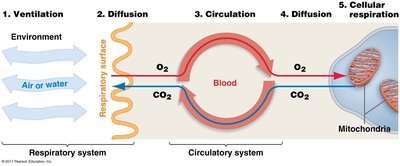
Gas exchange and circulation are essential processes that allow animals to obtain oxygen for cellular respiration and remove carbon dioxide, a metabolic waste product. These processes involve the coordinated function of the respiratory and circulatory systems.
Ventilation: Movement of air or water across a gas-exchange surface.
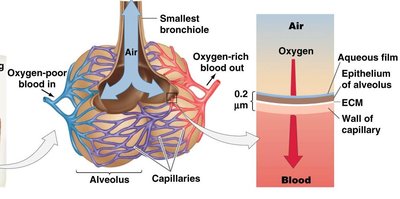
Diffusion: Movement of gases down their partial pressure gradients across respiratory surfaces.
Circulation: Bulk transport of gases in body fluids (e.g., blood).
Cellular Respiration: Use of oxygen and production of carbon dioxide in mitochondria.
Physics of Respiration
Bulk Flow and Diffusion
Both air and water are fluids, and their movement is driven by pressure differences (bulk flow). The rate of flow depends on pressure differential, viscosity, and the diameter of the tubes through which the fluid moves.
Bulk Flow: Movement of large volumes of fluid due to pressure gradients.
Diffusion: Movement of individual gas molecules from high to low partial pressure.
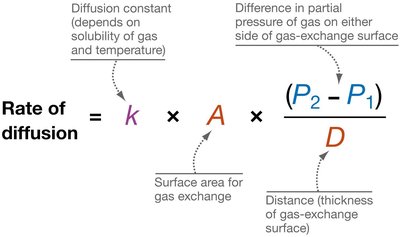
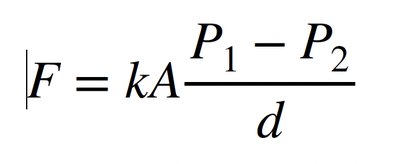
Fick's Law of Diffusion
The rate of gas diffusion across a membrane is described by Fick's Law:
k: Diffusion constant (depends on solubility and temperature)
A: Surface area for gas exchange
P2 - P1: Difference in partial pressure across the membrane
D: Thickness of the gas-exchange surface
Mathematically:
Or, equivalently:
Partial Pressure and Gas Solubility
Gas diffusion is driven by partial pressure gradients. The partial pressure of a gas in a mixture is calculated as:
PTotal: Total pressure of the gas mixture
FX: Fraction of the mixture that is gas X
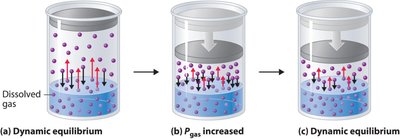
Gas solubility in water is proportional to its partial pressure. At equilibrium, the partial pressure of a gas in solution equals that in the air above it, but the amount dissolved depends on solubility.
Gas Exchange Organs in Animals
Simple Diffusion Across Body Surface
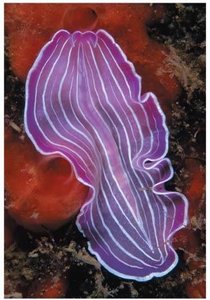
Small or thin animals (e.g., flatworms) can rely on diffusion across their body surface for gas exchange. This strategy is effective only in moist environments and for organisms with high surface area to volume ratios.
Gills
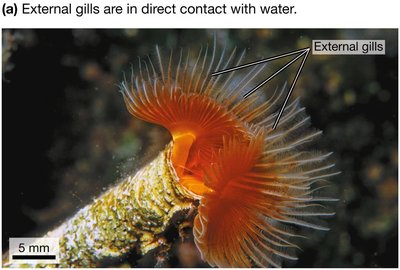
Gills are specialized outgrowths of the body surface used for gas exchange in aquatic animals. They can be external or internal and are highly vascularized to maximize surface area.
External gills: Directly exposed to water, increasing surface area for diffusion.
Internal gills: Protected within the body, water is actively pumped over them.
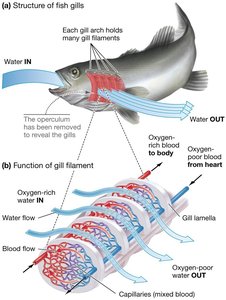
Fish gills use counter-current exchange to maximize oxygen extraction, with water and blood flowing in opposite directions.
Tracheal System in Insects
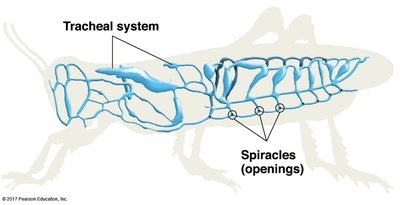
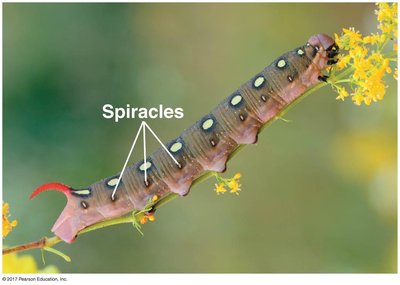
Insects and some other arthropods use a tracheal system—a network of tubes (tracheae) that deliver air directly to tissues. Spiracles are openings that regulate air entry and water loss.
Lungs in Vertebrates
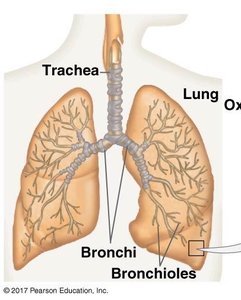
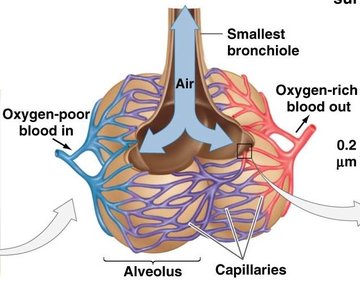
Lungs are internal organs specialized for gas exchange in terrestrial vertebrates. Air enters through the trachea, which branches into bronchi and bronchioles, ending in alveoli where gas exchange occurs.
Mechanisms of Ventilation
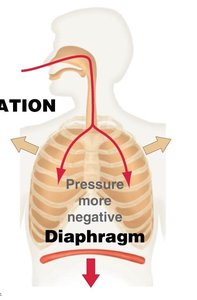
Ventilation in mammals is achieved by negative pressure generated by the diaphragm. When the diaphragm contracts, thoracic volume increases, pressure decreases, and air is drawn into the lungs.
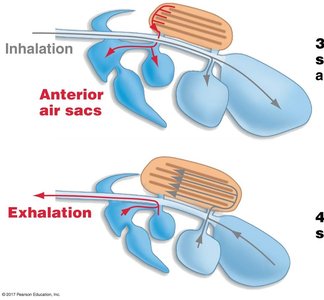
Avian Ventilation
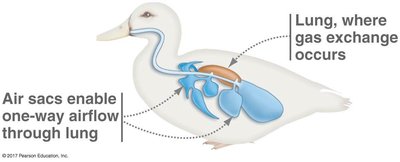
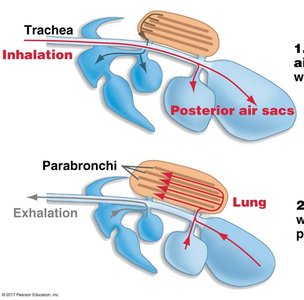
Birds have a highly efficient respiratory system with one-way airflow through the lungs, supported by air sacs. This system allows for continuous gas exchange during both inhalation and exhalation.
Gas Transport in Blood
Oxygen Transport
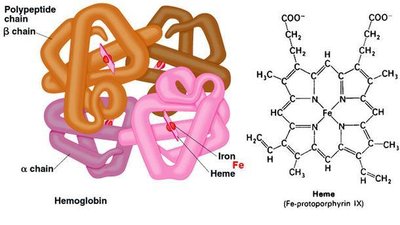
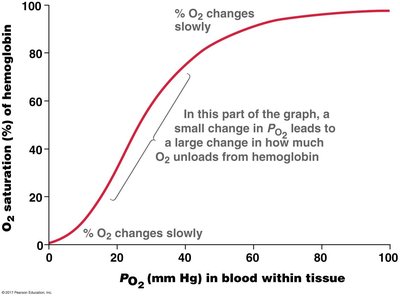
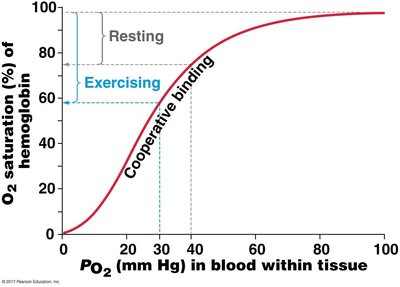
Due to low solubility of oxygen in water, most animals use respiratory pigments to transport oxygen. In vertebrates, hemoglobin in red blood cells binds oxygen, greatly increasing its carrying capacity.
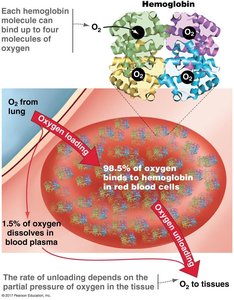
Cooperative binding: Binding of one O2 molecule increases the affinity for additional O2 molecules.
Carbon Dioxide Transport
Most CO2 is transported in the blood as bicarbonate ions, formed by the reaction:
This reaction helps buffer blood pH and is reversible in the lungs, allowing CO2 to be exhaled.
Circulatory Systems
Types of Circulatory Systems
Animals have either open or closed circulatory systems:
Characteristic | Open System | Closed System |
|---|---|---|
Circulating fluid called | Hemolymph | Blood |
Pressure | Lower | Higher |
Rate of flow | Lower | Higher |
Control of flow to specific areas | Limited | Significant |
Diffusion distance | Lower | Higher |
Closed systems support higher metabolic rates and more precise delivery of oxygen and nutrients.
Blood Vessels
Arteries: Carry blood away from the heart; thick-walled, high pressure.
Veins: Carry blood to the heart; thinner walls, lower pressure, contain valves.
Capillaries: Thin-walled vessels where exchange of gases, nutrients, and wastes occurs.
Capillary Exchange and Lymphatic System
Pressure differences in capillaries cause fluid to leave at the arteriole end and be reclaimed at the venule end. Excess interstitial fluid is collected by the lymphatic system and returned to the circulatory system.
Additional info: This guide covers the essential principles of gas exchange and circulation, including the physical laws governing diffusion, the structure and function of respiratory organs, and the mechanisms of gas transport and circulatory systems in animals.
