 Back
Gene Expression and Regulation: Mechanisms in Prokaryotes and Eukaryotes
Study Guide - Smart Notes
 Tailored notes based on your materials, expanded with key definitions, examples, and context.
Gene Expression and Regulation
DNA Replication and Cell Division
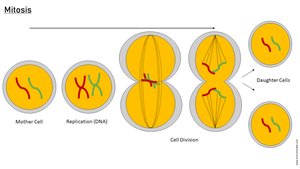
During mitosis, all DNA in a cell is replicated and passed on to daughter cells, ensuring that every cell in the body contains the same genetic material. However, despite identical DNA, cells can perform vastly different functions due to differential gene expression.
DNA Replication: The process by which a cell copies its DNA before cell division.
Cell Division: Results in two daughter cells, each with a complete set of DNA.
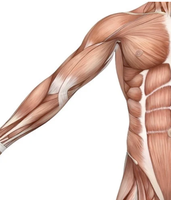
Cell Specialization: Different cell types (e.g., eye lens cells, muscle cells) express different subsets of genes, leading to unique functions.
Differential Gene Expression
Although all cells have the same DNA, only a portion of genes are expressed in any given cell. This selective expression is what gives rise to specialized cell types.
Housekeeping Genes: Genes required for basic cellular function, expressed in all cells.
Cell-Type Specific Genes: Genes unique to certain cell types, responsible for specialized functions.
Example: Eye lens cells and muscle cells contain the same DNA but express different genes, resulting in distinct functions.

Overview of Human Cell Types
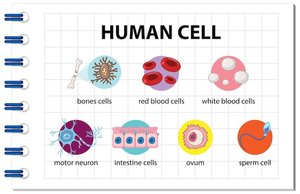
Human cells are diverse, each type performing unique roles based on differential gene expression.
Examples: Bone cells, red blood cells, white blood cells, motor neurons, intestine cells, ovum, sperm cell.
Gene Regulation in Prokaryotes: Operons
Operon Structure and Function
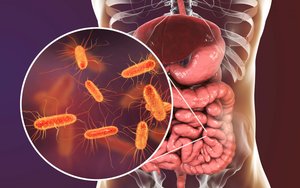
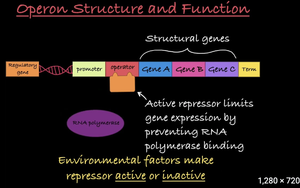
Prokaryotes, such as Escherichia coli (E. coli), regulate gene expression efficiently through operons. An operon is a cluster of genes under the control of a single promoter and operator, allowing coordinated regulation.
Operator: DNA segment that controls access of RNA polymerase to the genes.
Repressor: Protein that binds to the operator to block transcription.
Environmental Response: Operons respond to environmental changes, such as nutrient availability.
Repressible Operons: The trp Operon
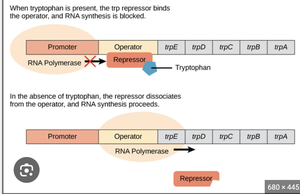
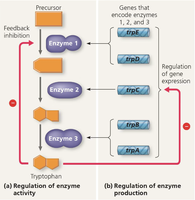
The trp operon in E. coli is a classic example of a repressible operon, regulating the synthesis of the amino acid tryptophan.
High Tryptophan: Tryptophan binds to the repressor, activating it. The repressor then binds to the operator, blocking transcription.
Low Tryptophan: The repressor is inactive, allowing transcription of genes that synthesize tryptophan.
Feedback Inhibition: The operon acts as a feedback mechanism, stopping production when enough tryptophan is present.
Inducible Operons: The lac Operon
The lac operon is an inducible operon, controlling the digestion of lactose in E. coli. Transcription is normally off but can be induced by the presence of lactose.
Lactose (Inducer): Binds to the repressor, inactivating it and allowing transcription.
Dual Control: The lac operon is regulated by both the presence of lactose and the availability of glucose (via cAMP and CAP).
Example: When lactose is present and glucose is scarce, cAMP accumulates, activating CAP and stimulating transcription.
Gene Regulation in Eukaryotes
Chromatin Structure and Epigenetic Regulation
Eukaryotic gene expression is regulated at multiple levels, starting with chromatin structure. Chromatin can be modified to make regions of DNA more or less accessible to transcription.
Histone Acetylation: Addition of acetyl groups opens chromatin, promoting transcription.
DNA Methylation: Addition of methyl groups condenses chromatin, repressing transcription.
Epigenetic Inheritance: Environmentally induced changes in gene expression that do not alter DNA sequence but can be inherited.
Example: DNA methylation during development can permanently silence genes, such as one X chromosome in females.
Transcription Factor Behavior
Transcription factors (TFs) are proteins that regulate gene expression by binding to specific DNA sequences called control elements.
Proximal TFs: Located near the promoter, initiate transcription.
Distal TFs: Located far from the promoter, act as enhancers to increase transcription.
Example: Protein p53 activates transcription in response to DNA damage, halting the cell cycle or triggering apoptosis.
RNA Processing and mRNA Lifespan
Gene expression is further regulated by RNA processing and the stability of mRNA.
RNA Processing: Addition of a cap and tail, and splicing of introns, allows for production of different protein isoforms.
mRNA Lifespan: Determines how long mRNA is available for translation; varies from minutes in bacteria to weeks in eukaryotes.
Example: Betaglobin mRNA in red blood cells persists for hours, enabling continued hemoglobin production.
Protein Alterations and Lifespan
Proteins may require modifications to become functional, and their lifespan is tightly regulated.
Post-translational Modifications: Addition of molecules (e.g., sugars, phosphates) can activate or deactivate proteins.
Protein Lifespan: Regulated by cyclin kinases; varies from minutes (e.g., p53) to years (e.g., collagen).
Summary Table: Prokaryotic vs. Eukaryotic Gene Regulation
Feature | Prokaryotes | Eukaryotes |
|---|---|---|
Gene Organization | Operons (clusters) | Scattered, individual genes |
Regulation Level | Transcriptional (operons) | Chromatin, transcription, RNA processing, translation, protein modification |
Examples | trp operon, lac operon | Histone modification, DNA methylation, TFs, alternative splicing |
Review Questions
How does binding the trp corepressor to the trp repressor alter repressor function and transcription?
How does binding of the lac inducer alter the function of the lac repressor?
Describe the binding of repressors and activators to the lac operon, and the effect on transcription when both lactose and glucose are scarce.
List the various ways that gene expression is altered in eukaryotes. Where and when do each of these take place?
Additional info: Academic context was added to clarify mechanisms, examples, and comparisons for completeness.
