 Back
Gene Expression: From DNA to Protein
Study Guide - Smart Notes
 Tailored notes based on your materials, expanded with key definitions, examples, and context.
Gene to Protein: The Central Dogma
Overview of Gene Action
The process by which genetic information flows from DNA to RNA to protein is fundamental to all living organisms. This flow of information is described by the central dogma of molecular biology. Genes specify the structure of proteins through two main processes: transcription and translation.
Genes specify proteins: Each gene contains instructions for building a specific protein.
Genetic code: The sequence of nucleotides in DNA and RNA determines the sequence of amino acids in proteins.
Transcription: The process of copying DNA information into RNA.
Translation: The process of decoding RNA to build a protein.
Biochemical Pathways and Gene Function
One Gene–One Polypeptide Hypothesis
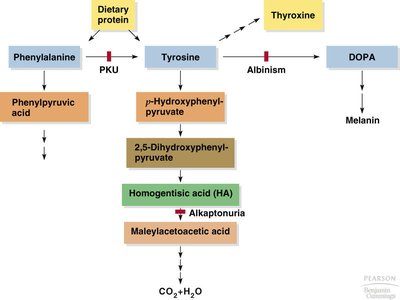
Early experiments by Beadle and Tatum using Neurospora demonstrated that single genes control the synthesis of single enzymes, leading to the "one gene–one polypeptide" hypothesis. Disruptions in these pathways can lead to metabolic diseases.
Biochemical pathways: Series of enzyme-catalyzed steps converting substrates to products.
Genetic disorders: Mutations in genes encoding enzymes can disrupt pathways (e.g., PKU, alkaptonuria, albinism).
The Genetic Code
Structure and Properties of the Genetic Code
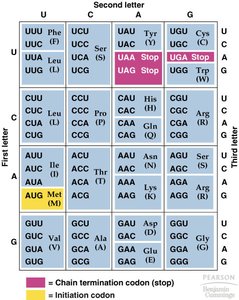
The genetic code is the set of rules by which the information encoded in genetic material (DNA or RNA sequences) is translated into proteins by living cells. It is nearly universal and highly conserved among organisms.
Triplet code: Each amino acid is encoded by a sequence of three nucleotides called a codon.
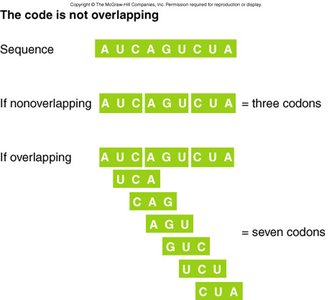
Non-overlapping: Each nucleotide is part of only one codon.
Comma-free: Codons are read sequentially without gaps.
Degenerate: Multiple codons can code for the same amino acid.
Start and stop signals: Specific codons signal the start (AUG) and stop (UAA, UAG, UGA) of translation.
Universal: The code is used by almost all organisms, with few exceptions.
Codon Assignment and Reading Frames
Codons are read in a non-overlapping manner, ensuring that each set of three nucleotides codes for one amino acid. Overlapping codes would produce different amino acid sequences.
Start and Stop Codons
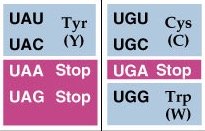
The start codon (AUG) signals the beginning of translation and codes for methionine. Stop codons (UAA, UAG, UGA) signal the end of translation and do not code for any amino acid.
Example: mRNA to Amino Acid Sequence
Given an mRNA sequence, the genetic code can be used to determine the corresponding amino acid sequence.

DNA and RNA: Structure and Function
Differences Between DNA and RNA
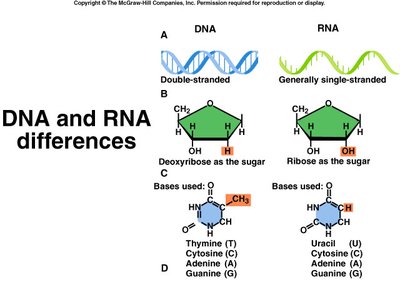
DNA and RNA are nucleic acids with distinct structures and functions:
DNA: Double-stranded, contains deoxyribose sugar, uses thymine (T) as a base, stores genetic information.
RNA: Single-stranded, contains ribose sugar, uses uracil (U) instead of thymine, involved in protein synthesis and regulation.
Types of RNA and Their Functions
Messenger RNA (mRNA), Ribosomal RNA (rRNA), and Transfer RNA (tRNA)
mRNA: Encodes the amino acid sequence of a protein.
rRNA: Forms the core of the ribosome and catalyzes protein synthesis.
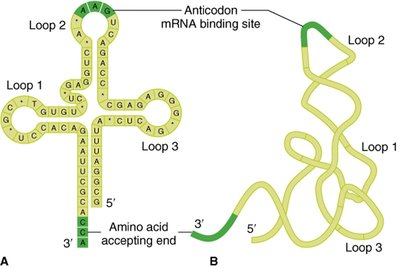
tRNA: Brings amino acids to the ribosome and matches them to the coded mRNA message via its anticodon.
Transcription: DNA to RNA
Steps of Transcription
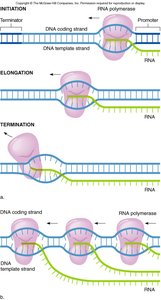
Transcription is the process by which a gene's DNA sequence is copied to make an RNA molecule. It occurs in three main steps:
Initiation: RNA polymerase binds to the promoter region of DNA.
Elongation: RNA polymerase adds complementary RNA nucleotides to the growing RNA strand.
Termination: RNA polymerase reaches a terminator sequence and releases the RNA transcript.
Processing of Eukaryotic mRNA
In eukaryotes, the initial mRNA transcript (pre-mRNA) undergoes processing before becoming mature mRNA:
Introns: Non-coding sequences removed from pre-mRNA.
Exons: Coding sequences that are spliced together to form the final mRNA.
Translation: RNA to Protein
Steps of Translation
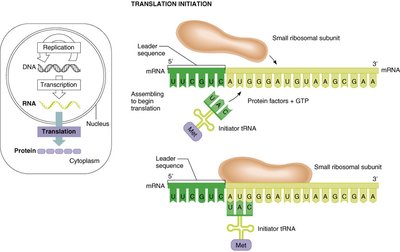
Translation is the process by which the sequence of an mRNA is used to build a corresponding polypeptide (protein). It occurs in three main steps:
Initiation: The ribosome assembles around the start codon (AUG) of the mRNA. The initiator tRNA brings methionine.
Elongation: tRNAs bring amino acids to the ribosome, matching their anticodons to the codons on the mRNA. The ribosome links the amino acids together in the correct order.
Termination: When a stop codon is reached, the ribosome releases the completed polypeptide.
Summary Table: Key Differences Between DNA and RNA
Feature | DNA | RNA |
|---|---|---|
Number of Strands | Double-stranded | Single-stranded |
Sugar | Deoxyribose | Ribose |
Bases Used | A, T, C, G | A, U, C, G |
Function | Stores genetic information | Protein synthesis, regulation |
