Back
Gene Expression: From DNA to Protein and Mutations
Study Guide - Smart Notes
 Tailored notes based on your materials, expanded with key definitions, examples, and context.
Gene Expression and the Central Dogma
Genes Specify Proteins
Genes are specific sequences in DNA that dictate the synthesis of proteins, which in turn determine an organism's traits.
Gene expression is the process by which DNA directs protein synthesis.
Proteins serve as the link between genotype (genetic makeup) and phenotype (observable traits).
The relationship between genes and proteins was discovered through studies of metabolic defects and nutritional mutants.
Evidence from Metabolic Defects
Metabolic pathways consist of a series of steps where cells synthesize and degrade molecules. Inherited diseases often reflect the inability to synthesize a specific enzyme.
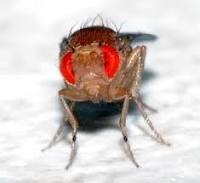
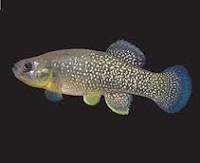
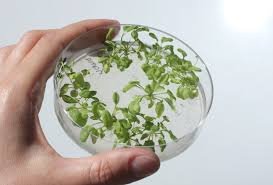
Model organisms used in these studies include Drosophila melanogaster (fruit fly), Fundulus heteroclitus (killifish), mold species, and Arabidopsis thaliana (thale cress).
Nutritional Mutants in Neurospora
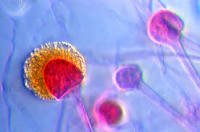
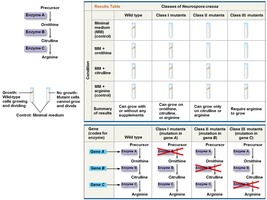
Beadle and Tatum exposed bread mold (Neurospora) to X-rays, creating mutants unable to grow on minimal medium.
Mutations affected enzymes necessary for synthesizing arginine.
Led to the one gene–one enzyme hypothesis, now refined to the one gene–one polypeptide hypothesis.
The Central Dogma: DNA to Protein
Transcription and Translation
The central dogma describes the flow of genetic information:
Transcription: Synthesis of RNA from DNA, producing messenger RNA (mRNA).
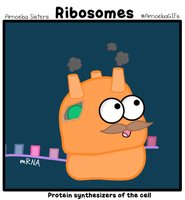
Translation: Synthesis of a polypeptide using information in mRNA, carried out by ribosomes.
Prokaryote vs. Eukaryote Gene Expression
In prokaryotes, translation can begin before transcription finishes (coupled reaction).
In eukaryotes, transcription occurs in the nucleus, producing a primary transcript (pre-mRNA) that undergoes RNA processing before translation in the cytoplasm.
The Genetic Code
Codons and Redundancy
There are 20 amino acids and only four nucleotide bases in DNA.
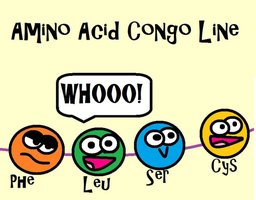
The genetic code is read in triplets called codons (three nucleotides per amino acid).
Of the 64 possible codons, 61 code for amino acids and 3 are stop codons.
The code is redundant (multiple codons for one amino acid) but not ambiguous (each codon specifies only one amino acid).
Universality of the Genetic Code
The genetic code is nearly universal, shared by all living organisms, allowing genes to be transplanted between species.
Transcription: A Closer Look
RNA Polymerase and Promoters
Transcription is catalyzed by RNA polymerase, which attaches to a DNA sequence called the promoter.
Transcription factors mediate the binding of RNA polymerase and the initiation of transcription.
A TATA box is a crucial promoter element in eukaryotes.
Elongation and Termination
RNA polymerase untwists the DNA helix and adds nucleotides to the 3′ end of the growing RNA strand.
Termination differs between prokaryotes (at terminator sequence) and eukaryotes (after polyadenylation signal).
RNA Processing in Eukaryotes
Modifications to pre-mRNA
5′ modified guanine cap and 3′ poly-A tail are added to facilitate export, protect from degradation, and help ribosome attachment.
Introns (noncoding regions) are removed, and exons (coding regions) are joined by RNA splicing.
Spliceosomes and Ribozymes
Spliceosomes, composed of proteins and snRNPs, catalyze splicing.
Some RNA molecules (ribozymes) can act as enzymes.
Alternative RNA Splicing
Allows a single gene to encode multiple polypeptides, increasing protein diversity.
Protein Domains and Exon Shuffling
Proteins have discrete regions called domains, often encoded by different exons.
Exon shuffling can lead to the evolution of new proteins.
Translation: Molecular Components
Transfer RNA (tRNA)
tRNA transfers amino acids to the growing polypeptide chain.
Each tRNA has a specific amino acid and an anticodon that pairs with the mRNA codon.
Flexible pairing at the third base (wobble) allows some tRNAs to bind to multiple codons.
Ribosomes
Ribosomes couple tRNA anticodons with mRNA codons and consist of a large and small subunit.
rRNA catalyzes peptide bond formation.
Translation Process
Three ribosome sites: P (peptidyl), A (aminoacyl), and E (exit).
Steps: Initiation (start codon recognition), Elongation (amino acid addition), Termination (stop codon recognition).
Post-Translational Modifications
Protein Folding and Modification
Polypeptides fold into secondary and tertiary structures during synthesis.
Post-translational modifications (PTMs) include proteolysis, glycosylation, and phosphorylation.
Targeting Proteins to Specific Locations
Free ribosomes synthesize cytosolic proteins; bound ribosomes synthesize proteins for the endomembrane system or secretion.
Signal peptides and signal-recognition particles (SRP) direct proteins to the ER.
Polyribosomes and Efficiency
Polyribosomes
Multiple ribosomes can translate a single mRNA simultaneously, forming a polyribosome (polysome).
In prokaryotes, transcription and translation are coupled; in eukaryotes, they are separated by the nucleus.
Mutations: Changes in DNA Sequence
Types of Mutations
Somatic mutations occur in non-reproductive cells; germline mutations occur in gametes.
Mutations can be spontaneous (during replication, recombination, or repair) or induced (by mutagens such as chemicals or radiation).
Small Scale Mutations
Point mutations: Nucleotide-pair substitutions, insertions, or deletions.
Silent mutations: No effect on amino acid sequence.
Missense mutations: Change one amino acid to another.
Nonsense mutations: Change an amino acid codon to a stop codon.
Frameshift mutations: Insertions or deletions that alter the reading frame.
Examples of Mutation Effects
Sickle cell anemia is caused by a missense mutation in the hemoglobin gene, resulting in misshaped red blood cells.
Lactase persistence in adults is due to a mutation in the regulatory region of the lactase gene.
What Is a Gene?
Modern Definition
A gene is a region of DNA that can be expressed to produce a final functional product, either a polypeptide or an RNA molecule.
Summary Table: One Gene–One Enzyme Hypothesis (Beadle and Tatum)
Class of Neurospora Mutant | Minimal Medium | Minimal Medium + Ornithine | Minimal Medium + Citrulline | Minimal Medium + Arginine |
|---|---|---|---|---|
Wild type | Growth | Growth | Growth | Growth |
Class I mutant | No growth | Growth | Growth | Growth |
Class II mutant | No growth | No growth | Growth | Growth |
Class III mutant | No growth | No growth | No growth | Growth |
Key Terms and Concepts
Central Dogma: DNA → RNA → Protein
Transcription: DNA-directed synthesis of RNA
Translation: mRNA-directed synthesis of polypeptide
Codon: Three-nucleotide sequence specifying an amino acid
Mutation: Change in DNA sequence
Polyribosome: Multiple ribosomes translating a single mRNA
Examples and Applications
Mutations can lead to genetic diseases (e.g., sickle cell anemia, lactose intolerance).
Gene expression is fundamental to biotechnology and genetic engineering.