 Back
Gene Expression: From Gene to Protein – The Central Dogma and Its Mechanisms
Study Guide - Smart Notes
 Tailored notes based on your materials, expanded with key definitions, examples, and context.
Gene Expression and the Central Dogma
Historical Foundations: Genes and Proteins
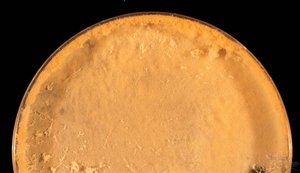
The relationship between genes and proteins was first elucidated through studies of inherited metabolic disorders and experiments with the bread mold Neurospora crassa. These studies led to the "one gene-one polypeptide" hypothesis, which states that each gene encodes a single polypeptide.
Phenotype Expression: Phenotypes are expressed through proteins, which are the functional products of genes.
Beadle and Tatum: Their experiments demonstrated that specific genes control specific metabolic steps.
One Gene-One Polypeptide: Each gene codes for a single polypeptide, which may function alone or as part of a larger protein complex.
Example: Mutations in a gene can lead to metabolic disorders by disrupting the production of a necessary enzyme.
The Central Dogma of Biology
DNA, RNA, and Protein
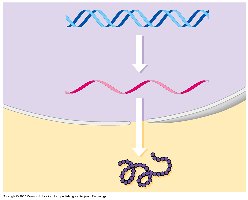
The central dogma of biology describes the flow of genetic information within a cell: DNA is transcribed into RNA, which is then translated into protein. This process is fundamental to all living organisms.
Transcription: The process by which DNA is copied into messenger RNA (mRNA).
Translation: The process by which mRNA is decoded to synthesize a polypeptide (protein).
Universality: Virtually all organisms use the same genetic code, highlighting the unity of life.
Equation:
The Genetic Code
Triplet Code and Codons
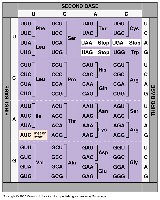
The genetic code is composed of triplets of nucleotides called codons, each of which specifies a particular amino acid. The code is nearly universal and acts as the "Rosetta stone" of life.
Codon: A sequence of three nucleotides in mRNA that specifies an amino acid.
Start Codon: AUG (methionine) signals the start of translation.
Stop Codons: UAA, UAG, UGA signal the end of translation.
Redundancy: Multiple codons can code for the same amino acid.
First Base | Second Base | Third Base | Amino Acid |
|---|---|---|---|
U | U | U | Phe |
A | U | G | Met (Start) |
U | A | A | Stop |
G | G | C | Gly |
C | G | A | Arg |
U | G | G | Trp |
Additional info: | Table shows codon-to-amino acid mapping. | ||
Transcription: DNA to RNA
Mechanism of Transcription
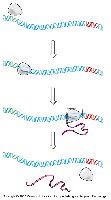
Transcription is the process by which the DNA helix unzips and RNA nucleotides line up along one strand, forming a single-stranded mRNA molecule. The enzyme RNA polymerase catalyzes this process.
Initiation: RNA polymerase binds to the promoter region of the gene.
Elongation: RNA polymerase moves along the DNA, synthesizing RNA.
Termination: RNA polymerase reaches a terminator sequence and releases the completed RNA.
Base-Pairing Rules: A-U, C-G in RNA.
RNA Processing in Eukaryotes
Splicing, Cap, and Tail Addition
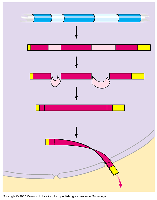
Before leaving the nucleus, eukaryotic mRNA undergoes processing. Noncoding segments called introns are removed, and a cap and tail are added to protect the mRNA and aid in translation.
Introns: Noncoding regions removed from the RNA transcript.
Exons: Coding regions spliced together to form mature mRNA.
Cap and Tail: Added to the 5' and 3' ends, respectively, for stability and export.
Translation: RNA to Protein
Role of Ribosomes and tRNA
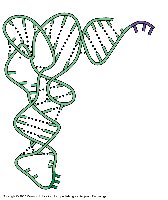
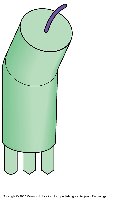
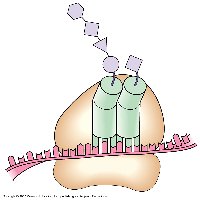
Translation occurs in the cytoplasm, where ribosomes read the mRNA and synthesize polypeptides. Transfer RNA (tRNA) molecules serve as interpreters, matching codons in mRNA with the correct amino acids.
Ribosome: Molecular machine that assembles polypeptides.
tRNA: Has an anticodon that pairs with mRNA codon and an amino acid attachment site.
Initiation: mRNA, tRNA, and ribosome subunits assemble at the start codon.
Elongation: Amino acids are added one by one to the growing polypeptide.
Termination: Translation ends at a stop codon.
Ribosome Structure and Function
Ribosomes consist of a large and small subunit, with binding sites for mRNA and tRNA. The ribosome facilitates the formation of peptide bonds between amino acids.
P Site: Holds the tRNA carrying the growing polypeptide chain.
A Site: Holds the tRNA carrying the next amino acid to be added.
Peptide Bond Formation: Catalyzed by the ribosome.
Mutations and Their Effects
Types of Mutations
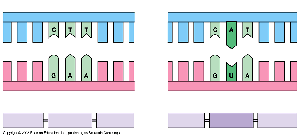
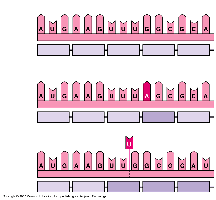
Mutations are changes in the DNA sequence that can affect gene expression and protein function. They may be caused by errors in replication or environmental factors.
Base Substitution: One nucleotide is replaced by another, potentially altering a single amino acid.
Base Deletion: One nucleotide is removed, causing a frameshift and altering the entire downstream sequence.
Example: Sickle-cell anemia is caused by a single base substitution in the hemoglobin gene.
Summary Table: Flow of Genetic Information
Step | Molecule | Process | Location |
|---|---|---|---|
1 | DNA | Transcription | Nucleus |
2 | mRNA | RNA Processing | Nucleus |
3 | mRNA | Translation | Cytoplasm |
4 | Polypeptide | Folding/Modification | Cytoplasm/ER |
Additional info: | Table summarizes the central dogma steps and locations. | ||
Review: The Central Dogma
The flow of genetic information in the cell is summarized as DNA → RNA → protein. This process is essential for the expression of genetic traits and the functioning of all living organisms.
