 Back
Gene Expression: From Gene to Protein
Study Guide - Smart Notes
 Tailored notes based on your materials, expanded with key definitions, examples, and context.
Gene Expression: From Gene to Protein
Introduction to Gene Expression
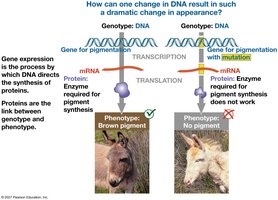
Gene expression is the process by which the information encoded in DNA directs the synthesis of proteins, ultimately determining an organism's traits. Proteins serve as the link between genotype (genetic makeup) and phenotype (observable characteristics).
Genotype: The genetic constitution of an organism.
Phenotype: The observable traits of an organism, resulting from the interaction of its genotype with the environment.
Gene Expression: Involves two main stages—transcription and translation.
The Central Dogma of Molecular Biology
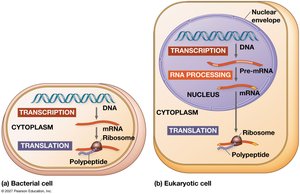
The central dogma describes the flow of genetic information within a biological system: DNA is transcribed into RNA, which is then translated into protein.
Transcription: Synthesis of RNA using DNA as a template.
Translation: Synthesis of a polypeptide (protein) using the information in messenger RNA (mRNA).
Ribosomes: Cellular structures where translation occurs.
The Genetic Code
Triplet Code and Codons
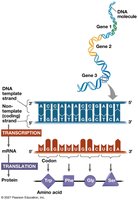
The genetic code is based on a triplet code, where each set of three nucleotides (codon) in mRNA specifies a particular amino acid. There are 20 amino acids and 64 possible codons (43 combinations).
Codon: A sequence of three nucleotides in mRNA that codes for a specific amino acid.
Template Strand: The DNA strand used as a template for RNA synthesis.
Coding Strand: The DNA strand whose sequence matches the mRNA (except T is replaced by U).
Reading Frame: The way nucleotides are grouped into codons; must be correct for proper protein synthesis.
The Codon Table
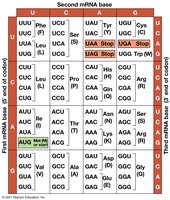
Of the 64 codons, 61 code for amino acids and 3 are stop signals. The genetic code is redundant (multiple codons for one amino acid) but not ambiguous (each codon specifies only one amino acid).
Universality of the Genetic Code
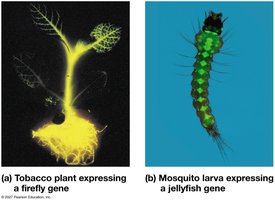
The genetic code is nearly universal among all organisms, providing evidence for a common evolutionary origin. Genes can often be expressed in different species.
Transcription: DNA to RNA
Stages of Transcription
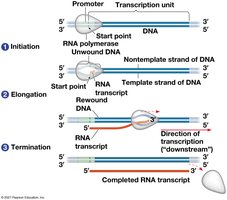
Transcription occurs in three main stages: initiation, elongation, and termination.
Initiation: RNA polymerase binds to the promoter region of DNA, aided by transcription factors in eukaryotes.
Elongation: RNA polymerase moves along the DNA, synthesizing RNA in the 5′ to 3′ direction.
Termination: Transcription ends when RNA polymerase reaches a terminator sequence (in prokaryotes) or after transcribing a polyadenylation signal (in eukaryotes).
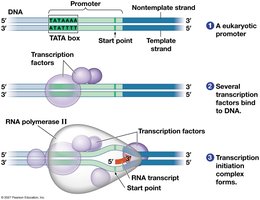
Transcription Initiation in Eukaryotes
In eukaryotes, transcription factors and a promoter element called the TATA box are crucial for the formation of the transcription initiation complex.
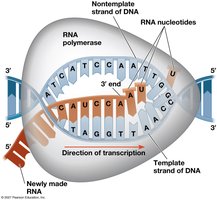
Transcription Elongation
As RNA polymerase moves along the DNA, it unwinds the double helix and adds RNA nucleotides complementary to the DNA template strand.
RNA Processing in Eukaryotes
Before mRNA leaves the nucleus, it undergoes processing:
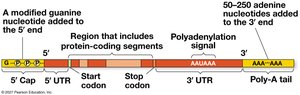
Addition of a 5′ cap (modified guanine nucleotide).
Addition of a 3′ poly-A tail (50–250 adenine nucleotides).
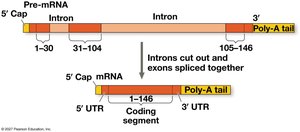
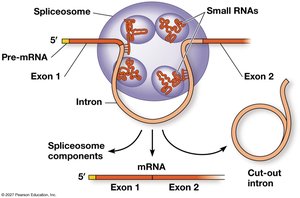
Splicing out of introns (noncoding regions) and joining of exons (coding regions).
Alternative RNA Splicing
Alternative splicing allows a single gene to code for multiple proteins by varying which exons are included in the final mRNA.
Ribozymes: RNA molecules that act as enzymes, capable of catalyzing their own splicing.
Translation: RNA to Protein
The Role of tRNA and Ribosomes
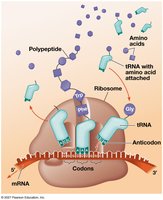
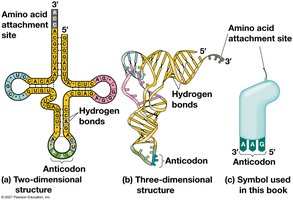
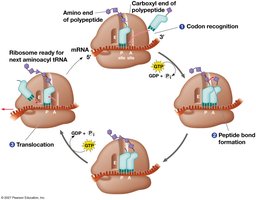
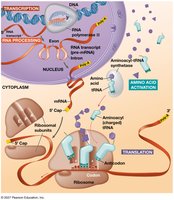
Translation is the process by which ribosomes synthesize proteins using mRNA as a template. Transfer RNA (tRNA) molecules bring amino acids to the ribosome, matching their anticodon with codons on the mRNA.
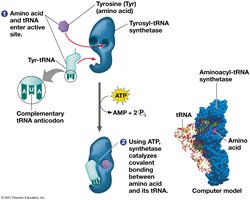
Aminoacyl-tRNA Synthetase
This enzyme attaches the correct amino acid to its corresponding tRNA, ensuring the fidelity of translation.
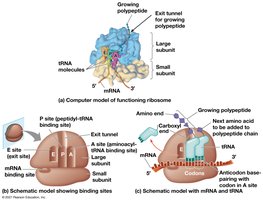
Ribosome Structure and Function
Ribosomes are composed of two subunits (large and small) and facilitate the coupling of tRNA anticodons with mRNA codons during protein synthesis.
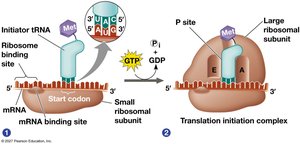
Stages of Translation
Initiation: The small ribosomal subunit binds to mRNA and the initiator tRNA (carrying methionine), followed by the joining of the large subunit.
Elongation: Amino acids are added one by one to the growing polypeptide chain through codon recognition, peptide bond formation, and translocation.
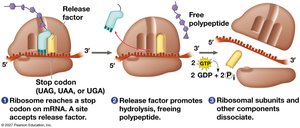
Termination: When a stop codon is reached, a release factor binds, causing the polypeptide to be released and the ribosome to dissociate.
Polyribosomes
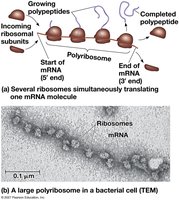
Multiple ribosomes can translate a single mRNA simultaneously, forming a polyribosome (polysome), which increases the efficiency of protein synthesis.
Coupling of Transcription and Translation in Prokaryotes
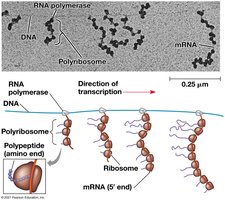
In prokaryotes, transcription and translation are coupled, allowing protein synthesis to begin before mRNA synthesis is complete.
Summary of Transcription and Translation in Eukaryotes
Mutations and Their Effects
Types of Mutations
Mutations are changes in the genetic information of a cell. They can affect protein structure and function, sometimes causing diseases.
Point Mutations: Changes in a single nucleotide pair.
Substitutions: Replacement of one nucleotide and its partner with another pair.
Insertions/Deletions: Addition or loss of nucleotide pairs, often causing frameshift mutations.
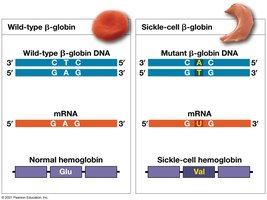
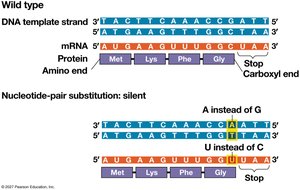
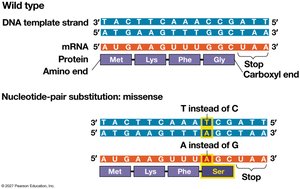
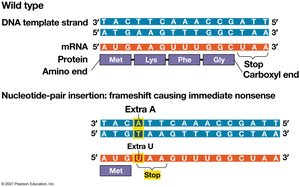
Consequences of Mutations
Silent Mutations: Do not affect the amino acid sequence due to redundancy in the genetic code.
Missense Mutations: Change one amino acid to another, which may affect protein function.
Nonsense Mutations: Convert an amino acid codon into a stop codon, leading to a truncated, usually nonfunctional protein.
Frameshift Mutations: Result from insertions or deletions that alter the reading frame, often producing nonfunctional proteins.
Causes of Mutations
Spontaneous Mutations: Occur during DNA replication or recombination.
Mutagens: Physical or chemical agents that cause mutations; many are also carcinogens (cancer-causing agents).
