 Back
Gene Expression: From Gene to Protein (Chapter 17) - Mini Study Guide
Study Guide - Smart Notes
 Tailored notes based on your materials, expanded with key definitions, examples, and context.
Gene Expression: From Gene to Protein
Central Dogma and Coding Redundancy
The central dogma of molecular biology describes the flow of genetic information from DNA to RNA to protein. This process is fundamental to understanding how genes specify traits and how coding redundancy ensures robustness in protein synthesis.
Central Dogma: Genetic information flows from DNA → RNA → Protein.
Coding Redundancy: The genetic code is redundant; multiple codons can code for the same amino acid, reducing the impact of mutations.
Key Processes: Transcription (DNA to RNA) and Translation (RNA to Protein).
Key Players: RNA polymerase, ribosomes, tRNA, mRNA.
RNA Modifications: Modifications such as capping, polyadenylation, and splicing are crucial for mRNA stability and translation efficiency.
Genes Specify Proteins
Genes are specific sequences in DNA that dictate the synthesis of proteins, which are the links between genotype and phenotype. Gene expression is the process by which DNA directs protein synthesis.
Gene Expression: The process by which information from a gene is used to synthesize a functional protein.
Discovery: The relationship between genes and proteins was discovered through studies of metabolic defects and nutritional mutants.
Evidence from Metabolic Defects
Metabolic pathways consist of a series of steps, each catalyzed by a specific enzyme. Inherited diseases often reflect the inability to synthesize a particular enzyme.
Model Organisms: Studies in Drosophila melanogaster, Fundulus heteroclitus, mold species, and Arabidopsis thaliana have been instrumental.

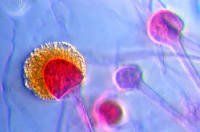
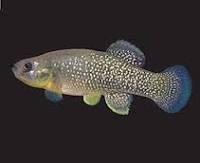
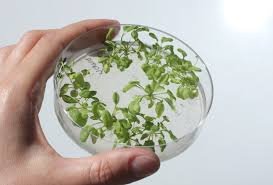
Nutritional Mutants in Neurospora
Beadle and Tatum exposed bread mold (Neurospora) to X-rays, creating mutants unable to grow on minimal medium. Each mutant had a defect in a different enzyme required for arginine synthesis.
One Gene-One Enzyme Hypothesis: Each gene dictates the production of a specific enzyme.
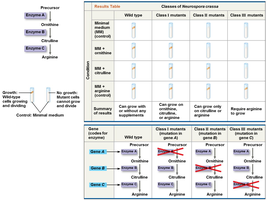
One Gene-One Protein Hypothesis
The original hypothesis evolved to "one gene–one protein (polypeptide)" as not all proteins are enzymes and some proteins are composed of multiple polypeptides.
Language Difference: DNA and protein use different languages; conversion requires transcription and translation.
Central Dogma Steps: Transcription (DNA to RNA) and Translation (RNA to Protein).
Transcription and Translation
Transcription is the synthesis of RNA from DNA, producing messenger RNA (mRNA). Translation is the synthesis of a polypeptide using information in mRNA, facilitated by ribosomes.
Transcription: Occurs in the nucleus (eukaryotes), produces mRNA.
Translation: Occurs in the cytoplasm, ribosomes read mRNA to build proteins.
Prokaryote vs. Eukaryote Gene Expression
In prokaryotes, translation can begin before transcription finishes (coupled reaction). In eukaryotes, transcription and translation are separated by the nuclear envelope, and pre-mRNA undergoes processing.
Prokaryotes: Coupled transcription and translation.
Eukaryotes: Transcription in nucleus, translation in cytoplasm, pre-mRNA processing required.
The Genetic Code
The genetic code consists of triplets of nucleotides (codons) that specify amino acids. There are 20 amino acids and only four nucleotide bases, so codons are three nucleotides long.
Codons: Triplets of nucleotides read in the 5′ → 3′ direction.
Redundancy: 64 codons, 61 code for amino acids, 3 are stop codons.
Reading Frame: Codons must be read in the correct frame to produce the correct polypeptide.
Universality and Evolution of the Genetic Code
The genetic code is nearly universal, allowing genes to be transplanted and expressed across species.
Application: Genes from fireflies (luciferase) can be expressed in other organisms.
Transcription: A Closer Look
Transcription is catalyzed by RNA polymerase, which binds to the promoter region of DNA. Transcription factors help initiate transcription in eukaryotes.
Promoter: DNA sequence where RNA polymerase attaches.
TATA Box: Crucial promoter element in eukaryotes.
Transcription Initiation Complex: Assembly of transcription factors and RNA polymerase II.
Elongation and Termination of Transcription
RNA polymerase untwists DNA and adds nucleotides to the 3′ end of the growing RNA strand. Termination differs between prokaryotes and eukaryotes.
Elongation: Multiple RNA polymerases can transcribe a gene simultaneously.
Termination: In prokaryotes, transcription stops at the terminator; in eukaryotes, a polyadenylation signal sequence is transcribed.
RNA Processing in Eukaryotes
Pre-mRNA undergoes modifications before leaving the nucleus, including capping, polyadenylation, and splicing.
5’ Cap: Modified guanine added to the 5’ end.
Poly-A Tail: Added to the 3’ end.
Splicing: Introns removed, exons joined.
RNA Splicing and Ribozymes
Spliceosomes, composed of proteins and snRNPs, catalyze RNA splicing. Some RNAs (ribozymes) can act as enzymes.
Ribozymes: RNA molecules with catalytic activity.
Alternative Splicing: Allows production of multiple proteins from one gene.
Protein Domains and Exon Shuffling
Proteins often have discrete regions called domains, coded by different exons. Exon shuffling can lead to new proteins.
Molecular Components of Translation
Translation requires mRNA, tRNA, and ribosomes. tRNAs carry amino acids and have anticodons that pair with mRNA codons.
tRNA: Single RNA strand (~80 nucleotides), L-shaped.
Wobble: Flexible pairing at the third base of a codon.
Translation by Ribosomes
Ribosomes couple tRNA anticodons with mRNA codons. Ribosomes have three sites: P (polypeptide), A (amino acid), and E (exit).
Initiation: Small ribosomal subunit binds mRNA and initiator tRNA, large subunit joins.
Elongation: Amino acids added to C-terminus, involves elongation factors.
Termination: Stop codon reached, release factor causes hydrolysis and release of polypeptide.
Completing the Functional Protein
Proteins fold into secondary and tertiary structures during synthesis. Post-translational modifications (PTMs) alter protein function.
PTMs: Proteolysis, glycosylation, phosphorylation.
Targeting Proteins to Specific Locations
Free ribosomes synthesize cytosolic proteins; bound ribosomes synthesize proteins for the endomembrane system or secretion. Signal peptides and SRPs direct proteins to the ER.
Polyribosomes (Polysomes)
Multiple ribosomes can translate a single mRNA simultaneously, forming a polyribosome. This enables rapid protein synthesis.
Mutations: Changes in DNA Sequence
Mutations are changes in the genetic material. They can be spontaneous or induced by mutagens. Mutations may not always result in phenotypic changes.
Types: Somatic and germline mutations.
Spontaneous: Occur during replication, recombination, or repair.
Induced: Caused by chemicals or radiation.
Small Scale Mutations
Point mutations include nucleotide-pair substitutions, insertions, and deletions.
Silent Mutation: No effect on amino acid.
Missense Mutation: Codes for a different amino acid.
Nonsense Mutation: Changes codon to stop codon.
Frameshift Mutation: Insertions or deletions alter reading frame.
Examples of Mutation Effects
Mutations can cause diseases such as sickle cell anemia (missense mutation in hemoglobin gene) and lactase persistence/intolerance (mutation in lactase gene regulation).
What Is a Gene?
A gene can be defined as a region of DNA that can be expressed to produce a final functional product, either a polypeptide or an RNA molecule.
