 Back
Gene Expression: From Gene to Protein – Study Guide
Study Guide - Smart Notes
 Tailored notes based on your materials, expanded with key definitions, examples, and context.
Gene Expression: From Gene to Protein
The Flow of Genetic Information
Gene expression is the process by which information from a gene is used to synthesize a functional gene product, typically a protein. The flow of genetic information follows the central dogma: DNA → RNA → protein.
Central Dogma: The concept that genetic information flows from DNA to RNA to protein.
Transcription: The synthesis of RNA from a DNA template.
Translation: The synthesis of a polypeptide (protein) from an mRNA template.
Ribosomes: The cellular structures where translation occurs.

Beadle and Tatum’s Experiment: One Gene-One Enzyme Hypothesis
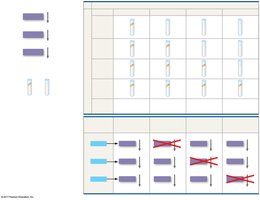
Beadle and Tatum demonstrated that genes specify enzymes by exposing Neurospora (bread mold) to X-rays, creating mutants unable to grow on minimal media. Their work led to the one gene-one enzyme hypothesis, now expanded to one gene-one polypeptide.
Mutants: Created by X-ray exposure, unable to synthesize certain amino acids.
Growth Tests: Mutants were tested on media supplemented with specific amino acids to identify metabolic blocks.
Enzyme Pathways: Each gene encodes a specific enzyme in a metabolic pathway.
Basic Principles of Transcription and Translation
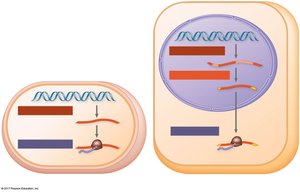
Transcription and translation are the two main steps in gene expression. RNA acts as a bridge between DNA and proteins.
Transcription: DNA is transcribed to produce messenger RNA (mRNA).
Translation: mRNA is translated into a polypeptide chain.
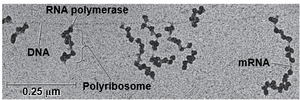
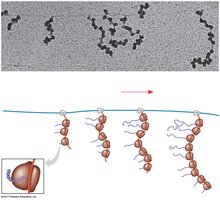
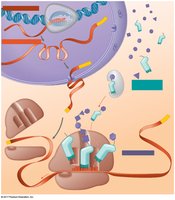
Prokaryotes vs. Eukaryotes: In prokaryotes, translation can begin before transcription is finished. In eukaryotes, transcription occurs in the nucleus and translation in the cytoplasm.
Codons: Triplets of Nucleotides
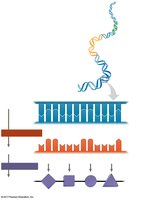
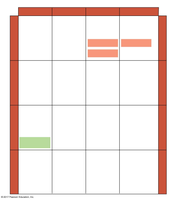
The genetic code is based on codons, which are sequences of three nucleotides in mRNA that specify amino acids.
Codon: A three-nucleotide sequence in mRNA that codes for an amino acid.
Redundancy: Multiple codons can code for the same amino acid.
Stop Codons: Three codons (UAA, UAG, UGA) signal the end of translation.
Reading Frame: Codons must be read in the correct grouping for proper protein synthesis.
Transcription: DNA-Directed Synthesis of RNA
Stages of Transcription
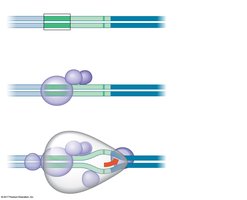
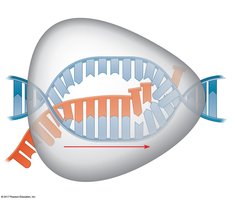
Transcription occurs in three stages: initiation, elongation, and termination. RNA polymerase catalyzes the synthesis of RNA from the DNA template.
Initiation: RNA polymerase binds to the promoter region, aided by transcription factors in eukaryotes.
Elongation: RNA polymerase moves along the DNA, synthesizing RNA in the 5′ → 3′ direction.
Termination: Transcription ends when RNA polymerase reaches a terminator sequence (bacteria) or polyadenylation signal (eukaryotes).
RNA Processing in Eukaryotes
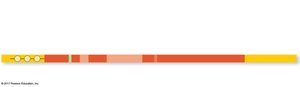
After transcription, eukaryotic pre-mRNA undergoes modifications to become mature mRNA.
5′ Cap: A modified guanine nucleotide added to the 5′ end.
Poly-A Tail: 50–250 adenine nucleotides added to the 3′ end.
Functions: Facilitate export, protect from degradation, and aid ribosome binding.
Split Genes and RNA Splicing
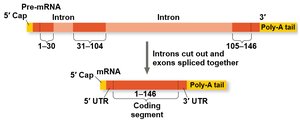
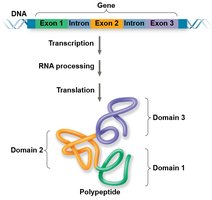
Eukaryotic genes contain introns (noncoding regions) and exons (coding regions). RNA splicing removes introns and joins exons.
Introns: Noncoding sequences removed during RNA processing.
Exons: Coding sequences retained in mature mRNA.
Spliceosome: A complex that catalyzes splicing.
Alternative Splicing: Allows a single gene to code for multiple proteins.
Translation: RNA-Directed Synthesis of Polypeptides
Transfer RNA (tRNA) Structure and Function
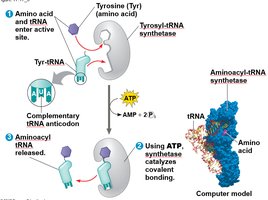
tRNA molecules bring amino acids to the ribosome and match them to the mRNA codons via their anticodon.
Anticodon: A three-nucleotide sequence in tRNA complementary to the mRNA codon.
Aminoacyl-tRNA Synthetase: Enzyme that attaches the correct amino acid to tRNA.

Ribosome Structure and Function
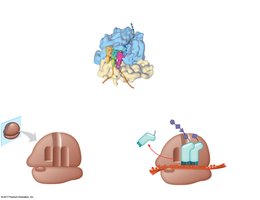
Ribosomes are composed of two subunits and facilitate the translation of mRNA into protein.
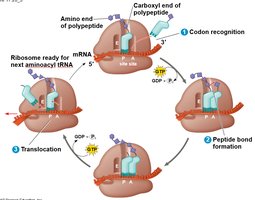
P Site: Holds the tRNA with the growing polypeptide chain.
A Site: Holds the tRNA with the next amino acid.
E Site: Exit site for discharged tRNA.
Translation Process: Initiation, Elongation, Termination
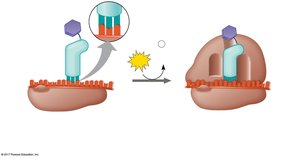
Translation occurs in three stages: initiation, elongation, and termination.
Initiation: The small ribosomal subunit binds to mRNA, and the initiator tRNA binds to the start codon.
Elongation: Amino acids are added one by one to the growing chain through codon recognition, peptide bond formation, and translocation.
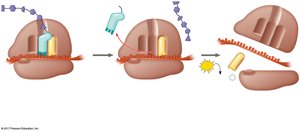
Termination: Occurs when a stop codon is reached; the polypeptide is released.
Polypeptide Targeting and Ribosome Populations
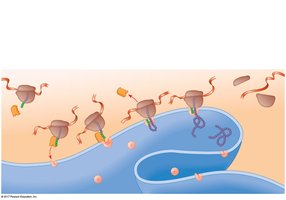
Proteins are targeted to specific locations in the cell. Free ribosomes synthesize cytosolic proteins, while bound ribosomes synthesize proteins for secretion or the endomembrane system.
Transcription and Translation in Prokaryotes vs. Eukaryotes
In prokaryotes, transcription and translation are coupled, while in eukaryotes, they are separated by the nuclear envelope.
Mutations and Their Effects on Protein Structure and Function
Point Mutations
Mutations are changes in the genetic material. Point mutations affect a single nucleotide pair and can alter protein function.
Types: Substitutions, insertions, deletions.
Effects: Silent, missense, nonsense, and frameshift mutations.
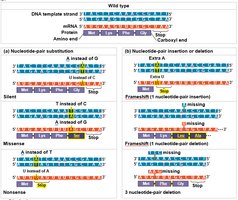
Summary Table: Types of Point Mutations
Type | Description | Effect |
|---|---|---|
Silent | Substitution that does not change amino acid | No effect on protein |
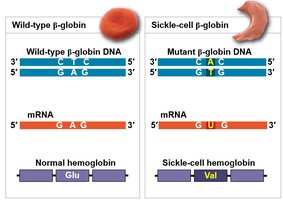
Missense | Substitution that changes one amino acid | May alter protein function |
Nonsense | Substitution that creates a stop codon | Premature termination |
Frameshift | Insertion or deletion that alters reading frame | Usually severe effect |
Example: Sickle-cell disease is caused by a missense mutation in the β-globin gene, changing glutamic acid to valine.
Additional info: Mutations are a source of genetic variation and can be beneficial, neutral, or harmful depending on their effect on protein function.
