 Back
Gene Expression: From Gene to Protein (Transcription and Translation)
Study Guide - Smart Notes
 Tailored notes based on your materials, expanded with key definitions, examples, and context.
Gene Expression: From Gene to Protein
Overview of Gene Expression
Gene expression is the process by which genetic information encoded in DNA is used to direct the synthesis of functional proteins. This process involves two main steps: transcription (the synthesis of RNA from DNA) and translation (the synthesis of protein from RNA). The flow of genetic information follows the "central dogma" of molecular biology: DNA → RNA → Protein.
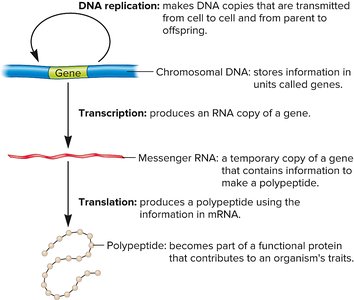
DNA replication: Copies DNA for inheritance.
Transcription: Produces an RNA copy of a gene.
Messenger RNA (mRNA): Temporary copy of a gene, carries information for protein synthesis.
Translation: Produces a polypeptide using the information in mRNA.
Polypeptide: Becomes part of a functional protein, contributing to an organism's traits.
Prokaryotic vs. Eukaryotic Gene Expression
Gene expression differs between prokaryotes and eukaryotes, primarily due to cellular compartmentalization in eukaryotes.
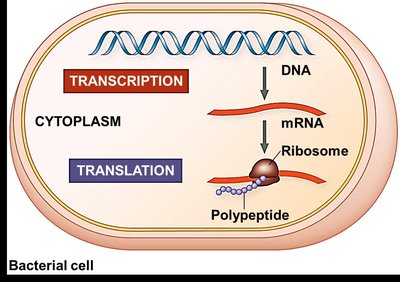
Prokaryotes: Transcription and translation both occur in the cytoplasm. Translation can begin before transcription is complete.
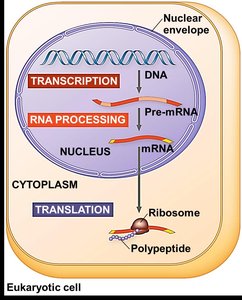
Eukaryotes: Transcription occurs in the nucleus, producing a pre-mRNA that undergoes RNA processing (capping, polyadenylation, and splicing) before being exported to the cytoplasm for translation.
The Central Dogma of Molecular Biology
The central dogma describes the directional flow of genetic information: DNA is transcribed into RNA, which is then translated into protein. This concept is fundamental to understanding how genes control cellular structure and function.
Transcription: DNA → RNA
Translation: RNA → Protein

Transcription: DNA to RNA
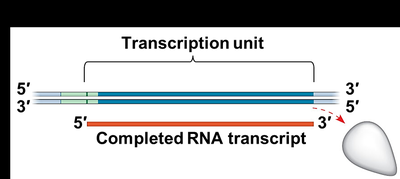
Transcription Unit and Strands
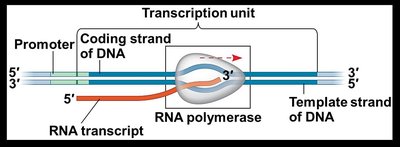
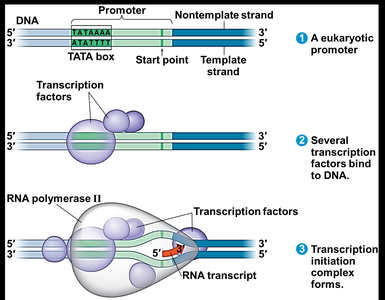
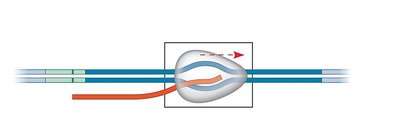
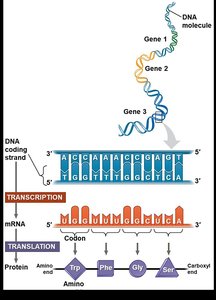
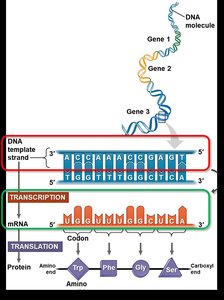
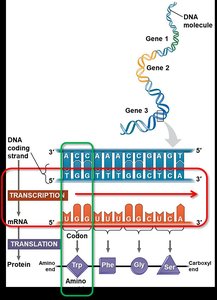
Transcription is initiated at a specific region called the promoter. The template strand of DNA is used by RNA polymerase to synthesize a complementary RNA strand. The coding strand of DNA has the same sequence as the RNA (except T is replaced by U in RNA).
Promoter: DNA sequence where RNA polymerase binds to initiate transcription.
Template strand: The DNA strand used as a template for RNA synthesis.
Coding strand: The non-template DNA strand; its sequence matches the RNA transcript (with U for T).
Transcription Process
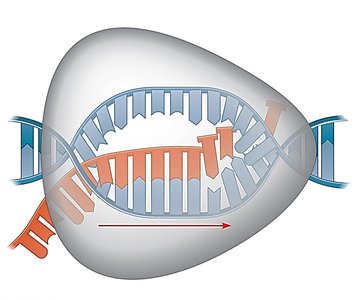
During transcription, RNA polymerase moves along the template strand in the 3' to 5' direction, synthesizing RNA in the 5' to 3' direction. The resulting RNA transcript is complementary to the template strand and nearly identical to the coding strand.
Initiation: RNA polymerase binds to the promoter with the help of transcription factors (in eukaryotes).
Elongation: RNA polymerase synthesizes the RNA strand.
Termination: Transcription ends at a terminator sequence (prokaryotes) or after a polyadenylation signal (eukaryotes).
RNA Processing in Eukaryotes
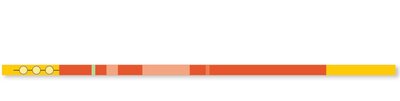
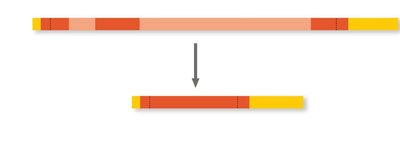
In eukaryotes, the primary RNA transcript (pre-mRNA) undergoes several modifications before becoming mature mRNA:
5' Capping: Addition of a modified guanine nucleotide to the 5' end.
Polyadenylation: Addition of a poly-A tail (50–250 adenines) to the 3' end.
Splicing: Removal of non-coding sequences (introns) and joining of coding sequences (exons).
Translation: RNA to Protein
The Genetic Code and Codons
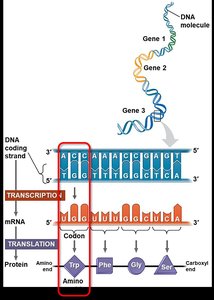
The genetic code is a set of rules by which the nucleotide sequence of mRNA is translated into the amino acid sequence of a protein. Each group of three nucleotides (codon) specifies one amino acid.
Triplet code: Three-nucleotide codons correspond to amino acids.
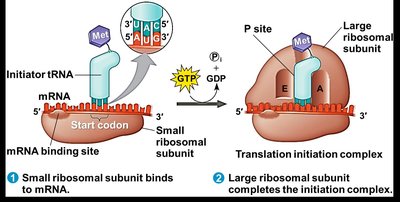
Start codon (AUG): Specifies methionine and signals the start of translation.
Stop codons (UAA, UAG, UGA): Signal the end of translation.
Redundancy: Most amino acids are encoded by more than one codon.
tRNA and the Ribosome
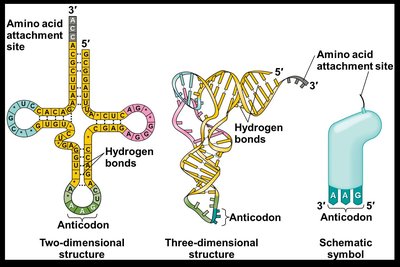
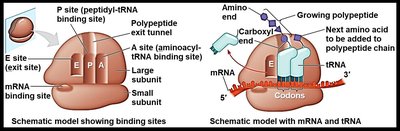
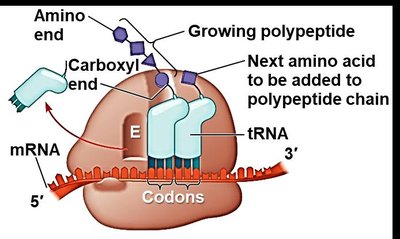
Transfer RNAs (tRNAs) bring amino acids to the ribosome, matching their anticodon with codons on the mRNA. The ribosome is the site of protein synthesis and is composed of a large and a small subunit, each with specific binding sites for tRNA and mRNA.
tRNA structure: Cloverleaf shape with an anticodon and an amino acid attachment site.
Ribosome: Has three binding sites for tRNA: A (aminoacyl), P (peptidyl), and E (exit).
Translation Process
Translation occurs in three main stages: initiation, elongation, and termination.
Initiation: The small ribosomal subunit binds to mRNA, and the initiator tRNA pairs with the start codon. The large subunit then joins to form the complete initiation complex.
Elongation: Amino acids are added one by one to the growing polypeptide chain as the ribosome moves along the mRNA.
Termination: When a stop codon is reached, the completed polypeptide is released.
Polyribosomes and Protein Targeting
Multiple ribosomes can simultaneously translate a single mRNA molecule, forming a structure called a polyribosome. Proteins synthesized on free ribosomes remain in the cytoplasm, while those with a signal sequence are targeted to the endoplasmic reticulum (ER) for secretion or membrane insertion.
Polyribosome: Increases efficiency of protein synthesis.
Signal sequence: Directs ribosome to the ER for protein targeting.
Mutations and Their Effects
Types of Mutations
Mutations are changes in the DNA sequence that can affect gene expression and protein function. They can be classified as:
Point mutations: Change a single nucleotide pair (substitutions, insertions, deletions).
Silent mutations: Do not alter the amino acid sequence due to redundancy in the genetic code.
Missense mutations: Change one amino acid to another.
Nonsense mutations: Convert a codon to a stop codon, leading to a truncated protein.
Frameshift mutations: Insertions or deletions that alter the reading frame, often resulting in nonfunctional proteins.
Non-Coding RNAs and Gene Regulation
Non-Coding RNAs (ncRNAs)
Not all RNAs code for proteins. Non-coding RNAs have diverse roles in the cell, including regulation of gene expression, RNA processing, and genome defense.
tRNAs and rRNAs: Essential for translation.
Small nuclear RNAs (snRNAs): Involved in splicing.
RNA interference (RNAi): Regulates gene expression and defends against viruses.
CRISPR RNAs: Involved in adaptive immunity in prokaryotes and gene editing technologies.
CRISPR-Cas9 Gene Editing
The CRISPR-Cas9 system, derived from a prokaryotic defense mechanism, is a powerful tool for precise genome editing. It uses a guide RNA to direct the Cas9 nuclease to a specific DNA sequence, where it introduces a double-strand break. This can be used to disrupt, repair, or replace genes.
Guide RNA: Determines the target DNA sequence.
Cas9 protein: Cuts the DNA at the specified location.
Applications: Gene knockout, gene correction, and insertion of new genetic material.
Summary Table: Key Steps in Gene Expression
Step | Location (Eukaryotes) | Main Molecules Involved | Key Function |
|---|---|---|---|
Transcription | Nucleus | DNA, RNA polymerase, pre-mRNA | Copy DNA to RNA |
RNA Processing | Nucleus | pre-mRNA, snRNPs, spliceosome | Modify and mature mRNA |
Translation | Cytoplasm | mRNA, tRNA, ribosome | Synthesize protein |
