 Back
Gene Expression, Regulation, and Environmental Influence on Phenotype
Study Guide - Smart Notes
 Tailored notes based on your materials, expanded with key definitions, examples, and context.
Heritability, Environment, and Phenotype
Norm of Reaction and Heritability
The norm of reaction describes how the phenotype of a genotype changes across different environments. Heritability measures the proportion of variation in a trait attributable to genetic differences among individuals in a specific environment, not the absolute contribution of genes to a trait.
Heritability (h2): Indicates how much of the observed variation in a population is due to genetic differences.
Example: Height in Dutch men is highly heritable (~0.8), but environmental improvements (nutrition, health) led to a population-wide increase in height over generations.
Key Point: Even highly heritable traits can shift dramatically if the environment changes for everyone.
Multifactorial Characters
Traits influenced by multiple genes and environmental factors are called multifactorial characters. Examples include height, skin color, and intelligence.
Polygenic Inheritance: Many genes contribute additively to the phenotype.
Environmental Influence: Nutrition, health, and other factors can modify the expression of these traits.
Developmental Information: Cytoplasmic Determinants and Induction
Sources of Cellular Information
Cells use two main sources of information to determine their fate during development:
Cytoplasmic Determinants: Molecules inherited from the mother cell during division that influence cell fate.
Induction: Signals from neighboring cells that trigger changes in gene expression.
Determination and Differentiation
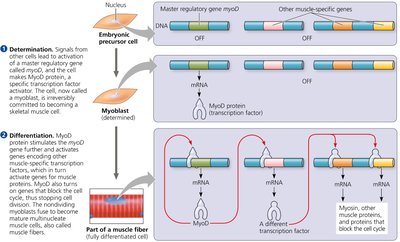
Determination is the process by which a cell becomes committed to a specific fate, followed by differentiation, where the cell acquires its specialized function.
Example: In muscle development, the activation of the myoD gene leads to determination, and subsequent gene expression results in differentiation into muscle fibers.
Environmental Effects on Gene Expression
Temperature-Dependent Sex Determination
Some organisms, such as turtles, exhibit temperature-dependent sex determination, where environmental conditions during development determine the sex of the offspring.
Example: Nest temperature during incubation decides whether turtle hatchlings become male or female.
Epigenetics: Lasting Environmental Marks
Epigenetic modifications are chemical changes to DNA or chromatin that affect gene expression without altering the DNA sequence. These marks can be influenced by environmental factors and persist for a lifetime.
DNA Methylation: Addition of methyl groups to DNA, often silencing gene expression.
Example: The Dutch Hunger Winter showed that prenatal famine exposure led to lasting changes in DNA methylation and health outcomes decades later.
Central Dogma: DNA to Protein
Transcription and Translation
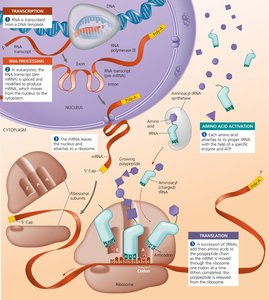
The central dogma of molecular biology describes the flow of genetic information: DNA is transcribed into RNA, which is then translated into protein.
Transcription: RNA polymerase synthesizes mRNA from a DNA template.
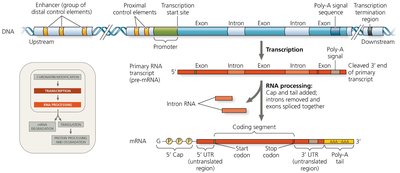
RNA Processing: Eukaryotic mRNA is modified with a 5' cap, poly-A tail, and removal of introns.
Translation: Ribosomes read mRNA codons and assemble amino acids into proteins.
The Genetic Code
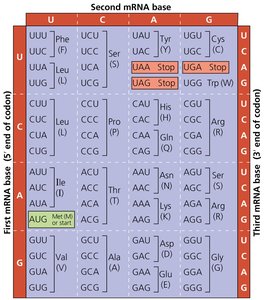
The genetic code is a set of rules by which information encoded in mRNA is translated into proteins. Each codon (three bases) specifies an amino acid or a stop signal.
Start Codon: AUG (methionine)
Stop Codons: UAA, UAG, UGA
Redundancy: Multiple codons can code for the same amino acid.
Gene Regulation in Prokaryotes and Eukaryotes
Prokaryotic Regulation: The Lac Operon
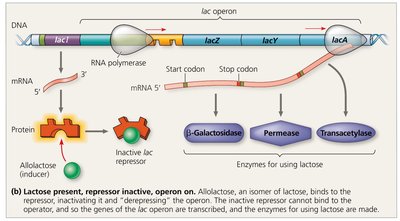
Prokaryotes often regulate gene expression at the transcriptional level. The lac operon is a classic example, controlling the metabolism of lactose in bacteria.
Repressor: Binds to the operator to block transcription unless lactose is present.
Inducer: Allolactose binds the repressor, allowing transcription.
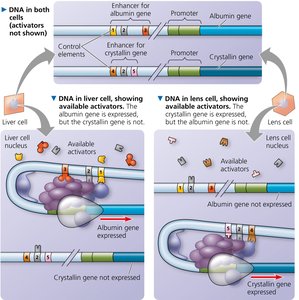
Eukaryotic Regulation: Enhancers and Activators
Eukaryotic cells regulate gene expression through complex interactions between enhancers, activators, and chromatin structure.
Enhancers: DNA sequences that increase transcription when bound by activators.
Activators: Proteins that bind enhancers and promote transcription.
Chromatin Modifications: Acetylation opens chromatin, methylation closes it.
RNA Processing and Alternative Splicing
RNA processing includes capping, tailing, and splicing. Alternative splicing allows a single gene to produce multiple protein variants.
Introns: Non-coding regions removed from pre-mRNA.
Exons: Coding regions joined to form mature mRNA.
Cell Signaling and Gene Expression
Signal Transduction Pathways
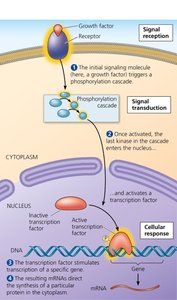
Cells respond to environmental signals through signal transduction pathways, which relay information from the cell surface to the nucleus, affecting gene expression.
Reception: Signal molecule binds to receptor.
Transduction: Cascade of molecular events, often involving phosphorylation.
Response: Activation of transcription factors and changes in gene expression.
Summary Table: Key Concepts in Gene Expression and Regulation
Concept | Definition | Example |
|---|---|---|
Heritability | Proportion of trait variation due to genetics | Height in Dutch men |
Norm of Reaction | Phenotype range for a genotype across environments | Daphnia neckteeth |
Cytoplasmic Determinants | Molecules inherited at cell division | Muscle cell determination |
Induction | Signals from neighboring cells | Frog embryo cell fate |
Epigenetics | Heritable changes in gene expression | Dutch Hunger Winter |
Central Dogma | DNA → RNA → Protein | Transcription and translation |
Lac Operon | Prokaryotic gene regulation | Lactose metabolism |
Enhancers/Activators | Eukaryotic gene regulation | Liver vs. lens cell gene expression |
Equations and Formulas
Heritability: where is genetic variance and is phenotypic variance.
Central Dogma:
Additional info:
Epigenetic marks such as DNA methylation can be influenced by diet, stress, and environmental exposures, affecting health and phenotype across generations.
Alternative splicing increases protein diversity without increasing gene number.
