 Back
Gene Expression Regulation in Prokaryotes and Eukaryotes
Study Guide - Smart Notes
 Tailored notes based on your materials, expanded with key definitions, examples, and context.
Regulation of Gene Expression
Overview of Gene Expression Regulation
Gene expression is the process by which information from a gene is used to synthesize functional gene products, such as proteins. Both prokaryotes and eukaryotes regulate gene expression to respond to environmental changes and to ensure proper development and cellular function. In multicellular eukaryotes, gene expression is crucial for cell differentiation and organismal development. RNA molecules also play significant roles in regulating gene expression, especially in eukaryotes.
Gene Regulation in Prokaryotes
Operon Model
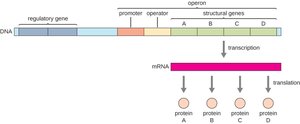
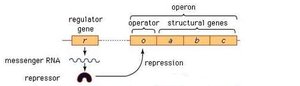
Prokaryotes often regulate gene expression at the transcriptional level using operons. An operon is a cluster of functionally related genes controlled by a single "on-off switch" called the operator, which is usually located within the promoter region. The operon includes the operator, promoter, and the genes they control.
Regulatory gene: Encodes a repressor protein that can bind to the operator to block transcription.
Repressor: A protein that prevents gene transcription by binding to the operator and blocking RNA polymerase.
Corepressor: A small molecule that cooperates with a repressor protein to switch an operon off.
Types of Operons: Repressible and Inducible
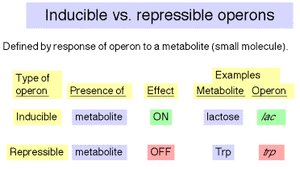
Operons can be classified based on their regulatory mechanisms:
Repressible operon: Usually on; binding of a repressor (with corepressor) shuts off transcription (e.g., trp operon).
Inducible operon: Usually off; an inducer inactivates the repressor and turns on transcription (e.g., lac operon).
The trp Operon (Repressible)
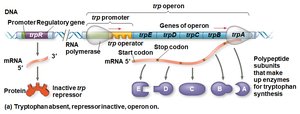
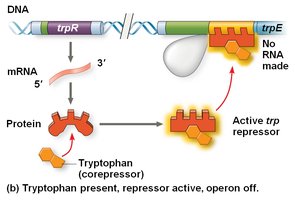
The trp operon encodes enzymes for tryptophan synthesis. When tryptophan is absent, the operon is active and genes are transcribed. When tryptophan is present, it acts as a corepressor, activating the repressor protein, which binds to the operator and blocks transcription.
The lac Operon (Inducible)
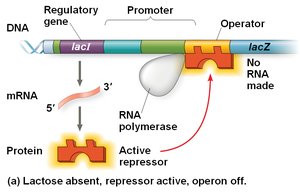
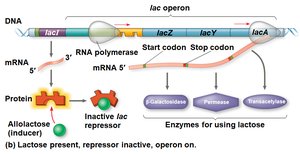
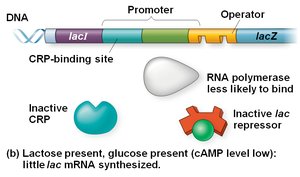
The lac operon encodes enzymes for lactose metabolism. By default, the repressor is active and the operon is off. When lactose (specifically allolactose) is present, it acts as an inducer, inactivating the repressor and allowing transcription.
Negative and Positive Gene Regulation
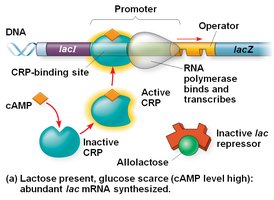
Both the trp and lac operons are examples of negative gene regulation, where active repressors turn off transcription. Some operons are also subject to positive control, such as the CRP-cAMP system in the lac operon, where the presence of cAMP activates CRP, which enhances RNA polymerase binding and transcription when glucose is scarce.
Gene Regulation in Eukaryotes
Levels of Gene Regulation
Gene expression in eukaryotes is regulated at multiple levels, including chromatin structure, transcription, RNA processing, mRNA stability, translation, and post-translational modifications. Differential gene expression is essential for cell specialization and development.
Regulation of Chromatin Structure
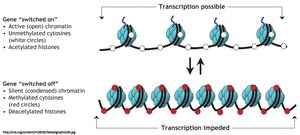
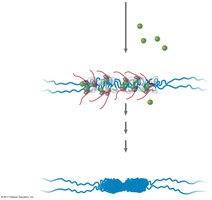
The organization of chromatin affects gene accessibility. Genes in highly compacted heterochromatin are usually not expressed, while those in euchromatin are accessible for transcription. Chemical modifications such as histone acetylation and DNA methylation play key roles:
Histone acetylation: Addition of acetyl groups to histone tails loosens chromatin, promoting transcription.
DNA methylation: Addition of methyl groups to DNA bases condenses chromatin and reduces transcription.
Epigenetic Inheritance
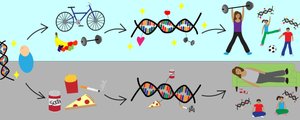
Epigenetic inheritance refers to the transmission of traits by mechanisms not involving changes in DNA sequence, such as chromatin modifications. These modifications can be inherited through cell divisions and affect gene expression patterns.
Transcriptional Regulation
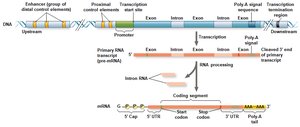
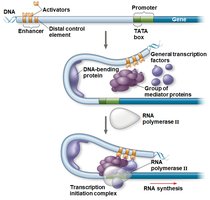
Transcription in eukaryotes is regulated by control elements (enhancers and promoters) and transcription factors. General transcription factors are required for all protein-coding genes, while specific transcription factors bind to enhancers to regulate particular genes.

Post-Transcriptional Regulation
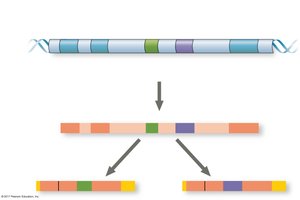
Gene expression can also be regulated after transcription through mechanisms such as alternative RNA splicing, mRNA degradation, and translational control. Alternative splicing allows a single gene to produce multiple protein variants.
Noncoding RNAs in Gene Regulation
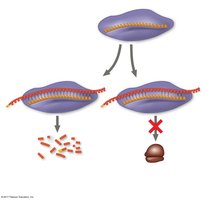
Noncoding RNAs (ncRNAs), including microRNAs (miRNAs) and small interfering RNAs (siRNAs), play crucial roles in post-transcriptional regulation by degrading mRNA or blocking translation. Other ncRNAs are involved in chromatin remodeling and gene silencing.
Differential Gene Expression and Development
Cell Differentiation and Morphogenesis
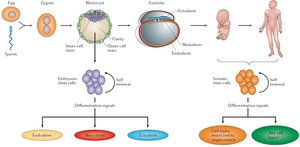
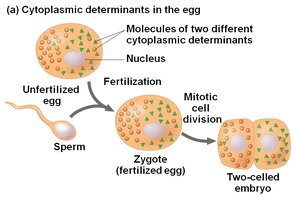
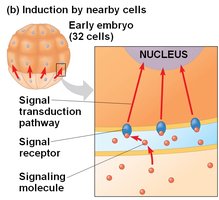
During development, differential gene expression leads to the formation of specialized cell types. Cytoplasmic determinants and inductive signals from neighboring cells guide cell fate and tissue organization.
Pattern Formation and Axis Establishment
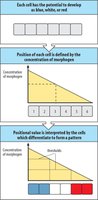
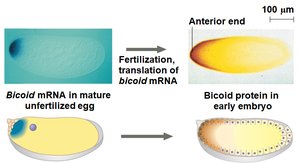
Pattern formation involves the spatial organization of tissues and organs. Maternal effect genes and morphogen gradients, such as the bicoid protein in Drosophila, establish body axes and positional information in embryos.
Gene Regulation and Cancer
Genetic Changes Leading to Cancer
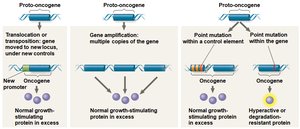
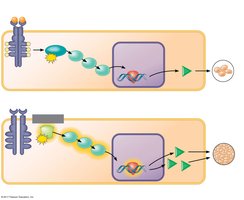
Cancer results from genetic changes that disrupt normal cell cycle control. Mutations in proto-oncogenes (which become oncogenes) and tumor-suppressor genes can lead to uncontrolled cell division. The ras proto-oncogene and p53 tumor-suppressor gene are commonly mutated in cancers.
Multistep Model of Cancer Development
Cancer typically develops after multiple mutations accumulate in a cell. These mutations often involve activation of oncogenes and inactivation of tumor-suppressor genes. Environmental factors and inherited mutations can contribute to cancer risk.
Breast Cancer Subtypes and Genomics
Genomic profiling has identified several subtypes of breast cancer, each with distinct molecular characteristics and prognoses. Treatments can be tailored based on the presence of specific receptors, such as HER2.
