 Back
Gene Expression: Transcription and Translation Study Guide
Study Guide - Smart Notes
 Tailored notes based on your materials, expanded with key definitions, examples, and context.
Gene Expression: The Central Dogma
Overview of Information Flow in Cells
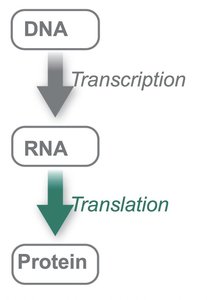
Gene expression is the process by which genetic information stored in DNA is used to produce functional proteins. This process involves two main steps: transcription (DNA to RNA) and translation (RNA to protein). The flow of information is often referred to as the Central Dogma of molecular biology.
DNA stores genetic instructions.
Transcription rewrites DNA information into RNA.
Translation converts RNA information into a new language: protein.
Transcription: DNA to mRNA
Transcription Process and Regulation
Transcription is the synthesis of messenger RNA (mRNA) from a DNA template. It is regulated by promoter sequences and transcription factors, which determine when, where, and how much a gene is transcribed.
Initiation: Transcription factors bind to the promoter region, recruiting RNA polymerase.
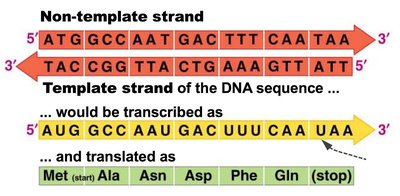
Elongation: RNA polymerase synthesizes mRNA in the 5' to 3' direction, using the DNA template strand.
Termination: Transcription ends at terminator sequences.
mRNA Processing: Addition of a 5' cap, poly(A) tail, and splicing of introns.
Key Points:
The coding strand of DNA has the same sequence as mRNA (except T is replaced by U).
The template strand is read 3' to 5' to synthesize mRNA 5' to 3'.
Processed mRNA is exported to the cytoplasm for translation.
Translation: mRNA to Protein
Translation Mechanism
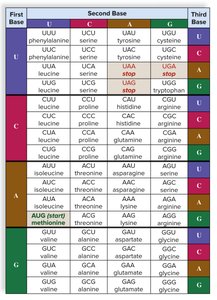
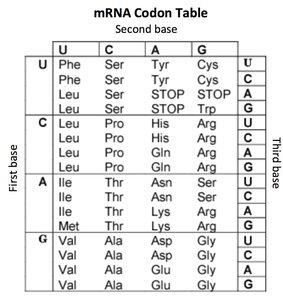
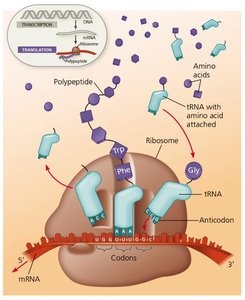
Translation is the process by which ribosomes decode mRNA into a polypeptide chain (protein). The mRNA is read in three-nucleotide units called codons, each specifying an amino acid or a stop signal.
Start Codon: AUG (methionine) marks the beginning of translation.
Stop Codons: UAA, UAG, UGA signal the end of translation.
Redundancy: There are 64 codons for 20 amino acids, leading to redundancy.
Components of Translation
Several molecular components are required for translation:
Messenger RNA (mRNA): Template for protein synthesis.
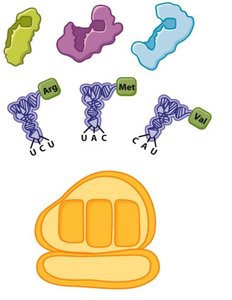
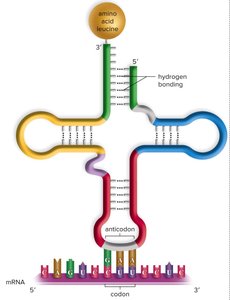
Transfer RNA (tRNA): Brings amino acids to the ribosome; each tRNA has an anticodon complementary to the mRNA codon.
Ribosome: Composed of ribosomal RNA (rRNA) and proteins; catalyzes peptide bond formation.
Aminoacyl tRNA synthetases: Enzymes that charge tRNAs with their specific amino acids.

Translation Steps
Translation occurs in three main stages: initiation, elongation, and termination.
Initiation
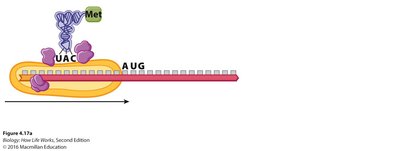
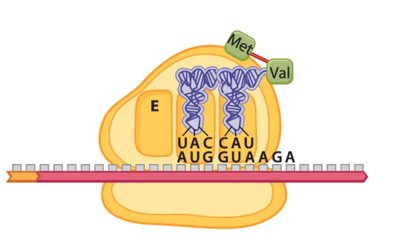
The small ribosomal subunit binds to mRNA at the start codon (AUG).
Initiator tRNA (with anticodon UAC, carrying methionine) binds to the start codon.
The large ribosomal subunit joins, forming the complete initiation complex.
Elongation
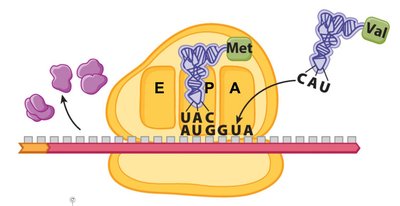
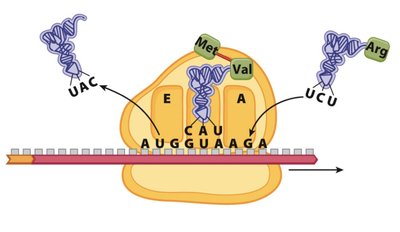
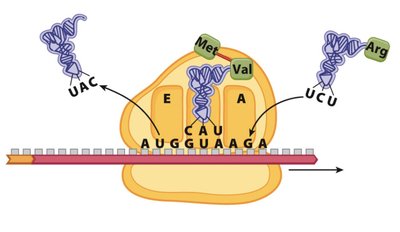
tRNAs bring amino acids to the ribosome, matching their anticodons to mRNA codons.
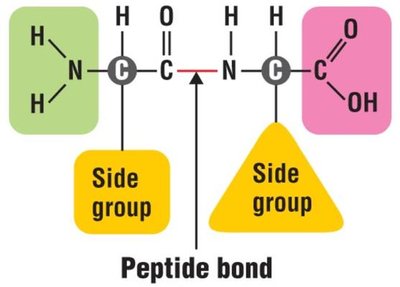
Peptide bonds are formed between amino acids, catalyzed by the ribosome.
The ribosome moves along the mRNA, shifting tRNAs through the E (exit), P (peptidyl), and A (aminoacyl) sites.
Termination
When a stop codon enters the A site, a release factor binds, causing the polypeptide to be released.
The ribosome disassembles, and translation ends.
Polyribosomes and Protein Synthesis Locations
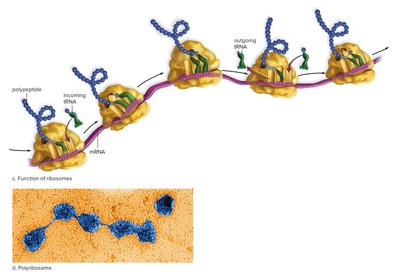
Multiple ribosomes can translate a single mRNA simultaneously, forming a polyribosome (polysome). Proteins are synthesized either in the cytoplasm or on the rough endoplasmic reticulum (RER), depending on their destination.
Free ribosomes: Synthesize proteins for the cytoplasm.
RER-bound ribosomes: Synthesize proteins for secretion or membrane insertion.
Codon-Anticodon Recognition and the Genetic Code
Codon Table and Redundancy
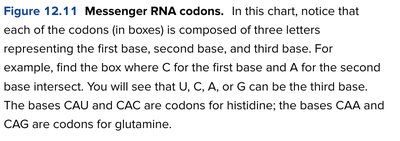
The genetic code is a set of rules by which information encoded in mRNA is translated into proteins. Each codon (three bases) specifies an amino acid or a stop signal. The code is redundant, meaning multiple codons can code for the same amino acid.
Example: CAU and CAC both code for histidine; CAA and CAG code for glutamine.
Anticodon: The tRNA anticodon is antiparallel and complementary to the mRNA codon.
Summary Table: Codon-Amino Acid Relationships
Codon | Amino Acid | Start/Stop |
|---|---|---|
AUG | Methionine | Start |
UAA | None | Stop |
UAG | None | Stop |
UGA | None | Stop |
UUU, UUC | Phenylalanine | |
CAA, CAG | Glutamine | |
CAU, CAC | Histidine | |
GCU, GCC, GCA, GCG | Alanine | |
... (see codon table for full list) |
Key Concepts and Practice Questions
Each amino acid is specified by one or more codons.
tRNA anticodon is antiparallel and complementary to the mRNA codon.
mRNA is read and made in the 5' to 3' direction.
Translation begins at the first start codon (AUG) and proceeds codon by codon.
Proteins not destined for the cytoplasm are synthesized on the RER and processed through the secretory pathway.
Additional info:
Alternative splicing allows multiple proteins to be produced from a single gene.
Gene expression is regulated primarily at the transcription initiation step.
Peptide bonds are formed by dehydration synthesis between amino acids.
