 Back
BackGene Expression: Transcription in Prokaryotes and Eukaryotes
Study Guide - Smart Notes
 Tailored notes based on your materials, expanded with key definitions, examples, and context.
Gene Expression and the Central Dogma
Overview of Gene Expression
Gene expression is the process by which information encoded in DNA is used to produce a specific polypeptide. This occurs in two main steps: transcription and translation. The central dogma of molecular biology describes the flow of genetic information: DNA → RNA → protein.
Transcription: Synthesis of RNA complementary to one strand of DNA.
Translation: Conversion of RNA sequence into an amino acid sequence of a polypeptide.
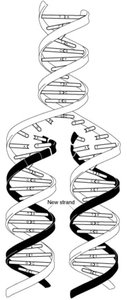
Replication: Copying DNA to produce identical DNA molecules.
Key Questions: How is DNA transcribed to RNA? What are the differences between prokaryotic and eukaryotic transcription?
Transcription in Prokaryotes
Bacterial RNA Polymerase Structure
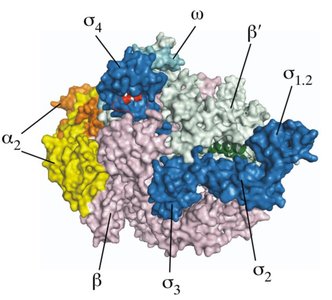
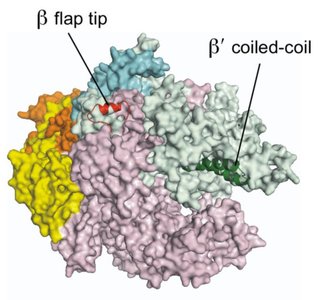
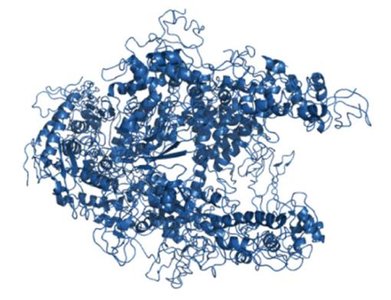
In Escherichia coli, the core RNA polymerase consists of five polypeptide subunits: β', β, α2, and ω. The holoenzyme includes the sigma (σ) factor, which is essential for promoter recognition.
Core RNA Polymerase: Responsible for RNA synthesis but cannot initiate transcription at specific sites.
Holoenzyme: Core enzyme plus sigma factor; recognizes and binds to promoter sequences.
Promoter Recognition and Initiation
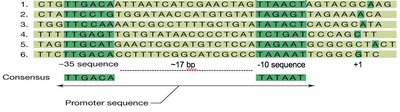
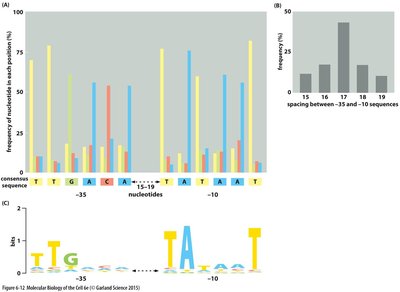
Transcription initiation requires recognition of promoter sequences by the holoenzyme. The sigma factor binds to consensus sequences in the core promoter, specifically the -35 and -10 elements.
Promoter: DNA sequence where RNA polymerase binds to initiate transcription.
Consensus Sequences: Conserved DNA motifs at -35 and -10 positions relative to the transcription start site.
Spacing: The distance between -35 and -10 elements is critical for promoter function.
Formation of Closed and Open Complexes
RNA polymerase initially forms a closed complex with DNA. Promoter opening creates an open complex, exposing the template strand for RNA synthesis.
Closed Complex: RNA polymerase bound to double-stranded DNA.
Open Complex: DNA unwound at the promoter, allowing transcription initiation.
Abortive Initiation and Promoter Escape
During early transcription, short RNA transcripts are produced (abortive initiation) until the polymerase escapes the promoter and enters elongation.
Abortive Initiation: Short transcripts synthesized while sigma factor remains bound.
Promoter Escape: Sigma factor is released, and elongation factors bind, allowing processive RNA synthesis.
Transcription Termination in Prokaryotes
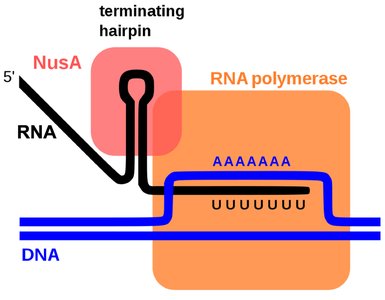
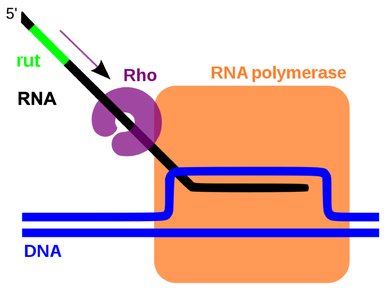
Termination occurs via two mechanisms: Rho-independent and Rho-dependent.
Rho-independent termination: Formation of a hairpin loop in the RNA causes RNA polymerase to stall and release the transcript.
Rho-dependent termination: Rho protein binds to the rut site on RNA, translocates, and induces transcript release.
Gene Organization in Prokaryotes
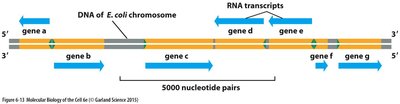
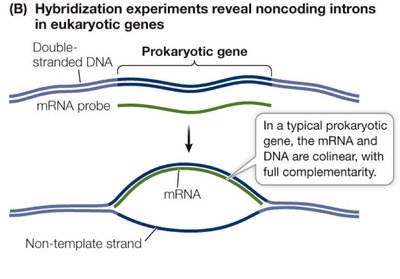
Prokaryotic genes are continuous, with coding sequences uninterrupted by introns. The RNA transcript is co-linear with the DNA template.
Continuous Coding Sequence: No introns; direct correspondence between DNA and mRNA.
Hybridization: mRNA fully complements the template DNA strand.
Transcription in Eukaryotes
RNA Polymerases in Eukaryotes
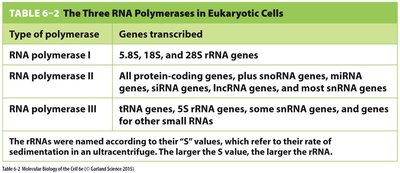
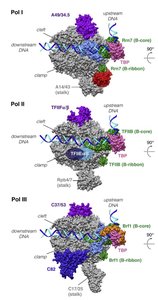
Eukaryotes possess three main nuclear RNA polymerases, each responsible for transcribing different classes of genes.
RNA Polymerase I: Transcribes rRNA genes (5.8S, 18S, 28S).
RNA Polymerase II: Transcribes all protein-coding genes and most small nuclear RNAs.
RNA Polymerase III: Transcribes tRNA, 5S rRNA, and other small RNAs.
Type of polymerase | Genes transcribed |
|---|---|
RNA polymerase I | 5.8S, 18S, and 28S rRNA genes |
RNA polymerase II | All protein-coding genes, snoRNA, miRNA, siRNA, lncRNA, most snRNA genes |
RNA polymerase III | tRNA, 5S rRNA, some snRNA, other small RNAs |
Promoter Elements and Transcription Factors
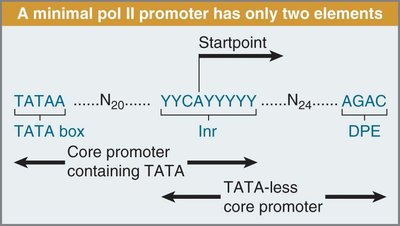
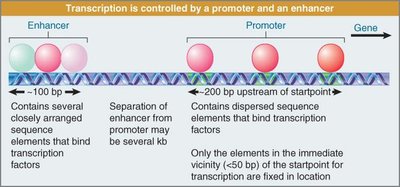
Eukaryotic transcription initiation requires recognition of core promoter elements by general transcription factors (GTFs), which recruit RNA polymerase II.
Core Promoter: Determines transcription start site; contains consensus sequences (e.g., TATA box, Inr, DPE).
General Transcription Factors (GTFs): Proteins required for RNA polymerase II to initiate transcription.
Promoter Proximal and Distal Elements: Regulatory sequences for transcriptional activators and repressors.
Transcription Elongation and Coupled Processes
Transcription elongation in eukaryotes is tightly coupled to mRNA processing, DNA repair, replication, and nuclear architecture.
mRNA Processing: Includes capping, splicing, and 3' end formation.
DNA Repair: Transcription-coupled repair mechanisms.
Replication: Actively transcribed genes are replicated early in S phase.
Nuclear Architecture: Organization of transcription foci and chromatin domains.
Sequence-Specific Transcription Factors
Transcription factors bind to specific DNA sequences, often as dimers, and regulate the rate of transcription initiation.
DNA-binding Domains: Recognize short consensus sequences, often arranged in palindromes.
Dimerization: Many transcription factors function as dimers for increased specificity.
Protein-DNA Interactions: Involve hydrogen bonds and contacts with the major and minor grooves of DNA.
mRNA Processing in Eukaryotes
Post-Transcriptional Modifications
Eukaryotic mRNA undergoes several processing steps before translation, including addition of a 5' cap, polyadenylation, and splicing.
5' Cap: Modified GTP added to the 5' end; facilitates ribosome binding and protects mRNA.
Poly(A) Tail: Sequence of adenines added to the 3' end; important for stability and export.
Splicing: Removal of introns and joining of exons by the spliceosome.
Alternative Splicing: Allows production of multiple proteins from a single gene.
Gene Structure: Introns and Exons
Most eukaryotic genes are 'split', containing non-coding introns that are removed during mRNA processing. The mature mRNA contains only exons.
Introns: Non-coding sequences removed by splicing.
Exons: Coding sequences retained in mature mRNA.
Spliceosome: Complex responsible for RNA splicing.
Export and Translation
Mature mRNA is selectively exported from the nucleus through nuclear pore complexes and translated in the cytoplasm. In prokaryotes, translation can begin while transcription is ongoing.
Export: Mature mRNA leaves the nucleus for translation.
Coupling: In prokaryotes, transcription and translation are coupled; in eukaryotes, they are separated by the nuclear envelope.
Comparative Summary: Prokaryotic vs. Eukaryotic Transcription
Prokaryotes: Single RNA polymerase, continuous coding sequence, direct mRNA-DNA correspondence, no introns, coupled transcription and translation.
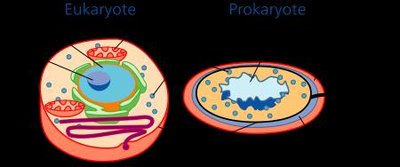
Eukaryotes: Multiple RNA polymerases, split genes with introns and exons, extensive mRNA processing, transcription and translation separated.
Key Terms and Concepts
Central Dogma
Promoter
Transcription Start Site
Termination Site
Core RNA Polymerase
Holo-enzyme
Sigma Factor
Promoter Recognition
Closed and Open Complexes
Distal Regulatory Elements
General Transcription Factors (GTFs)
Sequence Specific Transcription Factors
Splicing
Intron
Exon
Complementary Strand
Spliceosome
Gene Expression
5’ Cap
PolyA Tail
References and Further Reading
Sadava et al., Life: the Science of Biology, 11th edition, Chapters 14 (14.1-14.4) and 16 (16.2).
Alberts et al., Molecular Biology of the Cell, Chapter 6.
Sharp, PA. Trends in Biochemical Sciences (2005).
