 Back
Gene Regulation and Chromosome Packaging: Epigenetic Mechanisms in General Biology
Study Guide - Smart Notes
 Tailored notes based on your materials, expanded with key definitions, examples, and context.
Gene Regulation and Chromosome Packaging
Regulation of Gene Expression
Gene expression is tightly regulated in cells to ensure proper development, function, and adaptation. Regulation can occur at multiple levels, including DNA packaging, transcription, and post-transcriptional modifications. - Regulatory Regions: DNA sequences such as promoters and enhancers control where and when genes are expressed. - Mutations in Regulatory Regions: Can alter gene expression patterns, affecting phenotype without changing the protein coding sequence. - Mutations in Coding Sequence: Directly affect the structure and function of the protein produced. Example: The Pitx1 gene, a transcription factor, can be affected by mutations in its regulatory regions (altering expression in specific tissues) or coding sequence (altering protein function).
Chromosome Remodeling and Epigenetics
Chromosome remodeling refers to the dynamic changes in DNA packaging that regulate gene accessibility. Epigenetics involves heritable changes in gene expression without altering the DNA sequence. - Chromosome Remodeling: Includes processes like acetylation and methylation of histones and DNA. - Epigenetics: Heritable modifications such as DNA methylation and histone modification that affect gene expression. Example: Epigenetic changes can lead to abnormal gene expression, contributing to diseases like cancer.
DNA Packaging in Cells
DNA Structure and Packaging
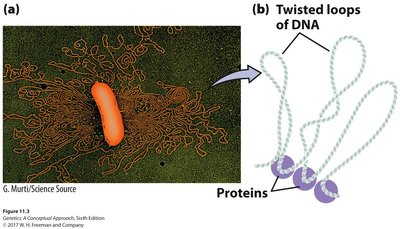
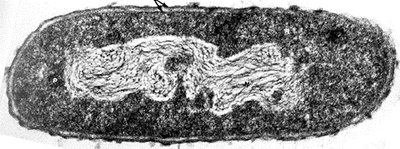
DNA is a long molecule that must be efficiently packaged within the cell nucleus or nucleoid. - Human DNA: Approximately 2 meters per cell, packed into a nucleus of about 6 µm. - Bacterial DNA: Circular, folded into loops, anchored by proteins. 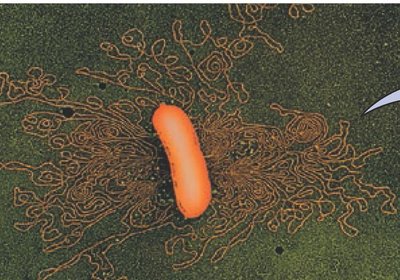
DNA-Protein Interactions
Proteins interact with DNA to provide structural integrity, packaging, and function. - Non-sequence Specific Interactions: Proteins bind DNA based on charge and shape, not sequence. - Amino Acids: Positively charged amino acids (lysine, arginine, histidine) interact with the negatively charged DNA backbone. 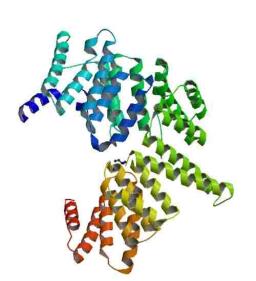
Packaging in Eukaryotes
Eukaryotic chromosomes are packaged by spooling DNA around histone proteins. - Histones: Octamer of 8 histones forms the core around which DNA is wrapped (2.5 turns). - Charge Interactions: Positively charged histones interact with the negatively charged DNA backbone. 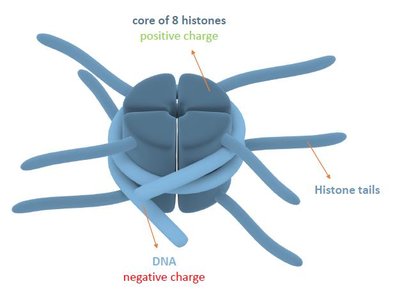
Levels of DNA Packaging
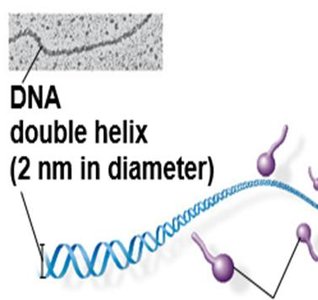
DNA is packaged at multiple levels: - Double Helix: 2 nm in diameter. - Nucleosome: DNA wrapped around histone core, 10 nm in diameter.
Dynamic Chromosome Packaging
Chromosome packaging is not static; it changes to allow access to genes. - Euchromatin: Less packaged, accessible DNA. - Heterochromatin: Tightly packaged, inaccessible DNA.
Chromosome Remodeling Mechanisms
Acetylation
Acetylation of histones reduces their positive charge, loosening DNA and making it more accessible. - Enzyme: Histone Acetylase (HAT) adds acetyl groups. - Deacetylation: Histone Deacetylase (HDAC) removes acetyl groups, restoring positive charge and tightening DNA. Example: Acetylated histones are associated with open, accessible DNA and active transcription.
Methylation
Methylation can occur on DNA (cytosine) or histones, affecting gene expression. - DNA Methylation: Addition of methyl groups to cytosine (especially in CpG islands) prevents binding of transcription factors, repressing gene expression. - Histone Methylation: Can either loosen or tighten DNA, depending on the site and number of methyl groups. Example: Methylation of lysine 36 in H3 (H3K36me3) increases transcription; methylation of lysine 9 in H3 (H3K9me3) represses transcription.
Epigenetics and Disease
Heritable Remodeling and Cancer
Epigenetic modifications can be inherited and are often associated with cancer. - TP53 Gene: Mutation leads to high cancer risk. - MLL2 and UTX Genes: Encode enzymes for methylation and demethylation; mutations are linked to cancer. - Abnormal Gene Expression: Cancer cells often show abnormal activation or repression of genes due to epigenetic changes.
Summary Table: DNA Packaging and Remodeling
Feature | Bacteria | Eukaryotes |
|---|---|---|
DNA Structure | Circular, loops | Linear, chromosomes |
Packaging Proteins | Non-histone, positively charged | Histones (octamer) |
Packaging Level | Nucleoid | Nucleus, nucleosome |
Remodeling Mechanisms | Protein binding | Acetylation, methylation |
Epigenetic Regulation | Limited | Extensive |
Key Terms
Promoter: DNA region where transcription begins.
Transcription Factor: Protein that regulates gene expression.
Histone: Protein that DNA wraps around in eukaryotes.
Acetylation: Addition of acetyl group to histones, loosening DNA.
Methylation: Addition of methyl group to DNA or histones, affecting gene expression.
Epigenetics: Heritable changes in gene expression without altering DNA sequence.
Relevant Equations
DNA Packaging Ratio: Acetylation Reaction: Methylation Reaction: Gene Expression Regulation: Example: Increased acetylation leads to increased accessibility and transcription.
Conclusion
Understanding gene regulation and chromosome packaging is fundamental to biology. Epigenetic mechanisms such as acetylation and methylation play crucial roles in controlling gene expression and are directly linked to health and disease, including cancer. Additional info: Some context and explanations were inferred to ensure completeness and clarity for exam preparation.
