 Back
Chapter 18 Gene expression
Study Guide - Smart Notes
 Tailored notes based on your materials, expanded with key definitions, examples, and context.
Regulation of Gene Expression
Overview of Gene Expression
Gene expression is the process by which information from a gene is used to synthesize a functional gene product, typically a protein. Regulation of gene expression allows cells to control which genes are active, adapting to internal and external conditions. - Key Point 1: Cells use only about 5-20% of their genes at any given time. - Key Point 2: Gene usage depends on cell type, internal conditions (such as cell cycle stage and nutrient availability), and external signals (such as environmental stress and growth factors). - Example: Muscle cells express muscle-specific genes, while heat shock proteins are expressed in response to elevated temperatures. 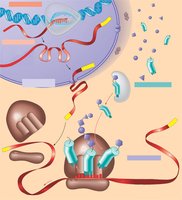
Major Points of Regulation
Gene regulation can occur at multiple levels, but two major points are: - Controlling enzyme activity: Feedback inhibition, such as in tryptophan synthesis, where the end product inhibits the pathway. - Controlling transcription (TXN): Regulation of gene transcription, such as the trp operon.
Transcription and Translation
Transcription Initiation
Transcription is initiated when RNA polymerase binds to the promoter region of DNA, often assisted by transcription factors. - Promoter: DNA sequence where RNA polymerase attaches. - Transcription factors: Proteins that regulate the binding of RNA polymerase. - Transcription initiation complex: Assembly of RNA polymerase and transcription factors at the promoter. 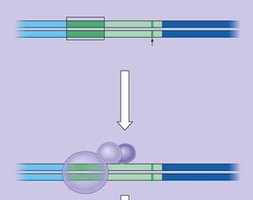
RNA Processing in Eukaryotes
After transcription, eukaryotic pre-mRNA undergoes processing: - Addition of a 5' cap and a poly-A tail. - Removal of introns and joining of exons. - Processed mRNA is exported from the nucleus to the cytoplasm for translation. 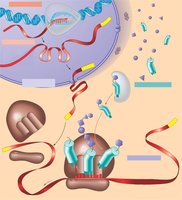
Gene Regulation in Prokaryotes: Operons
Operon Structure and Function
An operon is a cluster of genes under the control of a single promoter, transcribed together as one mRNA. - Operator: DNA segment within the promoter that acts as a regulatory switch. - Regulatory gene: Encodes a repressor protein that can inhibit transcription. - Example: The trp operon controls tryptophan synthesis. 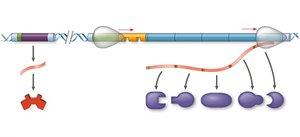
Negative Regulation: Repressible Operons (trp Operon)
Repressible operons are usually "on" but can be turned "off" when the end product is abundant. - trp Operon: When tryptophan levels are high, tryptophan binds to the repressor, activating it. The active repressor binds the operator, blocking transcription. - Feedback inhibition: Tryptophan also inhibits enzyme activity in its biosynthetic pathway. 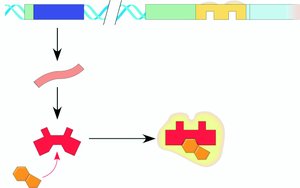
Positive Regulation: Inducible Operons (lac Operon)
Inducible operons are usually "off" but can be turned "on" in response to a substrate. - lac Operon: Controls genes for lactose metabolism. - Negative regulation: The lac repressor binds the operator and blocks transcription when lactose is absent. - Induction: When lactose is present, allolactose binds the repressor, inactivating it and allowing transcription. - Positive regulation: When glucose is low, cAMP levels rise, activating CRP (cAMP receptor protein), which stimulates transcription. 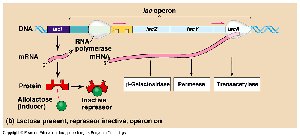
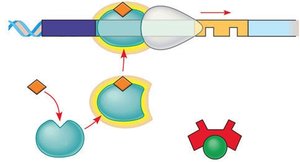
Summary Table: Repressible vs. Inducible Operons
Type | Default State | Regulation | Example |
|---|---|---|---|
Repressible | ON | Can be turned OFF | trp operon (anabolic pathway) |
Inducible | OFF | Can be turned ON | lac operon (catabolic pathway) |
Restriction Enzymes and DNA Tools
Restriction Enzymes
Restriction enzymes are proteins produced by bacteria to defend against viruses. They cut DNA at specific nucleotide sequences, often palindromic. - Restriction site: Specific sequence recognized and cut by the enzyme. - Sticky ends: Overhanging ends produced by staggered cuts, useful for DNA recombination. - Example: EcoRI cuts at the sequence GAATTC. 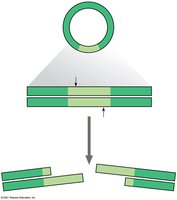
Applications of Restriction Enzymes
Restriction enzymes are used in molecular biology for: - DNA cloning - Genetic engineering - DNA fingerprinting
Additional info:
- The notes reference figures from textbook chapters 17 and 18, which cover gene expression and regulation. - The cell cycle and feedback inhibition are briefly mentioned, relevant to chapters 12 and 8. - The lab agenda references restriction enzyme digests and gel electrophoresis, which are part of DNA tools and biotechnology (chapter 20). ----------------------------------------
