 Back
Gene Regulation and Expression in Prokaryotes and Eukaryotes
Study Guide - Smart Notes
 Tailored notes based on your materials, expanded with key definitions, examples, and context.
Gene Regulation: Concepts and Mechanisms
Overview of Gene Regulation
Gene regulation is the process by which cells control the expression and timing of their genes, allowing adaptation to environmental changes and specialization of cell types. Regulation can occur at multiple stages, from transcription to post-translational modification. - Gene expression refers to the process by which information from a gene is used to synthesize a functional gene product, typically a protein. - Gene regulation ensures that the correct genes are expressed at the proper times and in appropriate amounts. - Feedback inhibition is a mechanism where the end product of a metabolic pathway inhibits an enzyme involved earlier in the pathway, preventing overproduction. 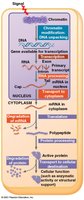
Gene Regulation in Prokaryotes: The Operon Model
The Operon Concept
In prokaryotes, functionally related genes are often organized into operons, which allow coordinated regulation. - An operon consists of an operator, a promoter, and the genes they control. - The operator acts as an "on-off" switch for transcription. - The promoter is the site where RNA polymerase binds to initiate transcription.
Types of Operons
There are three main types of gene regulation in prokaryotes:
Inducible Operons: Usually involved in catabolic pathways. The gene is "off" until an inducer removes the repressor. Example: Lac operon.
Repressible Operons: Usually involved in anabolic pathways. The gene is "on" until a corepressor enables the repressor to block transcription. Example: Trp operon.
Positive Regulation: Some operons are activated by stimulatory proteins (activators), such as CRP in the lac operon.
Positive and Negative Regulation
- Negative regulation involves repressors that block transcription. - Positive regulation involves activators that enhance transcription.
Gene Regulation in Eukaryotes
Differential Gene Expression
Eukaryotic cells regulate gene expression at many stages, resulting in different cell types from the same genome. Abnormal gene expression can lead to diseases, including cancer.
Regulation of Chromatin Structure
Chromatin structure plays a crucial role in gene expression. - Heterochromatin is tightly packed and usually not expressed. - Euchromatin is loosely packed and more accessible for transcription. - Structural features such as nucleosome positioning and DNA attachment sites affect transcription. - Histone modification (e.g., acetylation) and DNA methylation are key chemical regulators. 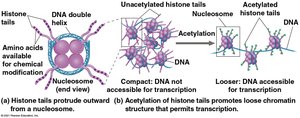
Histone Modifications and DNA Methylation
- Histone acetylation opens chromatin, promoting transcription. - DNA methylation condenses chromatin, reducing transcription and causing long-term gene inactivation. - Genomic imprinting involves methylation to regulate expression of maternal or paternal alleles.
Epigenetic Inheritance
Chromatin modifications can be inherited without changes to DNA sequence, explaining phenomena such as discordant disease development in identical twins. 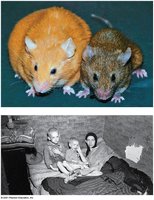
Regulation of Transcription Initiation
- Control elements are noncoding DNA segments that bind transcription factors. - General transcription factors are required for all protein-coding genes. - Specific transcription factors bind to enhancers or proximal elements to regulate particular genes.
Enhancers and Activators
- Enhancers are distal control elements that can be far from the gene they regulate. - Activators are proteins that bind enhancers and stimulate transcription. - Combinatorial control allows a small number of control elements to regulate many genes. 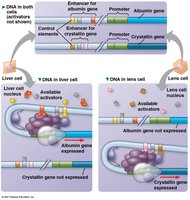
Coordinately Controlled Genes
- Co-expressed genes in eukaryotes are not organized in operons but share control elements recognized by activator proteins.
Post-Transcriptional Regulation
Gene expression can be regulated after transcription through several mechanisms:
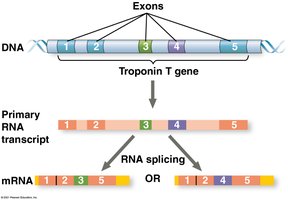
RNA Processing: Alternative splicing produces different mRNAs from the same transcript.
Initiation of Translation: Regulatory proteins can block translation.
mRNA Degradation: The lifespan of mRNA affects protein synthesis.
Protein Processing and Degradation: Proteins are modified and selectively degraded, often marked by ubiquitin for destruction by proteasomes.
Noncoding RNAs and Gene Regulation
MicroRNAs and Small Interfering RNAs
- MicroRNAs (miRNAs) are small RNAs that bind to mRNA, causing degradation or blocking translation. - Small interfering RNAs (siRNAs) are similar and cause RNA interference (RNAi). 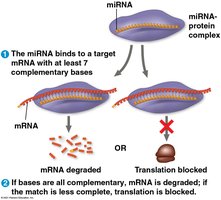
Chromatin Remodeling by ncRNAs
- piwi-interacting RNAs (piRNAs) induce heterochromatin formation, silencing transposons. - Long noncoding RNAs (lncRNAs) can regulate processes such as X chromosome inactivation.
Differential Gene Expression in Development
Embryonic Development and Cell Differentiation
- Cell division, cell differentiation, and morphogenesis are key processes. - Cytoplasmic determinants in the egg influence early development. - Induction involves signals from nearby cells causing differentiation. 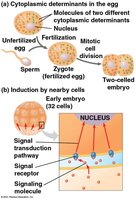
Sequential Regulation and Determination
- Determination commits a cell to a specific fate, followed by differentiation. - MyoD is a master regulatory gene for muscle cell differentiation.
Pattern Formation and Body Plan
- Pattern formation establishes spatial organization of tissues and organs. - Positional information guides cells to their correct locations. - Homeotic genes control pattern formation; mutations can cause embryonic lethality. 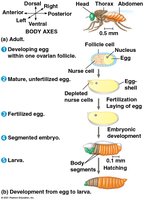
Axis Establishment and Morphogen Gradients
- Maternal effect genes (egg-polarity genes) establish body axes. - Bicoid gene is essential for anterior development in Drosophila, supporting the morphogen gradient hypothesis.
Cancer and Gene Regulation
Genetic Changes Leading to Cancer
Cancer results from genetic changes affecting cell cycle control, often involving the same regulatory systems as development. - Oncogenes arise from proto-oncogenes via epigenetic changes, translocations, gene amplification, or point mutations.
Genetic Change | Description |
|---|---|
Epigenetic changes | Alter gene expression without changing DNA sequence |
Translocations | Move gene to a new location, possibly under new regulatory control |
Gene amplification | Increase the number of gene copies |
Point mutations | Change a single nucleotide, affecting protein function |
Tumor-Suppressor Genes
- Tumor-suppressor genes inhibit cell division, repair DNA, and control cell adhesion. - Mutations can lead to cancer by reducing these protective functions.
Cell-Signaling Pathways and Cancer
- ras proto-oncogene mutations produce hyperactive Ras protein, increasing cell division. - p53 tumor-suppressor gene mutations prevent cell cycle suppression and DNA repair, leading to uncontrolled cell growth.
Multistep Model of Cancer Development
- Multiple mutations are required for cancer; risk increases with age. - Cancerous cells typically have active oncogenes and mutated tumor-suppressor genes.
Role of Viruses in Cancer
- Some viruses can cause cancer by integrating into host DNA and disrupting normal gene regulation. Additional info: The notes above expand on the original content with academic context, definitions, and examples to ensure completeness and clarity for exam preparation.
