 Back
Gene Regulation in Prokaryotes and Eukaryotes: The lac Operon and Epigenetic Control
Study Guide - Smart Notes
 Tailored notes based on your materials, expanded with key definitions, examples, and context.
Gene Regulation in Bacteria: The lac Operon
Overview of Gene Regulation
Gene regulation is the process by which cells control the expression and timing of their genes, ensuring that proteins and RNAs are produced only when needed. In bacteria, gene regulation is crucial for adapting to environmental changes and conserving energy.
Gene expression: The process by which information from a gene is used to synthesize a functional gene product (protein or RNA).
Gene regulation: The mechanisms that control when and how much a gene is expressed.
Regulation can occur at multiple levels: DNA modification, transcription, mRNA processing, translation, and protein modification.
Strategies for Metabolic Control in Bacteria
Bacteria use several strategies to regulate metabolism and gene expression:
Regulating enzyme concentration by controlling transcription and translation.
Adjusting the activity of enzymes already present (post-translational regulation).
Early intervention in gene expression saves energy.
Organization of Bacterial Genes: Operons
In bacteria, genes with related functions are often organized into operons, allowing coordinated regulation.
Operon: A cluster of functionally related genes controlled by a single promoter and operator.
Contains structural genes, a promoter, an operator, and often a regulatory gene encoding a repressor.
Produces a single polycistronic mRNA encoding multiple proteins.
The lac Operon: Structure and Function
The lac operon in E. coli is a classic example of gene regulation, controlling the metabolism of lactose.
Composed of three structural genes: lacZ (β-galactosidase), lacY (galactoside permease), and lacA (transacetylase).
Regulatory elements: Promoter (P) for RNA polymerase binding, Operator (O) for repressor binding.
lacI gene encodes the lac repressor protein, which can bind to the operator and block transcription.
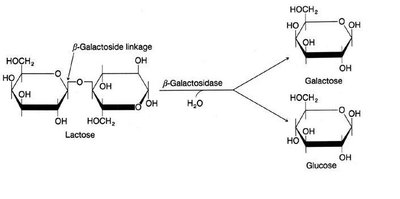
Figure: β-galactosidase hydrolyzes lactose into glucose and galactose, enabling E. coli to utilize lactose as a carbon source.
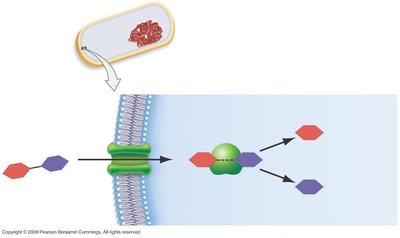
Figure: Lactose is transported into the cell by galactoside permease and then cleaved by β-galactosidase.
Negative Regulation: The Role of the Repressor
In the absence of lactose, the lac repressor binds to the operator, preventing transcription of the lac operon genes.
Repressor binding blocks RNA polymerase from transcribing the operon.
When lactose is absent, the operon is "off."
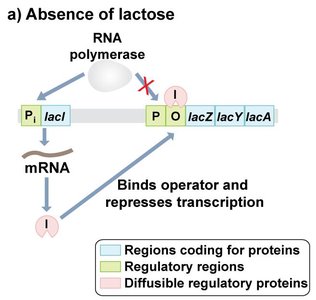
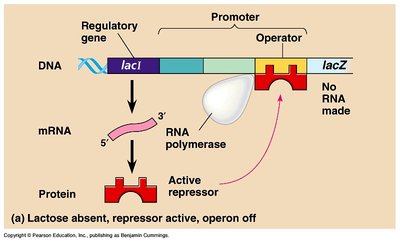
Figure: In the absence of lactose, the active repressor binds the operator, blocking transcription.
Induction: The Role of the Inducer (Lactose)
When lactose is present, it acts as an inducer by binding to the repressor, causing a conformational change that prevents the repressor from binding the operator. This allows RNA polymerase to transcribe the operon.
Allolactose (an isomer of lactose) is the actual inducer molecule.
Transcription of lacZ, lacY, and lacA leads to the production of enzymes needed for lactose metabolism.
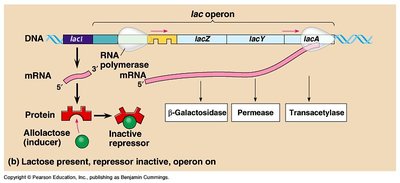
Figure: In the presence of lactose, the repressor is inactivated, and the operon is transcribed.
Positive Regulation: Catabolite Repression and the Role of cAMP-CAP
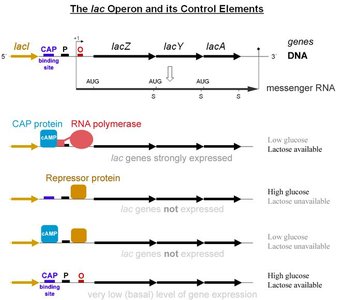
The lac operon is also regulated by glucose levels through catabolite repression. When glucose is scarce, cyclic AMP (cAMP) accumulates and binds to the catabolite activator protein (CAP), which then binds to the promoter and enhances transcription.
High glucose → low cAMP → CAP inactive → low lac operon transcription.
Low glucose → high cAMP → CAP active → high lac operon transcription (if lactose is present).
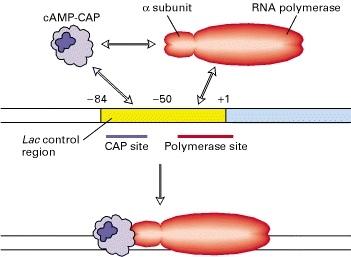
Figure: CAP-cAMP complex increases RNA polymerase affinity for the lac promoter, enhancing transcription.
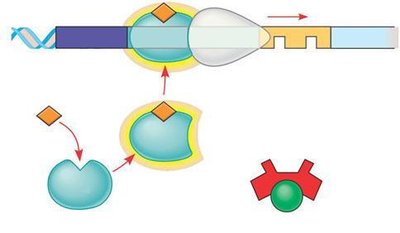
Figure: When lactose is present and glucose is scarce, the lac operon is strongly expressed.
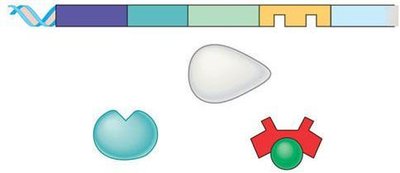
Figure: When both lactose and glucose are present, lac operon expression is low due to inactive CAP.
Summary Table: lac Operon Regulation
Condition | Repressor | CAP-cAMP | lac Operon Expression |
|---|---|---|---|
Glucose low, Lactose present | Inactive | Active | High |
Glucose high, Lactose present | Inactive | Inactive | Low |
Lactose absent | Active | Any | None |
Gene Regulation in Eukaryotes
Overview of Eukaryotic Gene Regulation
Gene expression in eukaryotes is essential for cell specialization and is regulated at multiple levels, from chromatin structure to protein degradation. Differential gene expression allows genetically identical cells to perform diverse functions.
Constitutive genes are always expressed (housekeeping genes).
Other genes are expressed only in specific cell types, developmental stages, or in response to environmental signals.
Levels of Gene Regulation in Eukaryotes
Gene expression can be regulated at many stages:
Chromatin modification (e.g., DNA methylation, histone acetylation)
Transcription initiation
RNA processing (alternative splicing)
mRNA transport and degradation
Translation initiation
Protein processing and degradation
Chromatin Structure and Epigenetic Regulation
Chromatin structure plays a key role in regulating gene accessibility. Epigenetic modifications can alter gene expression without changing the DNA sequence.
DNA methylation: Addition of methyl groups to cytosine bases, generally silencing gene expression.
Histone acetylation: Addition of acetyl groups to histone tails, loosening chromatin and promoting transcription.
Epigenetics: Heritable changes in gene expression not involving changes in DNA sequence.
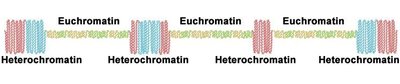
Figure: DNA methylation and histone modifications are two main components of the epigenetic code.
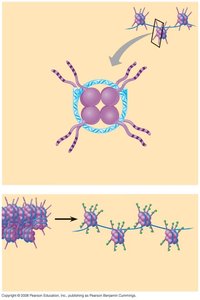
Figure: Acetylation of histone tails promotes loose chromatin structure, permitting transcription.
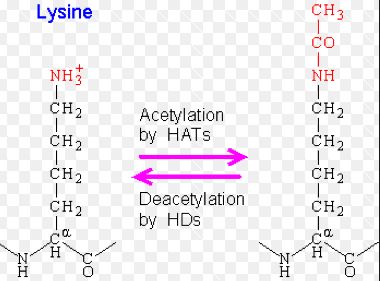
Figure: Deacetylation of histones tightens chromatin, reducing transcription.
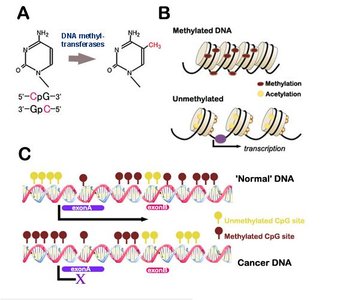
Figure: DNA methylation is associated with reduced transcription; demethylation relaxes chromatin.
Epigenetic Phenomena: The Agouti Gene Example
The Agouti gene in mice demonstrates how epigenetic modifications can affect phenotype without altering DNA sequence. Methylation of the Agouti gene leads to a brown coat and healthy phenotype, while lack of methylation results in a yellow coat, obesity, and disease susceptibility.
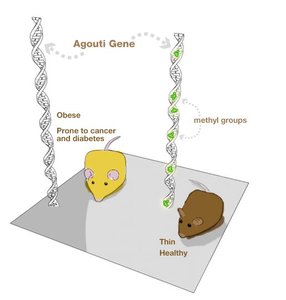
Figure: Methylation status of the Agouti gene affects mouse phenotype.
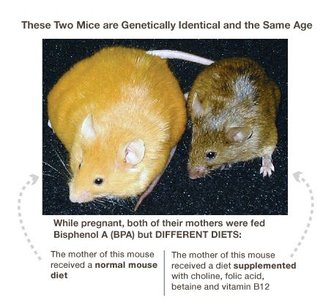
Figure: Maternal diet can influence offspring phenotype via epigenetic mechanisms.
Transcriptional Regulation in Eukaryotes
Unlike prokaryotes, eukaryotic genes are typically regulated individually, each with its own promoter and regulatory elements. Coordinate regulation is achieved through common control elements recognized by transcription factors.
Enhancers: Distal regulatory DNA sequences that increase transcription when bound by activators.
Transcription factors: Proteins that bind to specific DNA sequences to regulate transcription.
Combinatorial control ensures that only the correct combination of factors activates gene expression in a given cell type.
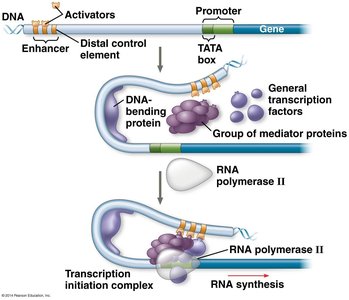
Figure: Activators bind enhancers and interact with the transcription initiation complex to regulate gene expression.
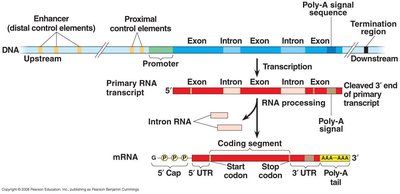
Figure: Multiple DNA control elements serve as binding sites for transcription factors.
Cell Differentiation and Developmental Regulation
Cell differentiation is driven by differential gene expression, often initiated by cytoplasmic determinants and inductive signals during embryonic development.
Cytoplasmic determinants: Maternal substances in the egg that influence early development by uneven distribution in daughter cells.
Inductive signals: Signals from nearby cells that influence gene expression and cell fate.
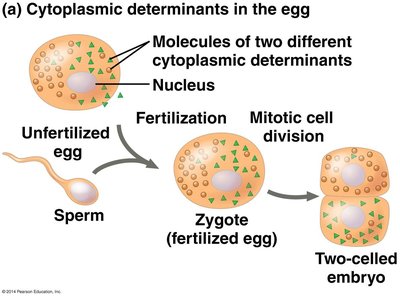
Figure: Cytoplasmic determinants are distributed unevenly during cell division, influencing cell fate.
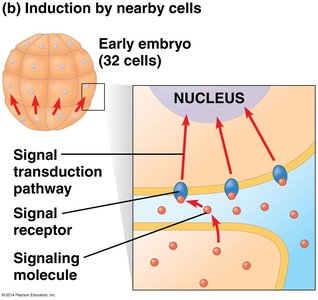
Figure: Inductive signals from neighboring cells can trigger changes in gene expression.
Post-Transcriptional Regulation
Gene expression can also be regulated after transcription through mechanisms such as mRNA degradation, translation initiation, and protein degradation.
mRNA degradation: The stability of mRNA affects how much protein is produced.
Translation initiation: Regulatory proteins can block or enhance translation of specific mRNAs.
Protein degradation: Proteins can be tagged with ubiquitin for destruction by the proteasome, controlling protein levels and activity.
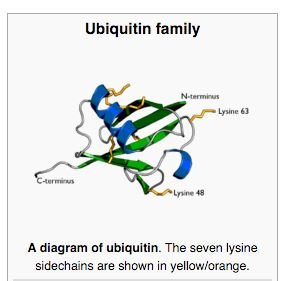
Figure: Ubiquitylation tags proteins for degradation.
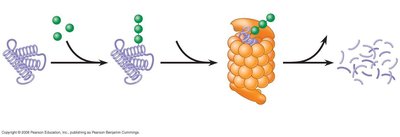
Figure: Proteasomes degrade ubiquitylated proteins, regulating protein levels in the cell.
Summary Table: Key Differences in Gene Regulation
Feature | Prokaryotes | Eukaryotes |
|---|---|---|
Gene Organization | Operons (polycistronic mRNA) | Individual genes (monocistronic mRNA) |
Regulatory Elements | Operator, promoter, repressor | Promoter, enhancers, silencers, transcription factors |
Epigenetic Regulation | Rare | Common (DNA methylation, histone modification) |
Post-Transcriptional Regulation | Limited | Extensive (splicing, mRNA stability, translation, protein degradation) |
Additional info: These notes integrate foundational concepts from molecular biology, genetics, and cell biology, providing a comprehensive overview suitable for exam preparation in a college-level biology course.
