 Back
Chapter 18 part 1
Study Guide - Smart Notes
 Tailored notes based on your materials, expanded with key definitions, examples, and context.
Gene Regulation
Overview of Gene Regulation
Gene regulation refers to the mechanisms that control the expression and timing of genes within a cell. Cells do not express all their genes at once; instead, they selectively use genes based on cell type, internal and external conditions, and developmental stage. This regulation is essential for cellular differentiation, adaptation, and homeostasis.
Cell Type: Different cells (e.g., muscle vs. nerve) express unique sets of genes.
Internal Conditions: Cell cycle stage, nutrient availability, and internal signals affect gene expression.
External Conditions: Environmental factors (e.g., temperature, signals from other cells) can induce or repress gene expression.
Example: Heat shock proteins are produced in response to elevated temperatures to help refold denatured proteins.
Gene Expression in Eukaryotes
Stages of Gene Expression
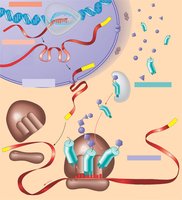
Gene expression in eukaryotes involves multiple steps, each of which can be regulated:
Transcription: DNA is transcribed into pre-mRNA by RNA polymerase.
RNA Processing: Pre-mRNA is processed (capping, polyadenylation, splicing) to form mature mRNA.
Translation: mRNA is translated into a polypeptide by ribosomes in the cytoplasm.
Post-translational Modifications: Polypeptides may be modified, folded, or transported to their final destinations.
Gene Regulation in Prokaryotes
Operons
An operon is a cluster of genes under the control of a single promoter and operator, transcribed together as one mRNA. Operons are common in prokaryotes and allow coordinated regulation of genes with related functions.
Promoter: DNA sequence where RNA polymerase binds to initiate transcription.
Operator: DNA segment where a repressor protein can bind to block transcription.
Structural Genes: Genes encoding proteins with related functions (e.g., enzymes in a metabolic pathway).
Types of Regulation
Negative Regulation: A repressor protein binds to the operator to block transcription. Default state is "on" unless repressed.
Positive Regulation: An activator protein is required to stimulate transcription. Default state is "off" unless activated.
Repressible and Inducible Operons
Type | Default State | Regulation | Example |
|---|---|---|---|
Repressible | On | Can be turned off by a repressor | trp operon (tryptophan synthesis) |
Inducible | Off | Can be turned on by an inducer | lac operon (lactose metabolism) |
The trp Operon (Repressible)
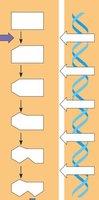
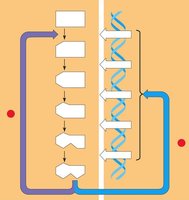
The trp operon contains genes for enzymes that synthesize the amino acid tryptophan. It is regulated by negative feedback:
When tryptophan is scarce, the repressor is inactive, and transcription proceeds.
When tryptophan is abundant, it binds to the repressor, activating it. The active repressor binds the operator, blocking transcription.
The lac Operon (Inducible)
The lac operon contains genes for enzymes that metabolize lactose. Its regulation involves both negative and positive control:
Negative Control: The lac repressor binds the operator and blocks transcription when lactose is absent.
When lactose is present, some is converted to allolactose, which binds and inactivates the repressor, allowing transcription if glucose is low.
Positive Control: When glucose is low, cAMP levels rise, activating CRP (cAMP receptor protein), which enhances RNA polymerase binding and transcription.
Condition | lac Operon Status |
|---|---|
No lactose | Repressor active, operon off |
Lactose present, glucose absent | Repressor inactive, CRP active, operon on |
Lactose present, glucose present | Repressor inactive, CRP inactive, operon low |
Major Points of Regulation
Controlling Enzyme Activity: Feedback inhibition (e.g., tryptophan inhibits its own synthesis pathway).
Controlling Transcription: Regulation at the level of mRNA synthesis (e.g., operons).
Restriction Enzymes
Definition and Function
Restriction enzymes are proteins produced by bacteria that cut DNA at specific nucleotide sequences, known as restriction sites. These enzymes are used as a defense mechanism against viruses and foreign DNA.
Restriction sites are often palindromic (the same sequence forward and backward).
Cutting produces fragments with 'sticky ends' or 'blunt ends' that can be joined with other DNA fragments.
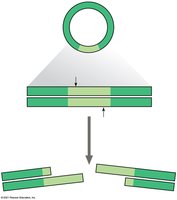
Example: EcoRI recognizes the sequence GAATTC and cuts between G and A.
Applications
Restriction enzymes are essential tools in molecular biology for cloning, DNA mapping, and genetic engineering.
Summary Table: Repressible vs. Inducible Operons
Operon Type | Pathway | Regulation | Example |
|---|---|---|---|
Repressible | Anabolic (biosynthetic) | Can be turned off | trp operon |
Inducible | Catabolic (degradative) | Can be turned on | lac operon |
