Back
Gene Regulation: Mechanisms and Importance in Cell Function
Study Guide - Smart Notes
 Tailored notes based on your materials, expanded with key definitions, examples, and context.
Gene Regulation
Same DNA, Different Gene Expression
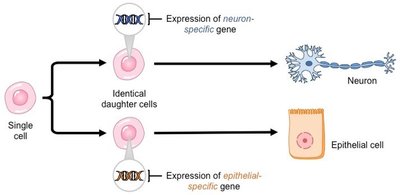
Gene regulation is a fundamental process that allows cells with identical DNA to perform specialized functions by expressing different sets of genes. This enables cell differentiation and adaptation to environmental changes.
Key Point 1: Most cells in the body contain the same DNA, but express different genes depending on their function.
Key Point 2: Shared genes support basic cellular needs, while specialized genes enable unique cell functions (e.g., muscle contraction, insulin production).
Example: Muscle cells and pancreatic beta cells both express genes for ATP production, but only beta cells express insulin genes.
What is Gene Regulation?
Definition and Purpose
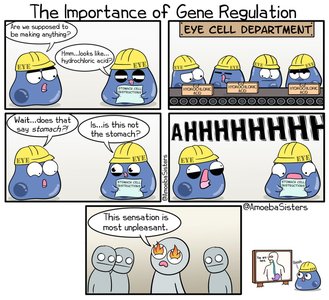
Gene regulation controls which genes are expressed, when they are expressed, and how much RNA or protein is produced. This process is essential for cell specialization and for cells to respond to internal and external signals.
Key Point 1: Regulation supports cell specialization and adaptation.
Key Point 2: It determines the timing and quantity of gene expression.
Eukaryotic Gene Regulation
Levels of Regulation
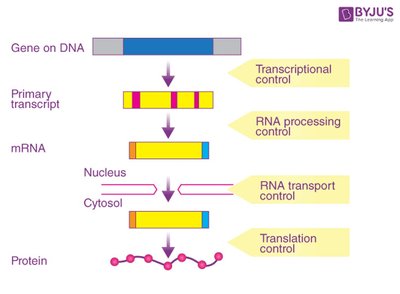
Eukaryotic cells regulate gene expression at multiple stages, from DNA to protein. Each stage offers opportunities for control, ensuring precise cellular function.
Key Point 1: Regulation occurs before, during, and after transcription, as well as during translation and after protein synthesis.
Key Point 2: DNA packaging, RNA processing, mRNA stability, translation, and protein modification are all regulatory points.
Transcriptional Regulation
Chromatin Structure and Access to DNA
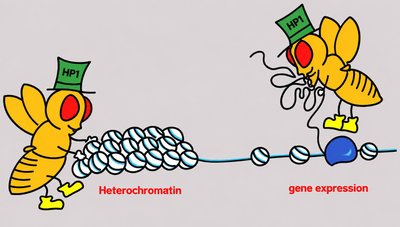
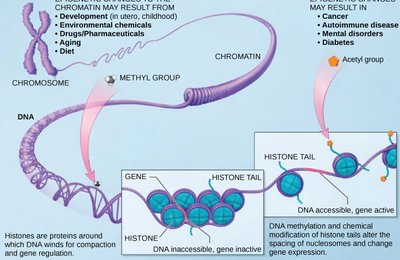
Transcriptional regulation is influenced by chromatin structure. DNA wraps around histone proteins to form chromatin, which can be tightly or loosely packed, affecting gene accessibility.
Key Point 1: Tightly packed chromatin (heterochromatin) restricts access to DNA, reducing transcription.
Key Point 2: Loosely packed chromatin (euchromatin) allows transcription machinery to access DNA.
Epigenetic Regulation
DNA Methylation and Histone Acetylation
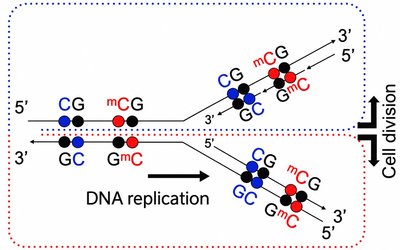
Epigenetic modifications, such as DNA methylation and histone acetylation, regulate gene activity without altering the DNA sequence. These changes can be inherited during cell division.
Key Point 1: DNA methylation adds methyl groups to DNA, often reducing transcription.
Key Point 2: Histone acetylation adds acetyl groups to histone tails, making chromatin less compact and increasing gene accessibility.
Key Point 3: Epigenetic patterns can be copied during DNA replication, maintaining gene expression states.
Regulatory DNA Regions
Promoters, Enhancers, and Silencers
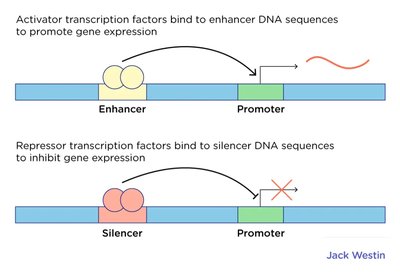
Regulatory DNA regions control the initiation and rate of transcription. Promoters are sites where transcription machinery assembles, while enhancers and silencers modulate transcription levels.
Key Point 1: Promoter: Region where RNA polymerase and general transcription factors bind to start transcription.
Key Point 2: Enhancer: DNA sequence that increases transcription when bound by activators.
Key Point 3: Silencer: DNA sequence that reduces transcription when bound by repressors.
Transcription Factors
Control of Transcription
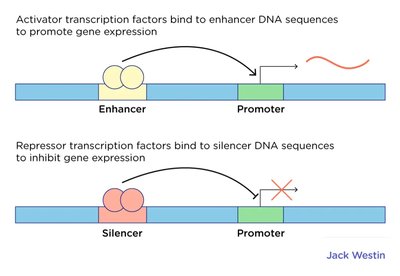
Transcription factors are proteins that bind specific regulatory DNA sequences to control gene expression. They can act as activators or repressors.
Key Point 1: General transcription factors assemble at the promoter to initiate transcription.
Key Point 2: Activators bind enhancers to increase transcription; repressors bind silencers to decrease transcription.
Cell Signaling and Gene Regulation
Hormonal Regulation Example: Aldosterone
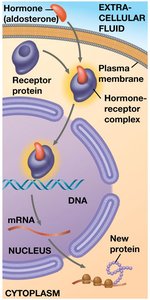
Cells respond to external signals, such as hormones, which can regulate gene expression. For example, aldosterone binds to intracellular receptors in kidney cells, activating transcription of genes involved in sodium reabsorption.
Key Point 1: Hormones can act as transcription factors, altering gene expression and cell function.
Example: Aldosterone increases transcription of sodium reabsorption genes in kidney cells.
Post-Transcriptional Regulation
Alternative RNA Splicing
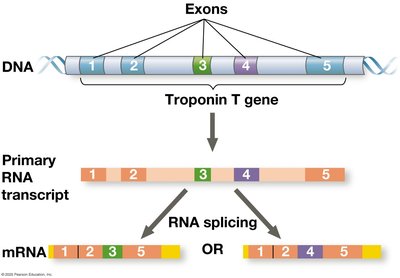
Alternative splicing allows a single gene to produce multiple protein variants by joining different sets of exons during RNA processing.
Key Point 1: Introns are removed and exons are joined in various combinations.
Key Point 2: This increases protein diversity from a single gene.
mRNA Stability and Translation Control
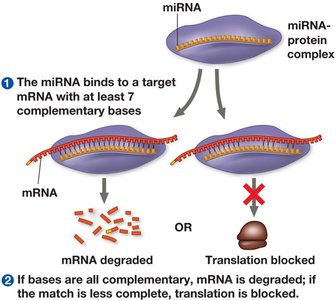
The lifetime of mRNA and the frequency of translation affect protein production. Regulatory RNAs, such as microRNAs (miRNAs), can bind mRNA to reduce translation or promote degradation.
Key Point 1: Longer mRNA lifetime allows more protein synthesis.
Key Point 2: miRNAs can block translation or cause mRNA degradation.
Post-Translational Regulation
Protein Modification and Degradation
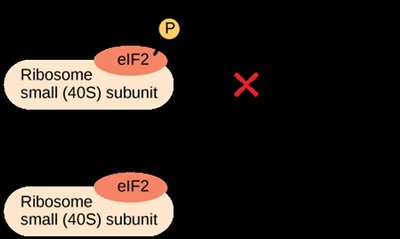
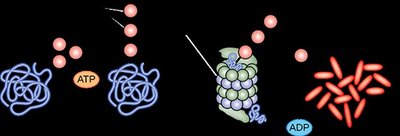
After translation, proteins can be modified to alter their activity or marked for degradation. Phosphorylation is a common modification that can activate or deactivate proteins.
Key Point 1: Protein activity can be regulated by adding or removing phosphate groups.
Key Point 2: Damaged or unneeded proteins are targeted for breakdown.
Gene Regulation in Bacteria
Operons and Regulatory Mechanisms
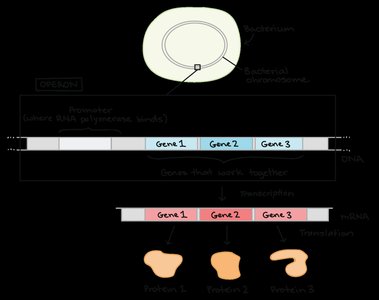
Bacteria regulate gene expression to adapt to environmental changes. Operons are groups of genes transcribed together, often with related functions.
Key Point 1: Operons are controlled by a single promoter and operator.
Key Point 2: Repressors and activators regulate operon transcription.
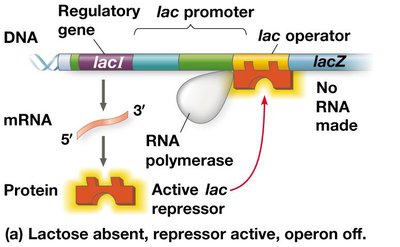
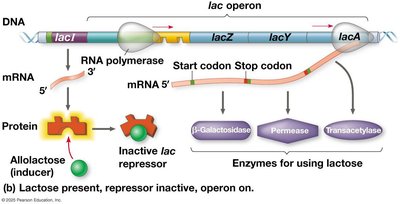
Example: The lac operon enables E. coli to metabolize lactose.
The lac Operon: Response to Lactose
The lac operon is a classic example of gene regulation in bacteria. It is activated in the presence of lactose, allowing the cell to produce enzymes for lactose metabolism.
Key Point 1: Without lactose, a repressor binds the operator, blocking transcription.
Key Point 2: With lactose, allolactose binds the repressor, releasing it from the operator and enabling transcription.
Condition | Repressor State | Transcription |
|---|---|---|
No lactose | Active, bound to operator | Off |
Lactose present | Inactive, released from operator | On |