 Back
BackGene Regulation, Mutations, and Evolutionary Adaptations: The Case of Lactase Persistence and Stickleback Fish
Study Guide - Smart Notes
 Tailored notes based on your materials, expanded with key definitions, examples, and context.
Gene Regulation and Expression
Overview of Gene Regulation
Gene regulation is the process by which cells control the expression and timing of specific genes. This regulation ensures that the correct proteins are produced at the right time and in the right amounts, which is essential for cellular function, development, and adaptation.
Transcriptional Control: Regulation at the level of transcription, often involving transcription factors and DNA accessibility (epigenetics).
Post-Transcriptional Control: Includes RNA processing, mRNA export from the nucleus, mRNA degradation, and protein processing/degradation.
Transcription factors are proteins that bind to specific DNA sequences to regulate gene expression. They can act as activators or repressors, influencing the recruitment of RNA polymerase and the initiation of transcription.
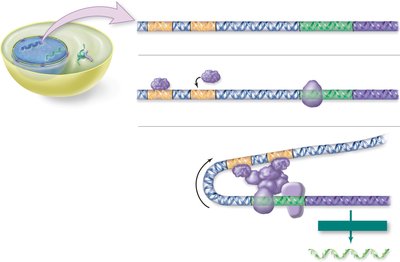
Enhancers, Promoters, and Gene Expression
Enhancers are regulatory DNA sequences that, when bound by activator proteins, increase the likelihood of transcription of a particular gene. Promoters are regions where RNA polymerase and general transcription factors assemble to begin transcription.
Enhancers: Can be located far from the gene they regulate and can control tissue-specific expression.
Promoters: Located near the gene, essential for the initiation of transcription.
Mutations in enhancers can alter gene expression without changing the coding sequence of the gene itself.
Case Study: Stickleback Fish and the Pitx1 Gene
Genetic Basis of Morphological Differences
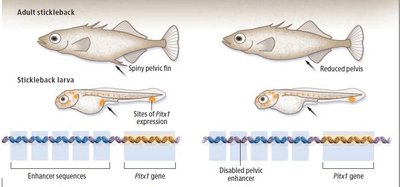
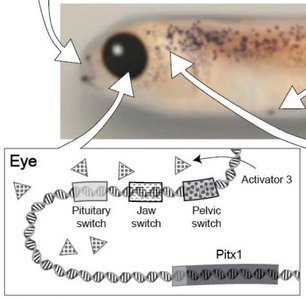
The stickleback fish provides a classic example of how changes in gene regulation can lead to evolutionary adaptations. Differences in the expression of the Pitx1 gene, regulated by multiple enhancers, result in morphological differences such as the presence or absence of pelvic spines.
Different alleles or different expression of genes can both contribute to trait variation.
Mutations in specific enhancer regions (e.g., pelvic enhancer) can disable gene expression in certain tissues, leading to phenotypic changes.
Mechanism of Enhancer Function
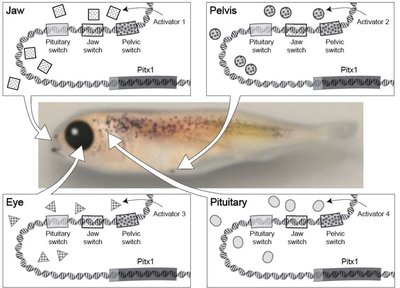
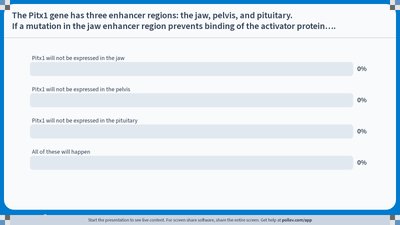
Each enhancer region can independently regulate gene expression in different tissues. For example, the jaw, pelvis, and pituitary enhancers of the Pitx1 gene allow for tissue-specific expression. A mutation in one enhancer affects only the expression in the corresponding tissue.
Example: A mutation in the jaw enhancer prevents Pitx1 expression in the jaw but not in other tissues.
Gene Regulation and Human Evolution: Lactase Persistence
Lactase Gene Expression and Lactose Intolerance
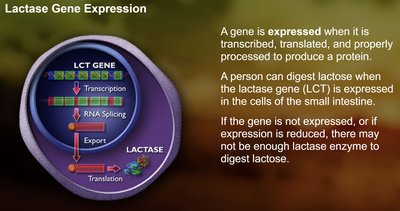
The ability to digest lactose in adulthood (lactase persistence) is a well-studied example of gene regulation in humans. The LCT gene encodes the enzyme lactase, which breaks down lactose into glucose and galactose. In most mammals, lactase production decreases after weaning, leading to lactose intolerance.
Lactase persistence is due to continued expression of the LCT gene in adults.
Regulation occurs via enhancer regions upstream of the LCT gene.

Genetic Mutations and Lactase Persistence
A single nucleotide polymorphism (SNP) 13,910 base pairs upstream of the LCT gene (T-13910) increases the binding affinity of the Oct-1 transcription factor, enhancing gene expression and allowing lactase production to persist into adulthood.
Normal adults: Decreased transcription factor binding leads to reduced lactase expression.
Lactase-persistent adults: Mutation in enhancer increases activator binding, maintaining high lactase levels.
Population Genetics and Evolutionary Selection
Lactase persistence has evolved independently in different human populations, often in association with the development of dairy farming. Positive selection favored individuals who could digest milk, providing nutritional and reproductive advantages.
Negative selection: Lactose intolerance can cause dehydration and malnutrition in milk-consuming populations.
Positive selection: Lactase persistence allows for continued milk consumption, increasing survival and reproductive success.

Summary Table: Mechanisms of Gene Regulation
Level of Regulation | Mechanism | Example |
|---|---|---|
Transcriptional | Transcription factors, enhancers, repressors | Oct-1 binding to LCT enhancer |
Post-transcriptional | RNA splicing, mRNA export, degradation | Alternative splicing of pre-mRNA |
Translational | Regulation of translation initiation | miRNA-mediated repression |
Post-translational | Protein modification, degradation | Ubiquitin-mediated proteolysis |
Key Terms and Concepts
Enhancer: A DNA sequence that increases the transcription of a gene when bound by specific proteins.
Transcription Factor: A protein that binds to specific DNA sequences to regulate gene expression.
Single Nucleotide Polymorphism (SNP): A variation at a single position in a DNA sequence among individuals.
Lactase Persistence: The continued activity of the lactase enzyme in adulthood.
Positive Selection: Evolutionary process favoring beneficial traits.
Equations and Genetic Notation
Transcriptional Activation:
Single Nucleotide Polymorphism (SNP) Example:
Conclusion
Gene regulation is a fundamental process in biology, underlying both normal development and evolutionary adaptation. Changes in regulatory DNA, such as enhancers, can have profound effects on phenotype without altering protein-coding sequences. The study of lactase persistence and stickleback fish morphology illustrates how mutations in regulatory regions drive diversity and adaptation in natural populations.
