 Back
Gene Structure and Function: From One-Gene, One-Enzyme to Alternative Splicing
Study Guide - Smart Notes
 Tailored notes based on your materials, expanded with key definitions, examples, and context.
Gene Structure and Function
What is a Gene?
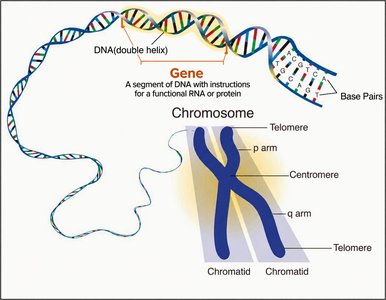
A gene is a segment of DNA that contains instructions for making a functional RNA or protein. Genes are located on chromosomes, which are structures found in the nucleus of eukaryotic cells. Each chromosome consists of a long DNA molecule, organized into regions called chromatids, and features such as telomeres and centromeres. The DNA double helix is composed of base pairs, which encode genetic information.
One-Gene, One-Enzyme Hypothesis
The one-gene, one-enzyme hypothesis was proposed by Beadle and Tatum, who demonstrated that each gene contains the information needed to make a specific enzyme. This was shown by analyzing mutant strains of Neurospora crassa that could not grow on minimal medium unless supplemented with certain nutrients. Their experiments established a direct relationship between genes and the synthesis of particular amino acids.
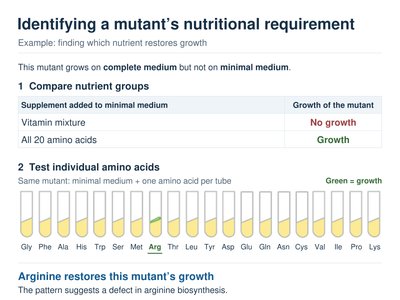
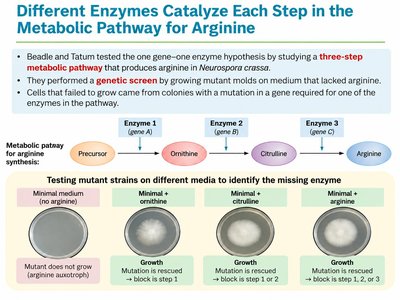
Key Point: Mutations in specific genes can block the synthesis of particular enzymes, leading to nutritional requirements for certain amino acids.
Example: Mutants unable to synthesize arginine can grow only when arginine is provided, indicating a defect in arginine biosynthesis.
Parts of a Gene
A typical eukaryotic protein-coding gene consists of regulatory and transcribed regions. The regulatory DNA controls when and how much RNA is made, including promoters and upstream control elements. The transcribed region contains exons (coding sequences) and introns (non-coding sequences). During transcription, introns are removed, and exons are joined to form mature mRNA, which is then translated into protein.
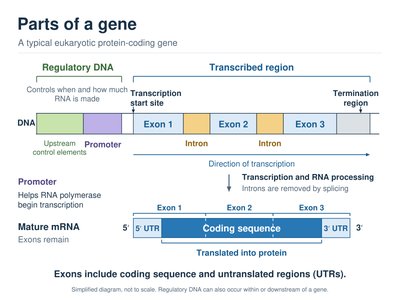
Key Point: Exons include coding sequences and untranslated regions (UTRs).
Example: The promoter region helps RNA polymerase begin transcription.
One-Gene, Multiple-Polypeptide Hypothesis
Modern understanding reveals that a single gene can code for more than one protein through mechanisms such as alternative splicing. This process allows different arrangements of exons in the final mRNA, resulting in multiple protein isoforms from a single gene.
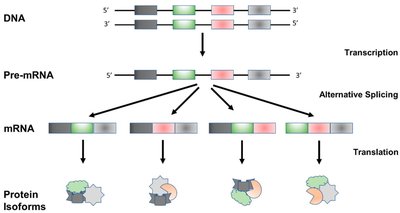
Key Point: Alternative splicing increases protein diversity without increasing the number of genes.
Example: Different mRNAs produced from the same gene can encode proteins with distinct functions.
Alternative Splicing
Alternative splicing is a process by which different combinations of exons are joined together to produce multiple mature mRNAs from a single gene. This results in the production of different polypeptide isoforms, which can vary in sequence and function.
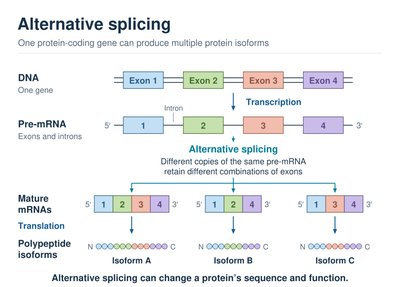
Key Point: Alternative splicing can change a protein's sequence and function, allowing for greater complexity in gene expression.
Example: Isoform A, B, and C are produced from the same gene by retaining different combinations of exons.
Summary Table: Gene Structure and Function
Concept | Description | Example/Application |
|---|---|---|
Gene | Segment of DNA encoding RNA/protein | Gene for arginine biosynthesis |
One-Gene, One-Enzyme Hypothesis | Each gene codes for a specific enzyme | Arginine auxotrophs in Neurospora |
Gene Structure | Regulatory regions, exons, introns | Promoter initiates transcription |
Alternative Splicing | One gene produces multiple proteins | Isoforms A, B, C from same gene |
Additional info: The notes expand on the classic one-gene, one-enzyme hypothesis to include modern concepts such as alternative splicing and gene structure, providing a comprehensive overview suitable for General Biology students.
