 Back
General Biology (BSC1005) Syllabus and Course Structure Study Notes
Study Guide - Smart Notes
 Tailored notes based on your materials, expanded with key definitions, examples, and context.
Course Overview
Introduction to General Biology (BSC1005)
This course provides a foundational understanding of biology, focusing on the scientific method and its application to the study of life. Students will explore key biological concepts including cells, genetics, evolution, ecology, and behavior. The course emphasizes critical thinking, data analysis, and scientific literacy.
Course ID: BSC1005
Credits: 3
Delivery: Online
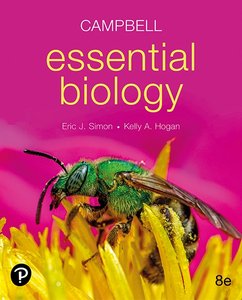
Textbook: Campbell Essential Biology (8th Edition) by Eric J. Simon & Kelly A. Hogan
Course Content Structure
Modules and Chapters
The course is organized into five main modules, each covering essential topics in biology. Each module contains several chapters, assignments, quizzes, and discussions to reinforce learning.
Module 1: Introduction and Basic Chemistry for Biology Students
Chapter 1: Learning About Life
Chapter 2: Essential Chemistry for Biology
Chapter 3: The Molecules of Life
Module 2: The Cell
Chapter 4: A Tour of the Cell
Chapter 5: The Working Cell
Module 3: Cellular Metabolism - Respiration and Photosynthesis
Chapter 6: Cellular Respiration: Obtaining Energy from Food
Chapter 7: Photosynthesis: Using Light to Make Food
Module 4: Genetics
Chapter 8: Cellular Reproduction: Cells from Cells
Chapter 9: Patterns of Inheritance
Chapter 10: The Structure and Function of DNA
Module 5: Evolution, Diversity, and Ecology
Chapter 13: How Populations Evolve
Chapter 14: How Biological Diversity Evolves
Chapter 18: An Introduction to Ecology and the Biosphere
Course Competencies and Learning Outcomes
Key Competencies
Nature of Science: Understanding the scientific method, distinguishing science from pseudoscience, and recognizing the characteristics of life.
Biological Chemistry: Explaining atomic structure, chemical bonding, and the four major groups of biological molecules (carbohydrates, lipids, proteins, nucleic acids).
Cell Structure and Function: Describing prokaryotic and eukaryotic cells, organelles, and membrane transport processes.
Genetics and Cell Division: Understanding mitosis, meiosis, heredity (Mendelian and non-Mendelian), DNA replication, and gene expression.
Evolution: Explaining evolutionary theory, evidence for evolution, and classification of organisms.
Ecology: Describing interactions between organisms and their environment, population dynamics, community relationships, ecosystem processes, and human impacts on biodiversity.
Learning Outcomes
Solve problems using critical and creative thinking and scientific reasoning.
Formulate strategies to locate, evaluate, and apply information.
Describe how natural systems function and recognize the impact of humans on the environment.
Coursework and Assessment
Assignments and Grading
Weekly assignments include reading, PowerPoint presentations, quizzes, discussions, and homework on Mastering Biology.
Exams: Four non-proctored unit exams, one proctored midterm, and one non-proctored final exam.
Grading breakdown:
Graded Discussions: 5%
Mastering Biology Assignments: 20%
Canvas Quizzes: 10%
Non-Proctored Unit Exams: 15%
Proctored Midterm Exam: 35%
Final Exam: 15%
Technology and Exam Proctoring
Honorlock Proctoring Requirements
For the proctored midterm exam, students must use Honorlock, which requires a primary webcam and a secondary side-angle camera (such as a smartphone). The system monitors for academic integrity and requires a 360-degree room scan, proper lighting, and a quiet environment. Violations may result in point deductions or a zero on the exam.
Textbook Information
Required Textbook
Campbell Essential Biology (8th Edition) by Eric J. Simon & Kelly A. Hogan
Publisher: Pearson
ISBN: 9780135318683
Student Support and Policies
Support Services
ACCESS Disability Services
Virtual and in-person tutoring
Technical support for Canvas and Mastering Biology
Academic Integrity
AI tools may be used for learning but not for completing assignments unless permitted by the instructor.
All exams must be taken independently and without unauthorized materials.
Summary Table: Course Modules and Key Topics
Module | Main Topics |
|---|---|
Module 1 | Introduction to Biology, Chemistry, Biomolecules |
Module 2 | Cell Structure, Cell Function |
Module 3 | Cellular Respiration, Photosynthesis |
Module 4 | Cell Division, Genetics, DNA Structure and Function |
Module 5 | Evolution, Biological Diversity, Ecology |
