 Back
General Biology Exam 1 Study Guide – Step-by-Step Guidance
Study Guide - Smart Notes
 Tailored notes based on your materials, expanded with key definitions, examples, and context.
Q1. What properties are shared by all living organisms?
Background
Topic: Characteristics of Life
This question tests your understanding of the fundamental properties that define living things in biology.
Key Terms:
Order
Reproduction
Growth and development
Energy processing
Response to environment
Regulation (homeostasis)
Evolutionary adaptation
Step-by-Step Guidance
Recall the main criteria biologists use to distinguish living from non-living things. Think about what all living things must do to survive and reproduce.
List at least five properties that are universally present in all living organisms, such as the ability to maintain internal order or respond to stimuli.
Consider examples of each property in real organisms (e.g., how plants grow, how animals respond to their environment).
Think about why each property is essential for life and how it contributes to survival and reproduction.
Try solving on your own before revealing the answer!
Final Answer:
All living organisms share the following properties: order (organized structure), the ability to reproduce, growth and development, energy processing (metabolism), response to environmental stimuli, regulation (homeostasis), and evolutionary adaptation. These characteristics distinguish living things from non-living matter.
Q2. What is meant by “the ordered complexity of life”? How do we see this at different levels of organization?
Background
Topic: Biological Organization and Complexity
This question explores the concept of biological organization, from molecules to ecosystems, and how complexity arises at each level.
Key Terms:
Ordered complexity
Levels of organization (molecule, cell, tissue, organ, organism, population, community, ecosystem, biosphere)
Step-by-Step Guidance
Define what is meant by "ordered complexity" in the context of living systems.
List the major levels of biological organization, starting from the smallest (molecule) to the largest (biosphere).
For each level, think of an example that illustrates increasing complexity (e.g., how cells form tissues, tissues form organs, etc.).
Consider how order and complexity are maintained at each level and why this is important for life.
Try solving on your own before revealing the answer!
Final Answer:
"Ordered complexity" refers to the highly organized and structured arrangement of components in living organisms, from molecules to entire ecosystems. This complexity is seen at different levels: molecules make up organelles, which form cells; cells form tissues; tissues form organs; organs form organ systems; organ systems make up organisms; organisms form populations; populations form communities; communities form ecosystems; and ecosystems make up the biosphere. Each level shows increasing complexity and organization.
Q3. What is the smallest unit of life? Why is this the smallest unit?
Background
Topic: Cell Theory
This question tests your understanding of the cell as the fundamental unit of life and why it holds this distinction.
Key Terms:
Cell
Cell theory
Step-by-Step Guidance
Recall the definition of a cell and the main points of cell theory.
Think about what makes a cell different from smaller biological structures like organelles or molecules.
Consider why organelles or molecules alone are not considered living units.
Reflect on the functions that a cell can perform independently that smaller structures cannot.
Try solving on your own before revealing the answer!
Final Answer:
The cell is the smallest unit of life because it is the smallest structure capable of performing all the functions necessary for life, such as metabolism, growth, and reproduction. Organelles and molecules cannot function independently as living things, but a cell can.
Q4. Why is understanding how cells work important?
Background
Topic: Importance of Cell Biology
This question asks you to consider the significance of studying cells in biology and medicine.
Key Terms:
Cell function
Health and disease
Step-by-Step Guidance
Think about the role of cells in the structure and function of all living organisms.
Consider how understanding cell processes helps us understand how organisms grow, develop, and respond to their environment.
Reflect on how knowledge of cell biology is applied in medicine, biotechnology, and research.
List at least two examples where understanding cells has led to advances in health or technology.
Try solving on your own before revealing the answer!
Final Answer:
Understanding how cells work is important because all living things are made of cells, and the processes that occur within cells underlie all biological functions. Knowledge of cell biology helps us understand health, disease, development, and enables advances in medicine and biotechnology.
Q5. What are the 3 parts of an atom?
Background
Topic: Atomic Structure
This question tests your knowledge of the basic components that make up an atom, which is fundamental to understanding chemistry in biology.
Key Terms:
Proton
Neutron
Electron
Step-by-Step Guidance
Recall the three subatomic particles that make up an atom.
Identify the charge and location of each particle within the atom (nucleus or electron cloud).
Think about how these particles contribute to the properties of elements.
Try solving on your own before revealing the answer!
Final Answer:
The three parts of an atom are protons (positively charged, in the nucleus), neutrons (neutral, in the nucleus), and electrons (negatively charged, in the electron cloud around the nucleus).
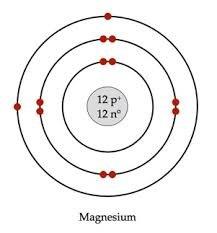
Q6. Draw a Bohr model depicting a Mg atom. How many protons, neutrons, and electrons does Mg have? How many electrons are in the valence shell?
Background
Topic: Atomic Structure and Electron Configuration
This question tests your ability to represent an atom using the Bohr model and to determine the number of subatomic particles and valence electrons.
Key Terms and Formulas:
Bohr model
Atomic number = number of protons
Number of neutrons = mass number - atomic number
Number of electrons = number of protons (for a neutral atom)
Valence shell = outermost electron shell
Step-by-Step Guidance
Find the atomic number and mass number of magnesium (Mg) on the periodic table.
Determine the number of protons, neutrons, and electrons in a neutral Mg atom.
Draw the Bohr model: place the correct number of electrons in each shell (2 in the first, 8 in the second, remaining in the third).
Identify the number of electrons in the outermost (valence) shell.
Try solving on your own before revealing the answer!
Final Answer:
Magnesium (Mg) has 12 protons, 12 neutrons, and 12 electrons. In the Bohr model, there are 2 electrons in the first shell, 8 in the second, and 2 in the valence (third) shell. The valence shell has 2 electrons.
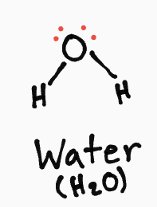
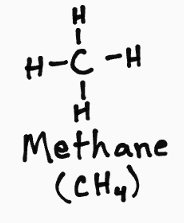
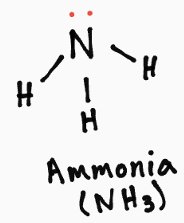
Q7. Look at the following molecules. Which have polar covalent bonds and which have nonpolar covalent bonds? (And how do you know?)
Background
Topic: Chemical Bonding and Polarity
This question tests your understanding of the difference between polar and nonpolar covalent bonds, and how to identify them in molecules.
Key Terms:
Polar covalent bond
Nonpolar covalent bond
Electronegativity
Step-by-Step Guidance
Recall the definition of polar and nonpolar covalent bonds. Polar covalent bonds occur when atoms with different electronegativities share electrons unequally; nonpolar covalent bonds occur when atoms share electrons equally.
Examine the molecules: water (H2O), methane (CH4), and ammonia (NH3).
Compare the electronegativities of the atoms in each molecule to determine if the bonds are polar or nonpolar.
Decide which molecules have polar covalent bonds and which have nonpolar covalent bonds based on the differences in electronegativity.
Try solving on your own before revealing the answer!
Final Answer:
Water (H2O) and ammonia (NH3) have polar covalent bonds because of the significant difference in electronegativity between oxygen/nitrogen and hydrogen. Methane (CH4) has nonpolar covalent bonds because the electronegativity difference between carbon and hydrogen is very small, so electrons are shared equally.
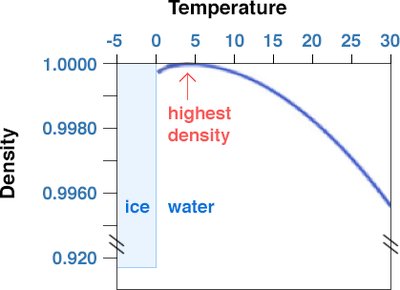
Q8. How does water density change with decreasing temperature? Why does this make ice special?
Background
Topic: Properties of Water
This question tests your understanding of how water behaves as it cools and why ice floats on liquid water.
Key Terms:
Density
Hydrogen bonding
Solid vs. liquid water structure
Step-by-Step Guidance
Recall how the density of most substances changes as they cool (usually increases).
Think about what happens to water molecules as water cools and freezes.
Consider the arrangement of water molecules in ice compared to liquid water, and how hydrogen bonds play a role.
Look at the density graph for water and ice to see how density changes with temperature.
Try solving on your own before revealing the answer!
Final Answer:
As water cools, its density increases until about 4°C, then decreases as it freezes. Ice is less dense than liquid water because its molecules form a crystalline structure held by hydrogen bonds, creating more open space. This is why ice floats on water.
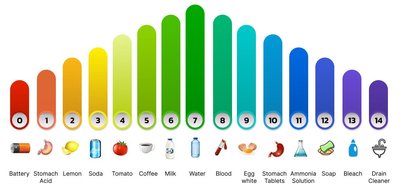
Q9. Look at the following pH scale. Is tomato juice acidic or basic? Does it have more [H+] or [OH-]?
Background
Topic: Acids, Bases, and pH
This question tests your ability to interpret a pH scale and understand the relationship between pH, acidity, and ion concentration.
Key Terms:
pH scale
Acidic vs. basic (alkaline)
Hydrogen ion concentration [H+]
Hydroxide ion concentration [OH-]
Step-by-Step Guidance
Find tomato juice on the pH scale and note its pH value.
Recall that a pH less than 7 is acidic, and a pH greater than 7 is basic.
Determine whether tomato juice has more hydrogen ions ([H+]) or hydroxide ions ([OH-]).
Think about what this means for the properties of tomato juice.
Try solving on your own before revealing the answer!
Final Answer:
Tomato juice is acidic (pH around 4), so it has more hydrogen ions ([H+]) than hydroxide ions ([OH-]).
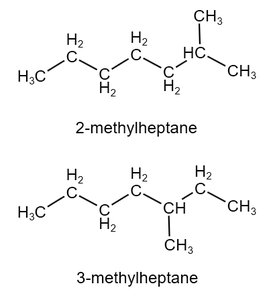
Q10. What type of isomer is shown in the hydrocarbons to the right? What type of bond is found between each C and H in these structures? How do you know?
Background
Topic: Isomerism and Chemical Bonding
This question tests your understanding of structural isomers and the types of bonds in hydrocarbons.
Key Terms:
Isomer
Structural isomer
Covalent bond
Nonpolar bond
Step-by-Step Guidance
Examine the two hydrocarbon structures and compare their connectivity.
Recall the definition of structural isomers (same molecular formula, different connectivity).
Identify the type of bond between carbon and hydrogen atoms in alkanes.
Consider the electronegativity difference between carbon and hydrogen to determine bond polarity.
Try solving on your own before revealing the answer!
Final Answer:
The hydrocarbons shown are structural isomers (2-methylheptane and 3-methylheptane). The bonds between C and H are nonpolar covalent bonds because the electronegativity difference is very small, so electrons are shared equally.
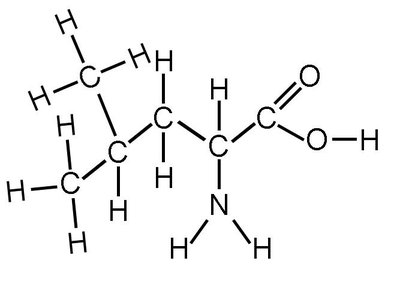
Q11. Look at the molecule to the right. What functional groups can you identify? Which functional groups have polar covalent bonds? Why/how do you know?
Background
Topic: Functional Groups and Bond Polarity
This question tests your ability to recognize functional groups in organic molecules and understand their polarity.
Key Terms:
Functional group
Polar covalent bond
Step-by-Step Guidance
Identify the different functional groups present in the molecule (e.g., amino, carboxyl, hydroxyl).
Recall which functional groups are typically polar due to electronegative atoms like O or N.
Determine which bonds within these groups are polar covalent and explain why.
Try solving on your own before revealing the answer!
Final Answer:
The molecule contains amino, carboxyl, and hydroxyl functional groups. These groups have polar covalent bonds because they contain highly electronegative atoms (O and N) bonded to less electronegative atoms (H or C), resulting in unequal sharing of electrons.
Q12. What type of reaction breaks monomers off of polymers?
Background
Topic: Macromolecules and Chemical Reactions
This question tests your knowledge of the chemical processes that break down polymers into monomers.
Key Terms:
Polymer
Monomer
Hydrolysis
Step-by-Step Guidance
Recall the two main types of reactions involved in building and breaking down polymers: dehydration synthesis and hydrolysis.
Think about which reaction adds water to break bonds between monomers.
Consider the role of enzymes in facilitating these reactions in biological systems.
Try solving on your own before revealing the answer!
Final Answer:
Hydrolysis reactions break monomers off of polymers by adding a water molecule to break the covalent bond between monomers.
Q13. Which biomolecules are built from monomers into polymers with dehydration reaction and broken by hydrolysis reactions? What type of bond(s) are formed in each of these biomolecules?
Background
Topic: Macromolecules and Chemical Bonds
This question tests your understanding of how biological macromolecules are assembled and the types of bonds involved.
Key Terms:
Dehydration reaction
Hydrolysis
Carbohydrates, proteins, nucleic acids
Glycosidic, peptide, phosphodiester bonds
Step-by-Step Guidance
List the major classes of biomolecules that are polymers (carbohydrates, proteins, nucleic acids).
Recall the type of reaction that links monomers together (dehydration synthesis) and the reaction that breaks them apart (hydrolysis).
Identify the specific type of covalent bond formed in each class (e.g., glycosidic in carbohydrates, peptide in proteins, phosphodiester in nucleic acids).
Try solving on your own before revealing the answer!
Final Answer:
Carbohydrates, proteins, and nucleic acids are built from monomers into polymers by dehydration reactions and broken down by hydrolysis. Carbohydrates form glycosidic bonds, proteins form peptide bonds, and nucleic acids form phosphodiester bonds.
Q14. What are the monomers in carbohydrates, DNA/RNA, and proteins? What functional groups can you identify in each of these monomers? Are each of these molecules polar or non-polar and how do you know?
Background
Topic: Monomers, Functional Groups, and Polarity
This question tests your knowledge of the building blocks of macromolecules, their functional groups, and their polarity.
Key Terms:
Monomer
Functional group
Polarity
Step-by-Step Guidance
Identify the monomer for each macromolecule: monosaccharides for carbohydrates, nucleotides for DNA/RNA, and amino acids for proteins.
List the functional groups present in each monomer (e.g., hydroxyl in sugars, amino and carboxyl in amino acids, phosphate in nucleotides).
Determine whether each monomer is polar or non-polar based on the presence of polar functional groups.
Try solving on your own before revealing the answer!
Final Answer:
Carbohydrates are made of monosaccharides (with hydroxyl groups, making them polar), DNA/RNA are made of nucleotides (with phosphate, sugar, and nitrogenous base, generally polar), and proteins are made of amino acids (with amino and carboxyl groups, also polar). The presence of these polar functional groups makes these monomers generally polar.
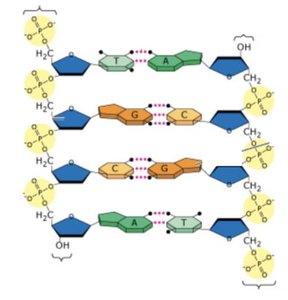
Q15. Look at the following sequence of DNA. What does it mean for DNA to be antiparallel and complementary? Label the 3' and 5' ends of each strand of DNA. What functional groups do you find at each end? Label a phosphodiester bond, a purine, a pyrimidine, and a hydrogen bond.
Background
Topic: DNA Structure
This question tests your understanding of the structure of DNA, including its directionality, base pairing, and chemical bonds.
Key Terms:
Antiparallel
Complementary base pairing
3' and 5' ends
Phosphodiester bond
Purine and pyrimidine
Hydrogen bond
Step-by-Step Guidance
Recall what it means for DNA strands to be antiparallel (run in opposite directions) and complementary (A pairs with T, G pairs with C).
Identify the 3' and 5' ends of each DNA strand and the functional groups present at each end (hydroxyl at 3', phosphate at 5').
Locate a phosphodiester bond (between sugar and phosphate), a purine (A or G), a pyrimidine (C or T), and a hydrogen bond (between bases).
Try solving on your own before revealing the answer!
Final Answer:
DNA is antiparallel because the two strands run in opposite directions (one 5' to 3', the other 3' to 5'). The 5' end has a phosphate group, and the 3' end has a hydroxyl group. Phosphodiester bonds link the sugar and phosphate backbone. Purines are adenine (A) and guanine (G); pyrimidines are cytosine (C) and thymine (T). Hydrogen bonds form between complementary bases (A-T, G-C).
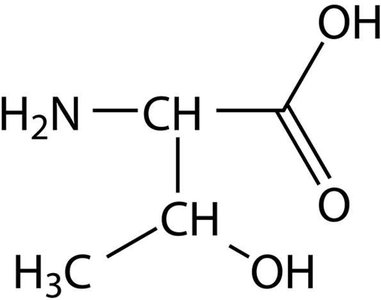
Q16. Below are an amino acid and a nucleotide. What polymers do these contribute to? Circle and identify the functional groups on each structure. Are these polar or non-polar? How do you know?
Background
Topic: Monomers, Functional Groups, and Polarity
This question tests your ability to identify the monomers of proteins and nucleic acids, their functional groups, and their polarity.
Key Terms:
Amino acid
Nucleotide
Functional group
Polarity
Step-by-Step Guidance
Identify which polymer each monomer forms: amino acids form proteins, nucleotides form nucleic acids.
Circle and label the functional groups on each structure (amino, carboxyl, phosphate, sugar, base).
Determine if the monomers are polar or non-polar based on the presence of polar functional groups (e.g., amino, carboxyl, phosphate).
Try solving on your own before revealing the answer!
Final Answer:
Amino acids contribute to proteins, and nucleotides contribute to nucleic acids. The amino acid has amino and carboxyl groups (both polar), and the nucleotide has phosphate, sugar, and base (phosphate and sugar are polar). Both monomers are generally polar due to these functional groups.
