 Back
General Biology Exam 1 Study Guide: Foundations, Chemistry of Life, Water, and Carbon
Study Guide - Smart Notes
 Tailored notes based on your materials, expanded with key definitions, examples, and context.
Chapter 1: Evolution, Themes of Biology, and Scientific Inquiry
Principles of Scientific Methodology
The scientific method is a systematic approach to understanding the natural world through observation, hypothesis formation, experimentation, and analysis.
Observation: Noticing phenomena in the natural world.
Question: Formulating a research question based on observations.
Hypothesis: A testable, falsifiable explanation (often in "if...then" format).
Prediction: What you expect to happen if the hypothesis is correct.
Experiment: Testing the hypothesis with controlled variables.
Analysis: Interpreting data, often using statistics or graphs.
Conclusion: Accepting or rejecting the hypothesis based on results.
Variables:
Independent variable: Manipulated by the researcher.
Dependent variable: Measured response.
Control variables: Kept constant to ensure a fair test.
Reasoning:
Inductive reasoning: Drawing general conclusions from specific observations.
Deductive reasoning: Predicting specific results from general principles.
Scientific theory: A broad, well-supported explanation for a wide range of phenomena.
Properties of Life
Living organisms share several defining characteristics:
Order: Highly organized structures (e.g., sunflower structure).
Evolutionary adaptation: Traits that enhance survival and reproduction (e.g., penguin adaptations).
Regulation/Homeostasis: Maintaining stable internal conditions (e.g., body temperature).
Reproduction: Producing offspring (asexual or sexual).
Response to environment: Reacting to stimuli (light, temperature, etc.).
Growth and development: Controlled by genetic information.
Energy processing: Obtaining and using energy (e.g., photosynthesis, metabolism).
Levels of Biological Organization
Biological systems are organized hierarchically from smallest to largest:
Molecules
Organelles
Cells
Tissues
Organs
Organisms
Populations
Communities
Ecosystems
Biosphere
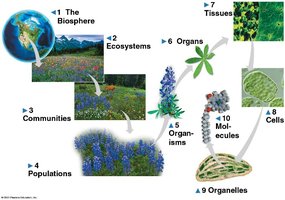
Emergent properties: New characteristics that arise at each level due to arrangement and interaction of parts (e.g., photosynthesis in chloroplasts).
Five Unifying Themes of Biology
Organization: Structure and function are correlated at all levels.
Information: Expression and transmission of genetic information (DNA).
Energy and Matter: Life requires energy transfer and transformation.
Interactions: Organisms interact with each other and their environment.
Evolution: The core theme explaining unity and diversity of life.
Feedback Regulation
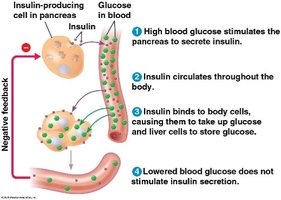
Biological processes are often regulated by feedback mechanisms. In negative feedback, accumulation of an end product slows the process (e.g., insulin regulation of blood glucose).
Evolution and Classification
Evolution explains both the unity and diversity of life. Natural selection is the mechanism by which advantageous traits become more common in a population over generations.
Three domains of life: Bacteria, Archaea (both prokaryotic), and Eukarya (eukaryotic).
Kingdoms under Eukarya: Plantae, Fungi, Animalia, and various protist groups.
Taxonomy: The science of naming and classifying organisms.
Chapter 2: The Chemical Context of Life
Atoms, Elements, and Compounds
Atom: The smallest unit of matter retaining the properties of an element.
Element: Substance that cannot be broken down by chemical means.
Compound: Substance consisting of two or more elements in a fixed ratio.
Isotope: Atoms of the same element with different numbers of neutrons.
Atomic number: Number of protons in the nucleus. Atomic mass: Number of protons plus neutrons.
Valence electrons: Electrons in the outermost shell; determine chemical behavior and bonding.
Chemical Bonds
Covalent bonds: Atoms share pairs of electrons. Can be single, double, or triple bonds.
Polar covalent bonds: Electrons shared unequally, creating partial charges (e.g., H2O).
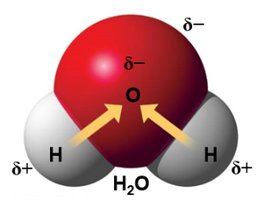
Nonpolar covalent bonds: Electrons shared equally.
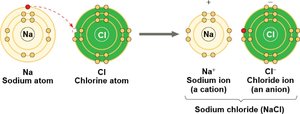
Ionic bonds: Attraction between oppositely charged ions (e.g., NaCl).
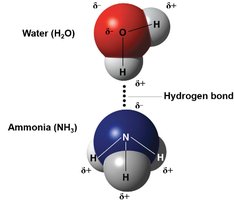
Hydrogen bonds: Weak bonds between a hydrogen atom and an electronegative atom (e.g., between water molecules or between water and ammonia).
Van der Waals interactions: Weak, transient attractions between molecules.
Chemical Reactions
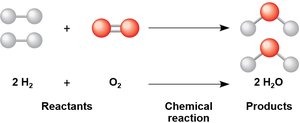
Chemical reactions involve the making and breaking of bonds. The starting substances are reactants, and the resulting substances are products.
Chemical equilibrium: The point at which forward and reverse reactions occur at the same rate.
Chapter 3: Water and Life
Properties of Water
Water is essential for life due to its unique properties, largely resulting from hydrogen bonding:
Cohesion: Water molecules stick together, aiding transport in plants and creating surface tension.
Adhesion: Water molecules stick to other substances (e.g., plant cell walls).
High specific heat: Water resists temperature changes, stabilizing environments.
Heat of vaporization: Large amount of energy required for evaporation, allowing evaporative cooling.
Expansion upon freezing: Ice is less dense than liquid water, so it floats.
Versatility as a solvent: Water dissolves many substances due to its polarity.
Hydrophilic: Substances that have an affinity for water. Hydrophobic: Substances that do not mix with water.
Acids, Bases, and Buffers
Acid: Increases H+ concentration in solution.
Base: Decreases H+ concentration.
Buffer: Minimizes changes in pH by accepting or donating H+ ions.
pH scale: Measures hydrogen ion concentration; pH = -log [H+].
Most biological fluids have pH values between 6 and 8.
Chapter 4: Carbon and the Molecular Diversity of Life
Importance and Properties of Carbon
Carbon is the backbone of organic molecules due to its ability to form four covalent bonds, allowing for a diversity of stable structures (chains, rings, branches).
Hydrocarbons: Molecules consisting only of carbon and hydrogen (e.g., methane, ethane).
Isomers: Compounds with the same molecular formula but different structures and properties.
Structural isomers: Differ in covalent arrangement of atoms.
Cis-trans (geometric) isomers: Differ in spatial arrangement around double bonds.
Enantiomers: Mirror images due to asymmetric carbon; often only one is biologically active.
Functional Groups
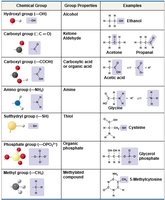
Certain chemical groups attached to carbon skeletons give molecules specific properties and functions. These include:
Chemical Group | Group Properties | Examples |
|---|---|---|
Hydroxyl (-OH) | Alcohol | Ethanol |
Carbonyl (C=O) | Ketone, Aldehyde | Acetone, Propanal |
Carboxyl (-COOH) | Carboxylic acid | Acetic acid |
Amino (-NH2) | Amine | Glycine |
Sulfhydryl (-SH) | Thiol | Cysteine |
Phosphate (-OPO32-) | Organic phosphate | Glycerol phosphate |
Methyl (-CH3) | Methylated compound | 5-Methylcytosine |
ATP (adenosine triphosphate): An important organic phosphate that stores and transfers energy in cells.
Additional info: This guide covers foundational concepts from the first four chapters of a General Biology course, including scientific inquiry, the chemical basis of life, water's properties, and the molecular diversity enabled by carbon. It is designed for exam preparation and provides both definitions and examples, with relevant diagrams to reinforce key concepts.
