 Back
General Biology Exam 1 Study Guide: Cells, Chemistry, and Biological Organization
Study Guide - Smart Notes
 Tailored notes based on your materials, expanded with key definitions, examples, and context.
Domains of Life
Classification and Characteristics
The three domains of life represent the broadest classification of living organisms, based on cellular structure and genetic differences.
Bacteria: Single-celled organisms lacking nuclei; example: E. coli.
Archaea: Single-celled, lack nuclei, often found in extreme environments.
Eukarya: Organisms with nuclei; includes kingdoms such as Animals, Protista (protozoans, algae, slime molds), Fungi, and Plantae.
Cell Structure and Organelles
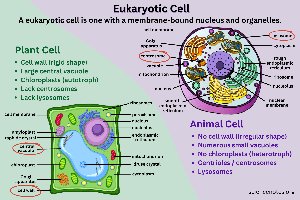
Eukaryotic vs. Prokaryotic Cells
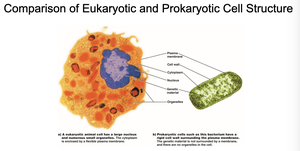
Cells are the basic units of life, and their structure varies between eukaryotes and prokaryotes.
Eukaryotic cells: Have membrane-bound nuclei and organelles.
Prokaryotic cells: Lack nuclei and most organelles; simpler structure.
Cell Organelles: Names, Functions, and Shapes
Eukaryotic cells contain specialized organelles, each with distinct functions.
Nucleus: Stores genetic material (DNA).
Mitochondria: Site of ATP production via cellular respiration.
Chloroplasts: Present in plant cells; site of photosynthesis.
Endoplasmic Reticulum (ER): Synthesizes proteins (rough ER) and lipids (smooth ER).
Golgi Apparatus: Modifies, sorts, and packages proteins and lipids.
Lysosomes: Digest cellular waste (animal cells).
Cell Wall: Provides structure (plant cells).
Vacuole: Stores water and nutrients (large in plant cells).
Hierarchy of Living Organisms
Levels of Biological Organization
Living organisms are organized in a hierarchical structure, from smallest to largest.
Atom: Smallest unit of an element.
Molecule: Stable association of two or more atoms.
Cell: Smallest unit exhibiting all characteristics of life.
Tissue: Group of similar cells performing a specific function.
Organ: Structure composed of multiple tissues.
Organ System: Group of organs working together.
Organism: Individual living being.
Population: Group of same species in a geographic area.
Community: All populations of different species in an environment.
Ecosystem: Living organisms plus physical environment and energy.
Biosphere: Sum of all ecosystems on Earth.
Cell Size and Surface Area
Surface Area-to-Volume Ratio
The relationship between cell size and surface area is crucial for cellular function.
As a cell grows, its volume increases faster than its surface area.
This results in a decreased surface-area-to-volume ratio, limiting efficient exchange of materials.
Inverse relationship: Larger cells have relatively less surface area for their volume.
Microscopy
Types and Uses
Microscopes are essential tools for studying cells and their structures.
Light Microscope: Magnifies up to 1000x; views living samples.
Transmission Electron Microscope (TEM): Magnifies up to 100,000x; reveals internal cell details.
Scanning Electron Microscope (SEM): Magnifies up to 100,000x; provides 3D view of cell surface.
Elements and Chemistry of Life
Abundant Elements
The most abundant elements in living organisms are:
Oxygen
Carbon
Hydrogen
Nitrogen
Reductionism
Reductionism is the approach of understanding complex systems by breaking them down into simpler components, such as organs, cells, proteins, and molecules.
DNA Importance
DNA programs cell activities by directing the synthesis of proteins, which are essential for structure and function.
Chemical Bonds
Types of Bonds
Chemical bonds are forces that hold atoms together in molecules.
Covalent Bonds: Sharing electrons; strong.
Nonpolar Covalent: Electrons shared equally (e.g., H2, O2, CH4).
Polar Covalent: Electrons not shared equally (e.g., H2O).
Ionic Bonds: Transfer of electrons; moderate strength (e.g., NaCl).
Hydrogen Bonds: Attraction between oppositely charged regions of molecules with covalently bonded hydrogen; weak (e.g., between water molecules).
Polarity
Polar Molecules: Uneven distribution of electrical charge; atoms have different electronegativities.
Nonpolar Molecules: Even distribution; atoms have similar electronegativities.
Acids, Bases, and pH
pH Scale
The pH scale measures the acidity or basicity of substances.
Acidic: pH 0-6 (e.g., tomato juice, soda, lemon juice).
Neutral: pH 7 (e.g., water, human blood).
Basic: pH 8-14 (e.g., milk of magnesia, bleach, oven cleaner).
Scientific Method
Steps in Scientific Inquiry
The scientific method is a systematic approach to investigation.
Observe
Formulate a hypothesis
Make a prediction
Experiment or observe
Modify hypothesis as needed
Repeat steps 3 and 4
Homeostasis
Definition and Importance
Homeostasis is the regulation of an internal environment compatible with life, maintaining chemical and physical conditions within a range suitable for survival.
Elements vs. Molecules
Definitions
Element: Fundamental form of matter; cannot be broken down further.
Molecule: Stable association of two or more atoms.
Living vs. Nonliving Characteristics
Shared Properties
Both living and nonliving things share certain characteristics, such as composition of matter, physical states, chemical reactivity, energy interactions, structural organization, response to stimuli, capacity for change, system formation, and information storage.
Radioisotope Technology
Applications
Radioisotopes emit measurable radiation, enabling diagnosis and treatment of disease, powering space missions, and testing industrial materials.
Atomic Charge Changes
Electron Transfer
Atoms change their charge by losing or gaining electrons, forming ions.
Diffusion
Process and Membrane Transport
Diffusion is the movement of molecules from high to low concentration. Small, lipid-soluble substances can move directly through the phospholipid bilayer without assistance.
ATP Production and Electron Transport Chain
Cellular Respiration Pathways
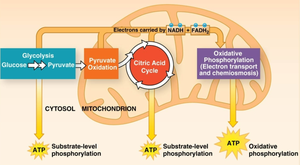
Most ATP is produced in the mitochondria during the electron transport chain.
Glycolysis: Occurs in cytosol; breaks down glucose to pyruvate.
Citric Acid Cycle: Occurs in mitochondria; generates electron carriers (NADH, FADH2).
Oxidative Phosphorylation: Electron transport and chemiosmosis produce ATP.
Plasma Membrane Structure
Components and Functions
The plasma membrane consists of:
Phospholipid Bilayer: Two layers; polar heads face outward, nonpolar tails meet in center.
Cholesterol: Increases mechanical strength.
Proteins: Transport molecules and transmit information.
Transport Across Membranes
Passive and Active Transport
Passive Transport: No energy required; includes diffusion and facilitated diffusion.
Active Transport: Cell expends energy to move substances against concentration gradient.
Selective Permeability
Large, charged, or polar molecules cannot pass through the plasma membrane without help.
Solutions and Cell Effects
Isotonic Solutions
An isotonic solution has the same concentration of solutes as the cell's interior, preventing net movement of water and maintaining cell shape.
Glycolysis
Purpose and Location
Glycolysis breaks down glucose into two pyruvate molecules, initiating cellular respiration in the cytosol.
Electron Carriers in Cellular Respiration
NADH and FADH2
During the citric acid cycle, NADH and FADH2 are produced by transferring electrons from metabolic intermediates.
Tissues and Their Types
Connective Tissue Types
Cartilage
Bone
Blood
Adipose tissue
Loose
Dense
Elastic
Reticular
Locations of Tissue Types
Epithelial: Skin
Connective: Bones
Muscle: Cardiac (heart)
Nervous: Brain
Muscle in the Stomach
The stomach contains smooth muscle.
Functions of Tissue Types
Epithelial: Covers surfaces, lines cavities, forms glands (e.g., skin).
Connective: Supports, binds, protects, integrates tissues (e.g., bones).
Muscle: Moves body, pumps blood, moves food (e.g., cardiac muscle).
Nervous: Sends electrical signals (e.g., brain, spinal cord).
Cell Junctions
Types and Functions
Cell junctions are specialized structures that connect cells.
Tight Junctions: Form leak-proof seals.
Adhesion Junctions: Anchor cells together, allow flexibility.
Gap Junctions: Direct transfer of water and ions between cells.
