 Back
General Biology Exam 1 Study Guide: Foundations, Chemistry, Cells, and Metabolism
Study Guide - Smart Notes
 Tailored notes based on your materials, expanded with key definitions, examples, and context.
Scientific Method and Reasoning
Major Steps of the Scientific Method
The scientific method is a systematic approach used in biology to investigate questions and test hypotheses. It consists of several distinct steps:
Purpose: The reason for conducting the experiment; defines the question being asked.
Hypothesis: A tentative, testable, and falsifiable answer to the question; leads to predictions.
Materials: The items and tools required for the experiment.
Procedure: The step-by-step process for conducting the experiment, including identification of variables (factors that can change and affect outcomes).
Results: The data collected, which can be qualitative (descriptions) or quantitative (numerical measurements).
Conclusion: Interpretation of results to determine if the hypothesis is supported.
Most biological research uses inductive reasoning, where enough data is gathered to make probabilistic conclusions.
Chemical Properties of Water
Emergent Properties of Water
Water exhibits four key emergent properties due to its molecular structure and hydrogen bonding:
Cohesive Behavior: Water molecules stick to each other (cohesion) and to other surfaces (adhesion), enabling capillary action and beading.
High Specific Heat: Water resists temperature changes due to strong hydrogen bonds; it also exhibits high heat of vaporization and evaporative cooling.
Expansion Upon Freezing: Water forms a lattice structure when frozen, making ice less dense than liquid water.
Universal Solvent: Water's polarity allows it to dissolve many substances by separating solute molecules.
Solvent is the substance that dissolves another, while solute is the substance being dissolved.
Carbon Chemistry and Isomers
Types of Isomers
Isomers are compounds with the same molecular formula but different structures:
Structural Isomers: Differ in covalent arrangement of atoms. Includes cis (spread out, broken apart faster) and trans (pack closely, accumulate easily) forms.
Enantiomers: Mirror images of each other; cannot be stacked but can be mirrored.
Example: Structural isomers of hexane differ in the arrangement of carbon atoms.
Carbon Functional Groups and Bonding Diversity
Carbon's ability to form four covalent bonds with various atoms makes it the backbone of organic molecules. Functional groups are specific groups of atoms within molecules that are involved in chemical reactions.
Macromolecules: Structure and Function
Monomers, Polymers, and Macromolecule Types
Macromolecules are large biological molecules made of smaller units called monomers. Polymers are chains of monomers. The four main macromolecules are:
Carbohydrates: Monomers are monosaccharides (e.g., glucose); polymers are polysaccharides. Serve as fuel and building material.
Lipids: Not true polymers. Include fats (glycerol + fatty acids), phospholipids, and steroids (e.g., cholesterol).
Proteins: Polymers of amino acids linked by peptide bonds. Functions include catalysis, defense, transport, communication, movement, and structural support.
Nucleic Acids: DNA and RNA; polymers of nucleotides. DNA is a double helix, RNA is single-stranded.
Example: Two glucose molecules joined by dehydration form maltose.
Protein Structure
Proteins have four levels of structure:
Primary: Unique sequence of amino acids.
Secondary: Coils and folds (e.g., beta sheets) from hydrogen bonding.
Tertiary: 3D shape from interactions among R groups.
Quaternary: Multiple polypeptide chains.
Peptide bonds are identified by nitrogen and double-bonded oxygen.
Microscopy and Cell Structure
Principles of Microscopy
Microscopy is essential for studying cells. Key concepts include:
Resolution: Clarity of an image.
Contrast: Difference in brightness between areas.
Fluorescence: Uses glowing molecules to visualize structures.
Electron Microscopy: Scanning (surface) and Transmission (internal) electron microscopy provide detailed cell images.
Units: centi-, milli-, micro-, nano-.
Cell Types and Organelles
Cells are classified as prokaryotic (no nucleus, simpler) or eukaryotic (nucleus, complex organelles). Key organelles and their functions:
Nucleus: Contains DNA and genes.
Ribosomes: Protein synthesis.
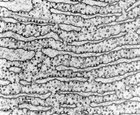
Endoplasmic Reticulum (ER): Rough ER (protein synthesis), Smooth ER (lipid synthesis, detoxification).
Golgi Apparatus: Modifies, sorts, and packages proteins and macromolecules.
Lysosomes: Digestion and recycling.
Vacuoles: Storage and maintenance.
Mitochondria: ATP production via cellular respiration.
Chloroplasts: Photosynthesis in plants.
Cytoskeleton: Microtubules, microfilaments, intermediate filaments for structure and movement.
Plant cells have chloroplasts, central vacuole, cell wall, and plasmodesmata; animal cells have lysosomes, centrosomes, and flagella.
Example: The Golgi apparatus is a series of flattened sacs involved in protein modification and transport.
Membrane Structure and Transport
Properties of Membranes
The plasma membrane is a phospholipid bilayer with embedded proteins, providing selective permeability. Phospholipids are amphipathic (hydrophilic heads, hydrophobic tails).
Peripheral proteins: Attached to membrane surface.
Integral proteins: Penetrate hydrophobic core; transmembrane proteins span the membrane.
Membrane fluidity is affected by temperature and cholesterol.
Membrane Transport
Transport across membranes occurs via:
Passive transport: Diffusion and osmosis; no energy required.
Active transport: Requires energy (usually ATP) to move solutes against gradients.
Transport proteins: Channels and carriers facilitate movement.
Membrane potential is the voltage difference across a membrane; electrochemical gradient drives ion diffusion.
Tonicity
Tonicity describes the effect of a solution on cell water movement:
Hypertonic: Higher solute outside; cell loses water.
Hypotonic: Lower solute outside; cell gains water.
Isotonic: Equal solute; no net water movement.
Energy, Metabolism, and Enzymes
Laws of Thermodynamics
First Law: Energy cannot be created or destroyed.
Second Law: Entropy (disorder) always increases.
Enzymes and Regulation
Enzymes are protein catalysts that lower activation energy for reactions. They do not change the free energy () of a reaction.
Competitive inhibitors: Bind to active site, blocking substrate.
Noncompetitive inhibitors: Bind elsewhere, changing enzyme shape.
Allosteric regulation: Regulatory molecules bind at one site, affecting function at another.
Metabolism includes all chemical reactions in an organism, divided into catabolic (breakdown, release energy) and anabolic (build up, consume energy) pathways.
Sample Calculations and Questions
Moles, Daltons, Grams, and Liters
One mole = entities.
1 gram = daltons.
Molarity (M) = moles of solute per liter of solution.
1 mole of glucose (molecular mass = 180 daltons) = 180 grams.
Sample Questions
A controlled experiment includes at least two groups, one of which does not receive the experimental treatment.
Vegetable oil is liquid at room temperature because it has more double bonds than animal fats.
Plant cells have chloroplasts, central vacuole, and cell wall; animal cells do not.
Hydrophobic small molecules pass more easily through the membrane than hydrophilic ones.
Cell Junctions
Types of Cell Junctions
Plasmodesmata: Channels between plant cells.
Gap Junctions: Channels between animal cells.
Tight Junctions: Found in epithelial tissues (e.g., animal stomach lining).
Additional info: Academic context was added to clarify and expand brief points, provide definitions, and ensure completeness for exam preparation.
