 Back
General Biology Exam 1 Study Guide: Foundations, Chemistry of Life, Water, and Carbon
Study Guide - Smart Notes
 Tailored notes based on your materials, expanded with key definitions, examples, and context.
Chapter 1: Evolution, the Themes of Biology, and Scientific Inquiry
Principles of Scientific Methodology
The scientific method is a systematic approach to understanding the natural world through observation, hypothesis formation, experimentation, and analysis. It ensures that scientific inquiry is logical, repeatable, and objective.
Observation: Noticing phenomena or patterns in nature.
Question: Formulating a research question based on observations.
Hypothesis: A testable and falsifiable explanation ("If...then..." statements).
Prediction: What you expect to happen if the hypothesis is correct.
Experiment: Testing the hypothesis with controlled variables.
Analysis: Interpreting data, often using statistics or graphs.
Conclusion: Accepting or rejecting the hypothesis and suggesting future research.
Variables in Experiments:
Independent variable: Manipulated by the researcher.
Dependent variable: Measured response.
Control variables: Kept constant to ensure valid results.
Reasoning Types:
Inductive reasoning: Generalizing from specific observations (e.g., repeated allergic reactions to peanuts suggest a peanut allergy).
Deductive reasoning: Predicting specific results from general principles (e.g., If A = B and B = C, then A = C).
Scientific Theory: A broad, well-supported explanation for a wide range of observations (e.g., theory of evolution).
Properties of Life
Living organisms share several defining characteristics that distinguish them from non-living matter.
Order: Highly organized structures (e.g., sunflower anatomy).
Evolutionary adaptation: Traits that enhance survival and reproduction (e.g., penguin adaptations to cold).
Regulation/Homeostasis: Maintaining stable internal conditions (e.g., body temperature, pH).
Reproduction: Producing offspring, either sexually or asexually.
Response to environment: Reacting to stimuli (e.g., light, temperature).
Growth and development: Controlled by genetic information.
Energy processing: Acquiring and using energy (e.g., photosynthesis, metabolism).
Levels of Biological Organization
Biological systems are organized in a hierarchy from the smallest to the largest scale.
Molecules → Organelles → Cells → Tissues → Organs → Organisms → Populations → Communities → Ecosystems → Biosphere
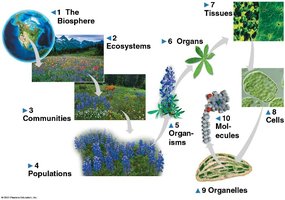
Emergent properties: New characteristics that arise at each level due to the arrangement and interactions of parts (e.g., photosynthesis in chloroplasts).
Five Unifying Themes of Biology
Organization: Structure and function are correlated at all levels.
Information: Genetic information (DNA) is expressed and transmitted.
Energy and Matter: Life requires energy transfer and transformation.
Interactions: Organisms interact with each other and their environment, affecting nutrient cycling and energy flow.
Evolution: The core theme explaining both unity and diversity of life.
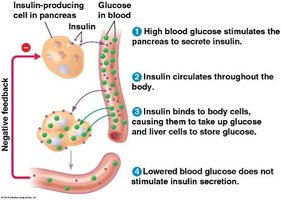
Feedback Regulation
Biological processes are often regulated by feedback mechanisms. Negative feedback slows a process as its end product accumulates (e.g., insulin regulation of blood glucose).
Cells: Prokaryotes vs. Eukaryotes
Prokaryotic cells: Simpler, no nucleus, no membrane-bound organelles (Domains: Bacteria, Archaea).
Eukaryotic cells: Complex, nucleus, membrane-bound organelles (Domain: Eukarya).
Taxonomy and Domains of Life
Taxonomy classifies organisms into hierarchical groups. The three domains are:
Bacteria: Prokaryotic, diverse environments.
Archaea: Prokaryotic, often in extreme environments.
Eukarya: Eukaryotic; includes Protists, Plantae, Fungi, Animalia.
Protists are a diverse group of mostly unicellular eukaryotes, not a single kingdom.
Evolution and Natural Selection
Evolution is the process by which populations change over generations through changes in genetic frequencies. Natural selection is the mechanism where individuals with advantageous traits reproduce more successfully, leading to adaptation.
Chapter 2: The Chemical Context of Life
Atoms, Elements, and Compounds
Atom: Smallest unit of matter retaining element properties.
Element: Substance consisting of one type of atom (e.g., C, H, O, N).
Compound: Substance formed from two or more elements in a fixed ratio (e.g., H2O).
Isotope: Atoms of the same element with different numbers of neutrons (e.g., 12C, 13C, 14C).
Atomic number: Number of protons. Atomic mass: Number of protons + neutrons.
Valence Electrons and Chemical Bonds
Valence electrons in the outer shell determine chemical reactivity and bond formation. Atoms with full valence shells are inert.
Covalent bonds: Atoms share electrons. Can be single, double, or triple bonds.
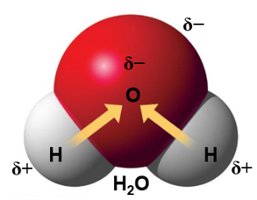
Polar covalent bonds: Unequal sharing of electrons (e.g., H2O).
Nonpolar covalent bonds: Equal sharing of electrons.
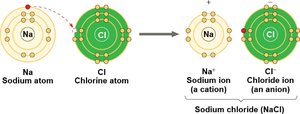
Ionic bonds: Transfer of electrons creates charged ions (cations and anions) that attract each other (e.g., NaCl).
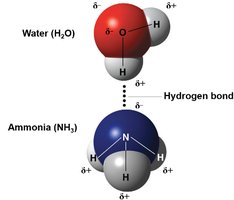
Hydrogen bonds: Weak attractions between a hydrogen atom and an electronegative atom (e.g., between water molecules).
Van der Waals interactions: Weak, transient attractions between molecules.
Chemical Reactions
Chemical reactions involve the making and breaking of bonds. Reactants are transformed into products. Chemical equilibrium is reached when forward and reverse reactions occur at the same rate.
Chapter 3: Water and Life
Properties of Water
Water's unique properties are essential for life and are largely due to its polarity and ability to form hydrogen bonds.
Cohesion: Water molecules stick together, aiding transport in plants and creating surface tension.
Adhesion: Water molecules stick to other substances (e.g., cell walls).
High specific heat: Water resists temperature changes, stabilizing environments.
Heat of vaporization: Large amount of energy required for evaporation, allowing evaporative cooling.
Expansion upon freezing: Ice is less dense than liquid water, so it floats.
Versatility as a solvent: Water dissolves many substances due to its polarity.
Acids, Bases, and Buffers
Acid: Increases H+ concentration in solution.
Base: Decreases H+ concentration.
Buffer: Minimizes changes in pH by accepting or donating H+ ions.
pH scale: Measures H+ concentration; pH = -log[H+].
In any aqueous solution at 25°C:
pH < 7: Acidic; pH > 7: Basic; pH = 7: Neutral
Chapter 4: Carbon and the Molecular Diversity of Life
Importance and Properties of Carbon
Carbon is the backbone of organic molecules due to its ability to form four covalent bonds, allowing for a diversity of stable structures (chains, rings, branches).
Hydrocarbons: Molecules consisting only of carbon and hydrogen (e.g., methane, ethane).
Isomers: Compounds with the same molecular formula but different structures and properties.
Structural isomers: Differ in covalent arrangement.
Cis-trans (geometric) isomers: Differ in spatial arrangement around double bonds.
Enantiomers: Mirror images due to asymmetric carbon; often only one is biologically active.
Functional Groups
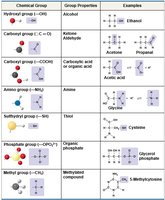
Chemical groups attached to carbon skeletons determine the properties and functions of organic molecules. Key functional groups include:
Chemical Group | Group Properties | Examples |
|---|---|---|
Hydroxyl (-OH) | Alcohol | Ethanol |
Carbonyl (C=O) | Ketone, Aldehyde | Acetone, Propanal |
Carboxyl (-COOH) | Carboxylic acid | Acetic acid |
Amino (-NH2) | Amine | Glycine |
Sulfhydryl (-SH) | Thiol | Cysteine |
Phosphate (-OPO32-) | Organic phosphate | Glycerol phosphate |
Methyl (-CH3) | Methylated compound | 5-Methylcytosine |
ATP (adenosine triphosphate): An important organic phosphate that stores and transfers energy in cells.
Additional info: This guide covers foundational concepts from the first four chapters of a General Biology course, including the scientific method, properties of life, biological organization, chemistry of life, water's role, and the molecular diversity enabled by carbon. Mastery of these topics is essential for understanding more advanced biological processes.
