 Back
General Biology: Foundations, Chemistry, and Water
Study Guide - Smart Notes
 Tailored notes based on your materials, expanded with key definitions, examples, and context.
Introduction to Biology
Properties of Life
All living organisms share a set of fundamental characteristics that distinguish them from non-living matter. These properties are essential for defining life and are observed across all domains of biology.
Order: Living things exhibit highly organized structures, from cellular to organismal levels.
Evolutionary Adaptation: Populations evolve over generations, adapting to their environments through natural selection.
Regulation (Homeostasis): Organisms maintain stable internal conditions despite external changes (e.g., sweating to cool down).
Cells: The cell is the basic unit of life; all living things are composed of one or more cells.
Reproduction: Organisms reproduce to ensure the continuation of their species.
Response to Environment: Living things detect and respond to stimuli (e.g., Venus flytrap closing on prey).
Growth and Development: Organisms grow and develop according to specific instructions coded in their DNA.
Energy Processing: Life requires energy transformation, such as converting food or sunlight into usable energy (ATP).
Unifying Themes in Biology
Theme 1: Organization
Biology can be studied at multiple hierarchical levels, from molecules to the biosphere. Understanding both the details (reductionism) and the emergent properties that arise at higher levels is crucial.
Emergent Properties: New properties arise at each level of organization that are not present at the preceding level.
Structure-Function Relationship: The form of biological structures is closely related to their function.
Levels of Biological Organization
Biosphere
Ecosystems
Communities
Populations
Organisms
Organs
Tissues
Cells
Organelles
Molecules
Systems Biology integrates components to understand how interactions give rise to function and behavior.
Theme 2: Information
Genetic information is stored in DNA and transmitted from one generation to the next. The universal genetic code underlies the unity of life.
DNA Structure: Double helix composed of four nucleotide bases (A, T, C, G).
Gene Expression: The process by which information from a gene is used to synthesize proteins.
Central Dogma of Biology:
Theme 3: Energy and Matter
All living organisms require energy to perform life processes. Energy flows through ecosystems, while matter is recycled.
Energy Flow: Originates from the sun, transformed by producers, and transferred through food webs.
Matter Cycling: Elements such as carbon, nitrogen, and oxygen are reused within ecosystems.
Theme 4: Interactions
Biological systems depend on interactions between their components, which can be regulated by feedback mechanisms.
Positive Feedback: Amplifies a process (e.g., blood clotting).
Negative Feedback: Dampens a process (e.g., insulin regulation of blood glucose).
Theme 5: Evolution
Evolution is the central unifying theme of biology, explaining both the diversity and unity of life. It is defined as genetic change in a population over generations.
Unity: All life shares a common genetic code.
Diversity: Life forms vary greatly in form and function.
The Scientific Method
Discovery Science vs. Hypothesis-Driven Science
Discovery Science: Based on observation and data collection, leading to general conclusions (inductive reasoning).
Hypothesis-Driven Science: Involves proposing and testing hypotheses through experiments (deductive reasoning).
Key Terms
Hypothesis: A testable, falsifiable explanation for an observation.
Theory: A broad explanation supported by a large body of evidence.
Prediction: An "if...then" statement derived from a hypothesis.
Variables: Independent (manipulated) and dependent (measured) variables in experiments.
Controls: Negative (no effect expected) and positive (known effect expected) controls are used for comparison.
Chemistry for Biology
Elements and Atoms
All matter is composed of elements, which are substances that cannot be broken down by chemical means. Atoms are the smallest units of elements that retain their properties.
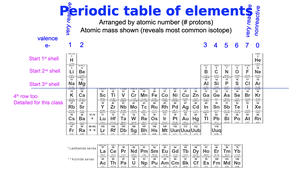
Atomic Number: Number of protons in the nucleus.
Mass Number: Sum of protons and neutrons.
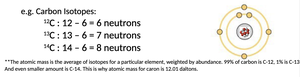
Isotopes: Atoms of the same element with different numbers of neutrons.
Electron Configuration and Chemical Behavior
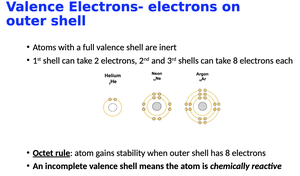
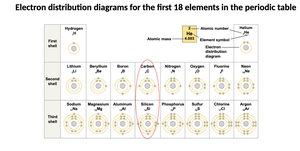
The arrangement of electrons in shells and orbitals determines an atom's chemical properties and reactivity.
Valence Electrons: Electrons in the outermost shell; determine chemical reactivity.
Octet Rule: Atoms are most stable with 8 electrons in their valence shell (except hydrogen and helium).
Electron Orbitals
Orbitals are three-dimensional regions where electrons are likely to be found. The shape and orientation of orbitals influence molecular geometry.
Chemical Bonds
Atoms form chemical bonds to achieve stable electron configurations. The main types of bonds are covalent, ionic, and weak interactions (hydrogen bonds, van der Waals interactions).
Covalent Bonds: Atoms share pairs of electrons; can be polar (unequal sharing) or nonpolar (equal sharing).
Ionic Bonds: Electrons are transferred from one atom to another, creating charged ions (cations and anions).
Hydrogen Bonds: Weak attractions between a hydrogen atom in a polar molecule and an electronegative atom (O or N) in another molecule.
Van der Waals Interactions: Weak, transient attractions due to temporary charge asymmetries.
Molecular Shape
The shape of a molecule is determined by the arrangement of its atoms and the orbitals involved in bonding. Shape is critical for biological function.
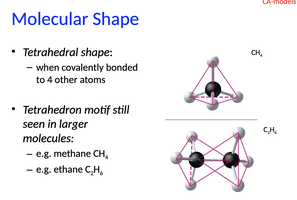
Tetrahedral Shape: When a central atom is bonded to four other atoms (e.g., methane, CH4).
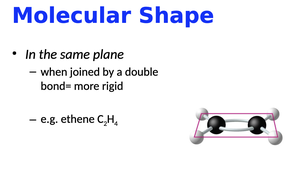
Planar Shape: Double bonds restrict rotation, keeping atoms in the same plane (e.g., ethene, C2H4).
Water and Its Properties
Structure and Polarity
Water is a polar molecule, with oxygen having a partial negative charge and hydrogens having partial positive charges. This polarity allows water molecules to form hydrogen bonds with each other and with other substances.
Emergent Properties of Water
Cohesion: Water molecules stick together due to hydrogen bonding, aiding in transport in plants and creating surface tension.
Adhesion: Water molecules stick to other substances, helping water move against gravity in plants.
Moderation of Temperature: Water has a high specific heat, allowing it to absorb or release large amounts of heat with little temperature change.
Ice Floats: Solid water is less dense than liquid water due to stable hydrogen bonds forming a crystalline lattice.
Solvent of Life: Water dissolves many substances due to its polarity, making it an excellent medium for biological reactions.
Acids, Bases, and pH
The concentration of hydrogen ions (H+) in a solution determines its acidity or basicity, measured by the pH scale. Biological systems require tightly regulated pH for proper function.
Acids: Increase H+ concentration.
Bases: Decrease H+ concentration, often by accepting H+ or releasing OH-.
Buffers: Substances that minimize changes in pH by accepting or donating H+.
Carbon and Molecular Diversity
Importance of Carbon
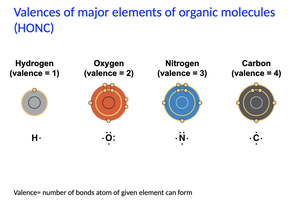
Carbon's ability to form four covalent bonds makes it uniquely suited to form the backbone of biological molecules, allowing for a diversity of structures and functions.
Hydrocarbons: Molecules consisting only of carbon and hydrogen; nonpolar and hydrophobic.
Isomers: Compounds with the same molecular formula but different structures (structural, cis-trans, enantiomers).
Functional Groups: Specific groups of atoms attached to carbon skeletons that confer unique properties (e.g., hydroxyl, carboxyl, amino, phosphate).
Molecular Mass and Moles
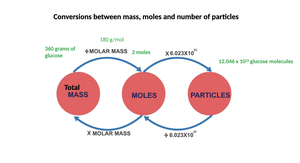
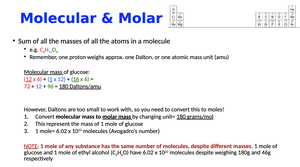
The molecular mass is the sum of the masses of all atoms in a molecule. The mole is a standard unit for counting molecules, relating mass to number of particles using Avogadro's number.
particles
Summary Table: Types of Chemical Bonds
Bond Type | Mechanism | Relative Strength | Example |
|---|---|---|---|
Covalent | Sharing of electron pairs | Strong | H2O, CH4 |
Ionic | Transfer of electrons | Strong (dry), weak (in water) | NaCl |
Hydrogen | Attraction between H (δ+) and O/N (δ-) | Weak (individually) | Between water molecules |
Van der Waals | Transient charge asymmetries | Very weak | Gecko feet adhesion |
