 Back
General Biology: Foundations, Chemistry of Life, and Cell Structure
Study Guide - Smart Notes
 Tailored notes based on your materials, expanded with key definitions, examples, and context.
Introduction to Biology and the Nature of Science
What is Science?
Science is a systematic approach to understanding the natural world through observation, experimentation, and reasoning. The term is derived from the Latin word meaning "to know." Science relies on the existence of a physical world, the presence of observers, and the predictability of natural phenomena.
Science is a branch of knowledge based on objective study and evidence.
It requires a physical reality, observers (minds), and predictable patterns.
Science is descriptive, not prescriptive; it explains how things are, not how they should be.
Science is limited by human fallibility, biases, and perspectives.
The Scientific Method
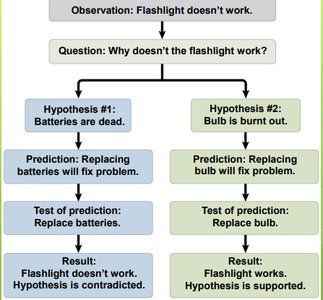
The scientific method is a logical process used to investigate questions and test hypotheses about the natural world.
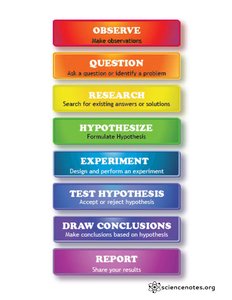
Steps include: Observation, Question, Research, Hypothesis, Experiment, Test Hypothesis, Draw Conclusions, and Report.
Objectivity and Bias in Science
While science strives for objectivity, complete objectivity is unattainable due to human limitations. Observations and interpretations are influenced by worldviews, beliefs, and societal factors such as media, politics, and funding sources.
Biases can affect scientific outcomes and interpretations.
It is important to recognize the limits of science and the influence of perspectives.
Types of Reasoning in Science
Scientific reasoning can be deductive, inductive, or based on inference to the best explanation.
Deductive | Inductive | Inference to Best Explanation |
|---|---|---|
Present 1. All students in this class are Biology majors. 2. You are a student in this class. 3. Therefore you are a biology student. | Future 1. All students in this class are Biology majors. 2. A new student is adding this class. 3. He will be a bio major. | Past 1. All students in this class are bio majors. 2. You must have been a bio major to add this class. 3. Only bio students were interested in this class. |
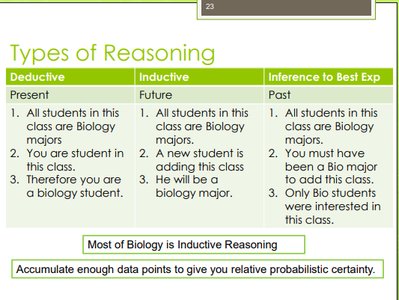
Most biological research relies on inductive reasoning, drawing general conclusions from specific observations.
The Chemical Context of Life
Properties of Water
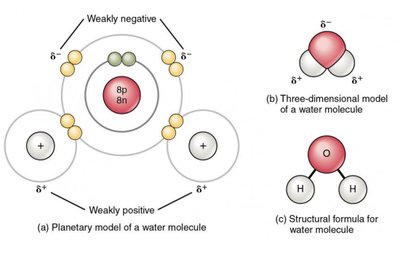
Water is essential for life due to its unique chemical and physical properties, which arise from its molecular structure and hydrogen bonding.
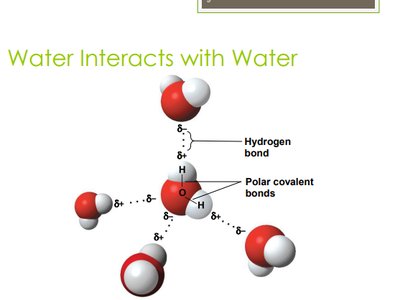
Water is a polar molecule, with an uneven distribution of charge.
Polarity allows water molecules to form hydrogen bonds with each other.
Cohesion and Adhesion
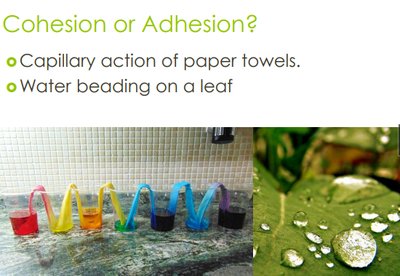
Cohesion: Attraction between water molecules due to hydrogen bonding.
Adhesion: Attraction between water molecules and other substances.
Surface tension: The measure of how difficult it is to break the surface of a liquid, high in water due to cohesion.
Thermal Properties of Water
Specific heat: The amount of heat required to raise the temperature of 1g of water by 1°C. Water's high specific heat helps stabilize temperatures in organisms and environments.
Heat of vaporization: The energy required to convert 1g of water from liquid to gas. This property allows for evaporative cooling.
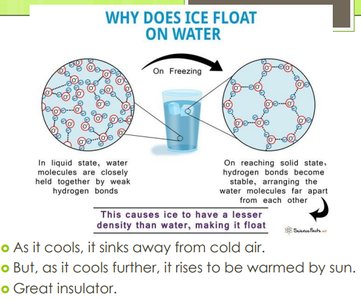
Water is most dense at 4°C, which is important for aquatic life.
Ice Floats on Water
As water freezes, hydrogen bonds stabilize and form a crystalline structure, making ice less dense than liquid water.
This property insulates bodies of water, protecting aquatic life in cold climates.
Water as a Solvent
Water's polarity makes it an excellent solvent, capable of dissolving a wide variety of substances.
Solution: Homogeneous mixture of two or more substances.
Solvent: The dissolving agent (water in aqueous solutions).
Solute: The substance dissolved.
Most biochemical reactions occur in aqueous solutions.
Solute Concentration and Molarity
Molecular mass: Sum of the masses of all atoms in a molecule.
Mole (mol): 6.02 × 10²³ molecules (Avogadro's number).
Molarity (M): Number of moles of solute per liter of solution.
Carbon and the Molecular Diversity of Life
Carbon: The Backbone of Life
Carbon atoms form the basis of all organic molecules due to their ability to form four covalent bonds, allowing for a diversity of stable structures.
Carbon can form chains, rings, and complex branching molecules.
Isomers: Compounds with the same molecular formula but different structures and properties.
Structural isomers: Differ in covalent arrangements.
Cis-trans isomers: Differ in spatial arrangement around double bonds.
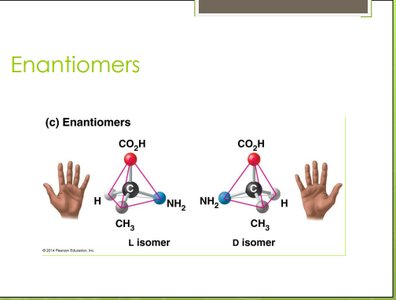
Enantiomers: Mirror images of each other, important in biology due to their different biological activities.
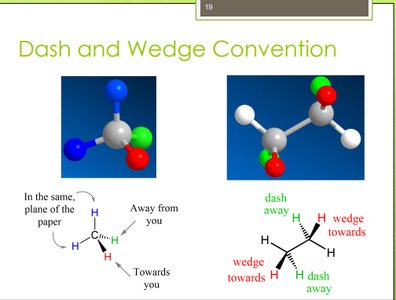
Functional Groups
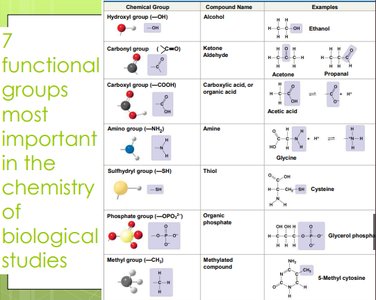
Functional groups are specific groups of atoms within molecules that are responsible for the characteristic chemical reactions of those molecules.
Common functional groups include hydroxyl, carbonyl, carboxyl, amino, sulfhydryl, phosphate, and methyl groups.
Macromolecules: Carbohydrates, Lipids, Proteins
Carbohydrates
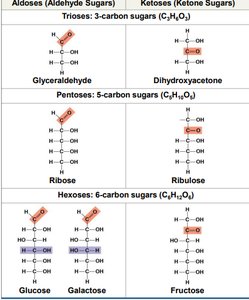
Carbohydrates are sugars and polymers of sugars, serving as fuel and building material for cells.
Monosaccharides: Simple sugars (e.g., glucose, fructose).
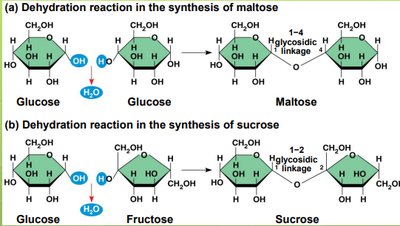
Disaccharides: Two monosaccharides joined by a dehydration reaction (e.g., sucrose, maltose).
Polysaccharides: Polymers of sugars (e.g., starch, cellulose).
Lipids
Lipids are hydrophobic molecules, including fats, phospholipids, and steroids. They function in energy storage, membrane structure, and signaling.
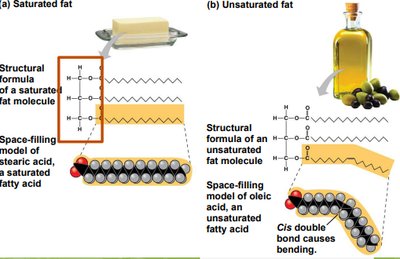
Fats (triglycerides): Composed of glycerol and three fatty acids.
Saturated fatty acids: No double bonds, solid at room temperature (e.g., butter).
Unsaturated fatty acids: One or more double bonds, liquid at room temperature (e.g., olive oil).
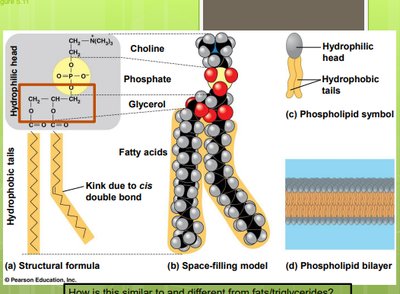
Phospholipids: Major component of cell membranes, with hydrophilic heads and hydrophobic tails.
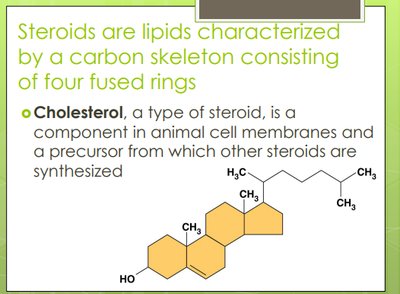
Steroids: Lipids with a carbon skeleton of four fused rings (e.g., cholesterol).
Proteins
Proteins are polymers of amino acids, performing a vast array of functions including catalysis, structure, transport, and signaling.
Amino acids: Building blocks of proteins, linked by peptide bonds.
Peptide bond: Covalent bond formed between the amino group of one amino acid and the carboxyl group of another.
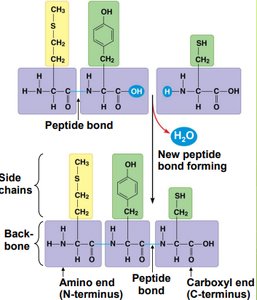
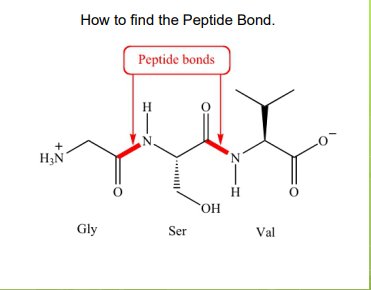
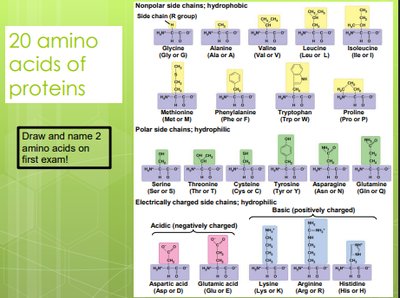
There are 20 different amino acids, each with unique side chains (R groups).
Protein structure has four levels: primary (sequence), secondary (alpha helix, beta sheet), tertiary (3D folding), and quaternary (multiple polypeptides).
Cell Structure and Function
Cell Theory and Types
The cell is the fundamental unit of life. Cells can be prokaryotic (bacteria, archaea) or eukaryotic (plants, animals, fungi, protists).
Prokaryotes: Lack a nucleus and membrane-bound organelles; divide rapidly.
Eukaryotes: Have a nucleus and organelles; divide more slowly.
Plant cells have chloroplasts, central vacuole, cell wall, and plasmodesmata.
Animal cells have lysosomes, centrosomes, and flagella.
Cell Membrane Structure and Function
The plasma membrane is a selectively permeable barrier composed of a phospholipid bilayer with embedded proteins.
Fluid mosaic model: Describes the dynamic arrangement of lipids and proteins in the membrane.
Peripheral proteins: Bound to the membrane surface.
Integral proteins: Penetrate the hydrophobic core.
Membrane Transport
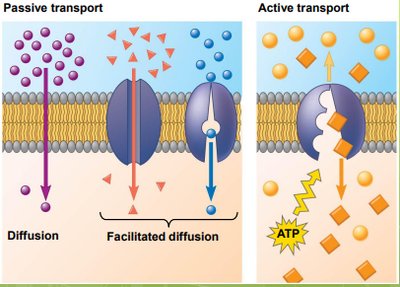
Cells regulate the movement of substances across membranes through passive and active transport mechanisms.
Passive transport: Movement down a concentration gradient without energy input (diffusion, facilitated diffusion).
Active transport: Movement against a gradient, requiring energy (ATP).
Tonicity: The ability of a solution to cause a cell to gain or lose water (isotonic, hypertonic, hypotonic).
Cellular Respiration and Metabolism
Overview of Cellular Respiration
Cellular respiration is the process by which cells extract energy from organic molecules, primarily glucose, to produce ATP. It includes glycolysis, pyruvate oxidation, the citric acid cycle, and oxidative phosphorylation.
Redox reactions: Involve the transfer of electrons; oxidation is loss, reduction is gain (OIL RIG).
Electron donor: Reducing agent; electron acceptor: Oxidizing agent.
Glycolysis: Breaks down glucose into pyruvate.
Pyruvate oxidation: Converts pyruvate to acetyl CoA.
Citric acid cycle: Completes the breakdown of glucose.
Oxidative phosphorylation: Produces most ATP via the electron transport chain and chemiosmosis.
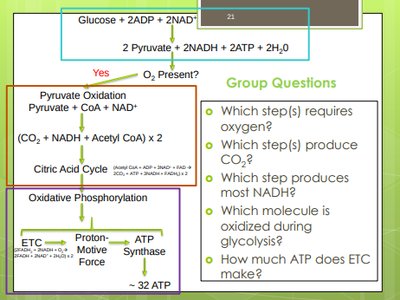
Proton-motive force: Drives ATP synthesis in mitochondria.
Additional info:
Some context and explanations have been expanded for clarity and completeness.
Tables and images have been recreated or included only when directly relevant to the topic discussed.
